Energy efficient rooflights in Birmingham
Every glazing option, side by side.
Energy efficient rooflights and skylights for Birmingham homes, compared on glass, frame, spacer and summer heat in one written quote. Free survey.
- 10-year workmanship guarantee
- Fitted to current Building Regulations
- Building Control notification handled
- Free survey and written quote
- Not tied to one manufacturer
Choosing an efficient rooflight
Is triple glazing worth having?
It keeps more heat in, and it weighs more. The quote lists each one, with the difference spelled out in plain words.
Could the room end up too warm in summer?
Glass can be chosen to cut sun gain, and we match it to the way your roof faces.
What figure does the law ask for?
Part L sets limits for replacement units, and every unit we quote states its own figure.

The long read
Energy efficient rooflights in Birmingham, compared
Why one rooflight holds heat better than another, what Part L asks of a replacement, and how the glass, frame and coating alternatives are lined up in one quote before any money is spent.
What makes a rooflight keep heat in
- Glass
- Spacer
- Frame
A rooflight loses heat in three places: through the glass, through the edge where the panes meet the frame, and through the frame itself. An efficient unit works on all three, which is why two rooflights that look alike from the garden can behave very differently on a January night.
The glass is the largest area, so it does the most. Extra panes, a low emissivity coating and a gas fill between the panes each slow the heat leaving the room. The spacer and the frame decide how much is lost round the edges.
At the survey we look at what you have now and what the roof can carry, then quote the build-ups that suit it.

Asked during the survey
Will a new rooflight cut my heating bill?
A modern sealed unit loses less heat than a tired one, and the gain is largest where the old unit is single glazed or has failed. Our answer on whether skylights lose a lot of heat puts it in context.
Where the heat actually goes
Heat leaves a room by conduction through the materials, by air leaking through gaps, and by radiation from warm surfaces to cold ones. A pane of glass is thin and conducts well, so a single pane is poor at keeping heat in. Two panes with a sealed gap between them slow that down, and three slow it further.
A low emissivity coating is a very thin metallic layer on one of the inner faces of the glass. It reflects heat back towards the room while letting daylight pass. The gap between the panes is usually filled with argon, which conducts less than air, and the unit is sealed so the gas stays put.
Air leakage matters less than people expect on a modern rooflight, because the seals are made to close tightly. It matters a good deal on an old one with perished rubber or a cracked bead, and that is often what makes an old rooflight feel cold in winter. How a failed seal is told from a sound one is explained on our page about misted and failed rooflight replacement.
Radiation is the part most easily forgotten. On a clear night a rooflight faces the open sky, which is far colder than the walls of the room, so a roof opening can feel colder to sit under than a window of the same size. A coated inner pane reflects some of your own warmth back into the room.
Why the roof opening matters
Heat rises, so the highest part of a room is the warmest, and a rooflight sits exactly there. That is why the glazing specification on a rooflight deserves more attention than the same pane in a side wall.
The opening also interrupts the roof insulation. Insulation is needed around the upstand or kerb that carries the rooflight, and the quote lists it as its own line so that nothing gets left out of the price.
Reading the U-value and Part L figures
- U-value
- Part L
- WER
What a U-value tells you
A U-value measures how quickly heat passes through a building element, in watts for every square metre for every degree of temperature difference, written W/m²K. A lower number means less heat lost. It is the figure to compare when two rooflights are otherwise similar.
Makers publish two kinds of figure. A centre-pane value describes the glass alone, away from the edges, and always looks better. A whole-unit value includes the frame and the spacer, and is the one that describes what you will actually have. We put the whole-unit figure on the quote wherever the maker gives it, and say so when only the centre-pane figure is available.
Our guide to rooflight U-values and Part L goes through the measurement in more detail, including how to read a maker's data sheet.
What Part L asks of you
The limits for new and replacement glazing in an existing home come from Part L of the Building Regulations. Table 4.2 of Part L 2021 caps rooflights in existing dwellings at 2.2 W/m²K, while for roof windows the test is Window Energy Rating Band B or a figure of 1.4 W/m²K, which is the limit for windows generally.
The split matters because a rooflight and a roof window are different products. A rooflight is usually a flat or low-pitched unit on a kerb. A roof window lies along the slope of a pitched roof and opens like a window. Some units, such as conservation rooflights, could look like either, so the maker's data sheet states which class a unit is in and therefore which limit applies. Our page on roof windows covers the second group, and the page on flat roof rooflights covers the first.
A rooflight that meets the limit is a minimum. Plenty of units do better, and the quote shows where each sits against the limit, so you can decide whether the extra is worth paying for.
| Item | Rooflight | Roof window |
|---|---|---|
| Limit in Table 4.2 | 2.2 W/m²K | Band B on the WER scale, or 1.4 W/m²K |
| Usual shape | Flat or low pitch, on a kerb | Lies along the slope of a pitched roof |
| Opens like a window | Sometimes, with a vent | Yes, by design |
| What we show on the quote | The maker's whole-unit figure | The maker's figure or WER band |
| Where it applies | Replacement or new unit in an existing home | Replacement or new unit in an existing home |
A centre-pane figure describes the glass alone, and the whole-unit figure describes what you will own.
When the limit applies to you
Swapping the whole rooflight, frame and glass together, counts as fitting a new controlled fitting, so the limit applies and the work is notifiable under the Building Regulations. We handle the Building Control notification. A sealed glass unit changed on its own, with the frame staying, is not notifiable, although a sound frame and a good unit still give a better result.
Forming an opening that did not exist before is building work, and the structure around it is looked at together with the glazing. The notifiable route is also the route that gives you a certificate for the file, which a buyer's solicitor may ask for when you sell.
None of this changes the rooms you can light. England's Building Regulations set no daylight requirement for houses, so adding a rooflight is a choice about what you want from the room, with the energy figures showing roughly what each option will cost to run once it is in.
Double, triple and solar control glass
- Double
- Triple
- Solar control
Three glass build-ups on the same measures
Double glazed
- Heat kept in
- Good
- Weight on the frame
- Lighter
- Summer heat
- More gain
- Light through
- High
- Price
- Lowest
A sealed unit with a coating and gas fill, and the usual choice.
Triple glazed
- Heat kept in
- Better
- Weight on the frame
- Heavier
- Summer heat
- Slightly less gain
- Light through
- A little lower
- Price
- Higher
Keeps more warmth in on a winter evening.
Solar control
- Heat kept in
- Depends on the unit
- Weight on the frame
- No change
- Summer heat
- Much less gain
- Light through
- A little lower, sometimes tinted
- Price
- Added to either
A coating that turns away part of the sun's heat.
Double or triple
Triple glazing adds a third pane and a second gas-filled gap, and the unit keeps more heat in as a result. It also weighs more, so the frame, the hinges of any opening vent and the kerb underneath all have to be specified for the extra load.
The third pane takes a little daylight out as well, because each sheet of glass absorbs and reflects a small share of the light. In a bright room the loss is easy to live with. In a dim room that depends on the rooflight for most of its light, we mention it before you order.
For the two compared on heat kept in, weight, light, lead time and price, see our guide to double and triple glazed rooflights.
Where each one tends to suit
Triple glazing earns its place over a room that is occupied in the evening and cold in winter: a north-facing bedroom, a shaded kitchen, a room with a tall ceiling where the warm air gathers at the glass. Double glazing is the sensible choice over a small utility room, a landing or a bathroom where the saving is small and the extra cost would be better spent on something else.
Nobody has to choose in the dark. Where both suit the roof, the quote lists them on separate lines with the difference in price and in lead time, taken from the maker at the time of quoting. You can pick the one that keeps the room comfortable without paying for performance you will not notice.
Frames, spacers and the edge of the glass
- Aluminium
- uPVC
- Warm edge
Two common frames
Thermally broken aluminium
- Sightlines
- Slimmer
- Strength
- Higher
- Heat through frame
- Low, with the break
- Colours
- Wide range
- Price
- Higher
uPVC
- Sightlines
- Chunkier
- Strength
- Lower
- Heat through frame
- Low
- Colours
- Fewer
- Price
- Lower
Aluminium conducts heat very well, so an aluminium frame without protection would carry the cold straight through to the room. Makers fit a thermal break, a strip of low-conductivity material that separates the outer part of the frame from the inner. With the break in place the frame performs well, and the strength of the metal lets the bars stay slim.
A uPVC frame has chambers inside it that trap air, so it keeps heat in without needing a break. The bars are wider, which means a little less glass for the same opening. On a small rooflight the difference is easy to live with, and the saving can go towards better glass.
Where both frames suit the unit, each is listed on the quote. Neither frame is the efficient one by default, since the figure that counts is the whole-unit value the maker states.


The spacer, the weakest line in the unit
The spacer is the strip that holds the two panes apart round the edge of a sealed unit. An older aluminium spacer conducts heat across the gap, so the edge of the glass runs colder than the middle. That cold edge is where condensation appears first, and where a perishing seal lets the unit mist.
A warm-edge spacer uses a material with far lower conductivity, usually a composite or a stainless steel strip, in place of the old aluminium. It raises the temperature of the glass at the edge, narrows the cold band and improves the whole-unit figure. It is a small part of the price and one of the better ways to spend a little extra.
Our answer on why rooflights get condensation explains how the spacer, the glass and the air in the room work together, and why no unit can be promised to stay clear in a steamy bathroom.
Summer heat, coatings and cleaning
- Aspect
- Coating
- Cleaning
Asked on the driveway
Which way does my roof face, and does it matter?
It matters a good deal. A rooflight facing south or west takes the sun for long afternoons, while one facing north gets even, cooler light. The survey records which way the roof faces, and the glass we quote is chosen to suit.
Glass that keeps heat in during winter also keeps it in during summer, which is why a well insulated rooflight on a sunny roof can leave a room warmer than the old single glazed one did. The cure is a coating that turns away part of the sun's energy while letting daylight through.
A solar control coating is applied to one face of the glass inside the sealed unit. It cuts the heat gain and often the glare as well, at the price of a little daylight, and some versions give the glass a faint blue or green tint. Whether you notice that depends on the coating and the room.
Solar control is one of the options we compare rather than a default we lead with. Our answer on whether a rooflight needs solar control glass sets out the rooms and roof directions where it helps most.
Blinds, shading and ventilation
Glass is one way to control summer heat. An external or internal blind is another, and on some rooflights a blind can be fitted at the factory and worked by a remote. A blind inside the room stops the sunlight, but the heat has already entered the building by the time it reaches the fabric. An external blind stops the heat before the glass, and works better.
Opening vents help too. Warm air gathers at the top of a room, and a vent in the rooflight lets it out while a window or door lower down lets cooler air in. Our page on electric and opening rooflights compares the motors, rain sensors and controls the makers offer.
None of these is a substitute for choosing sensible glass, and none is a promise that a room will never get warm. A south-facing glazed roof over a kitchen will be bright and warm on a hot afternoon, and the right combination of coating, shading and ventilation keeps it comfortable.
Self-cleaning glass
Self-cleaning glass carries a coating on its outer face that breaks dirt down in daylight, so rain can wash it away. It works best on glass with some slope, because rain needs to run across the surface. Flat glass holds water in puddles, and the dirt dries in place.
Our answer on self-cleaning skylight glass weighs the coating against the pitch of the roof. On a rooflight you cannot reach easily it is a sensible extra, with an occasional rinse still needed.
Condensation, moisture and fresh air
- Glass
- Spacer
- Room air
- Warm-edge spacer on the unit
- Ventilation in the room below
- Glass and frame matched to the room
Why the glass mists on the inside
Condensation forms when warm, damp air meets a surface colder than the dew point. Glass is usually the coldest surface in a room, so it is where the moisture shows. Better glazing raises the temperature of the inner pane, which makes condensation less likely, and a warm-edge spacer helps at the edges.
Condensation on the outside of a rooflight on a clear, still morning is a different matter. It shows that the glass is insulating well, because the outer pane stays cold.
What the room has to do too
Showers, cooking, drying clothes and breathing all add moisture, and the room has to get rid of it. A good extractor fan in a bathroom or kitchen does more for the glass than any coating, and a trickle vent or an opening window lets the damp out.
An efficient rooflight lowers the chance of condensation. It does not remove the moisture, and no rooflight can be promised to stay clear if the room is damp. During the survey we check the room's ventilation along with the glass, and tell you plainly if it needs attention.
Where a sealed unit has already misted between the panes, the seal has failed and the moisture is trapped. That is a different problem from surface condensation, and our page on misted rooflight replacement covers it.
Sizing, planning, cost and lead times
- Size
- Permission
- Price
How we size a replacement
Look at what is there
We note the type, glazing, frame and condition of the existing unit, and how it is fixed to the roof.
Measure the opening
We measure the opening and the kerb or upstand, because the new unit must fit what is already built.
Check the structure
We check the timber round the opening, which has to take the weight of heavier glazing.
Match to sizes
We compare the opening with each maker's standard sizes and quote made-to-measure where no standard size fits well.
Confirm before ordering
Once you choose, we measure again on site before the unit is ordered, so it arrives to fit.
Planning permission
Permitted development covers many rooflight replacements, and the conditions attached are in our rooflight planning guide. Where the building is listed, a rooflight waits on listed building consent, whatever the position under permitted development, and the right can also be withdrawn through a condition on an earlier planning permission or through an Article 4 direction.
At the survey we find out what applies to your address and tell you the result. The decision belongs to the council, and should an application be needed we can supply the product details and drawings with it.
What goes into the price
The price of an efficient rooflight is built from the unit, its glass specification, the kerb or upstand and its insulation, the roof covering round it, and the finish inside. Each line appears on the quote for each option.
Better glass adds cost, and a thicker, better insulated kerb adds some more. Our answer on how much it costs to replace a skylight explains each part.
Asked on a first call
Is better glass worth paying more for?
It depends on how long you will stay and how the room is used. A room lived in all day gains most from better glass, and we show the extra cost on the quote beside the figure it buys.
Lead times
Lead times are each maker's own to set, and they shift through the year. Standard sizes with ordinary double glazing usually come in ahead of made-to-measure units fitted with triple glazing or special coatings. Against each option, the quote shows the range the maker usually gives, as it stands on the day of quoting.
We book the fitting once the unit has a delivery date. Heavy rain or strong wind rules out glazing on the day, so the date can move, and the opening stays covered until the unit is in.
Fitting day, insulation and replacing an old unit
- Kerb
- Glazing
- Finish
A typical fitting starts with the old unit lifted out and the opening made safe and weathered first, which keeps the room below protected should the weather turn during the visit. The new unit is fixed to the kerb, the glass goes in, and the roof covering is dressed up and sealed.
The insulation round the kerb matters as much as the glass. Good insulation in the kerb stops cold bridging round the edge of the opening, and it appears on the quote so that you can see exactly what is being fitted.
Inside, the lining of the opening is finished to match the ceiling, with a splay at the sides that spreads the light across the room.
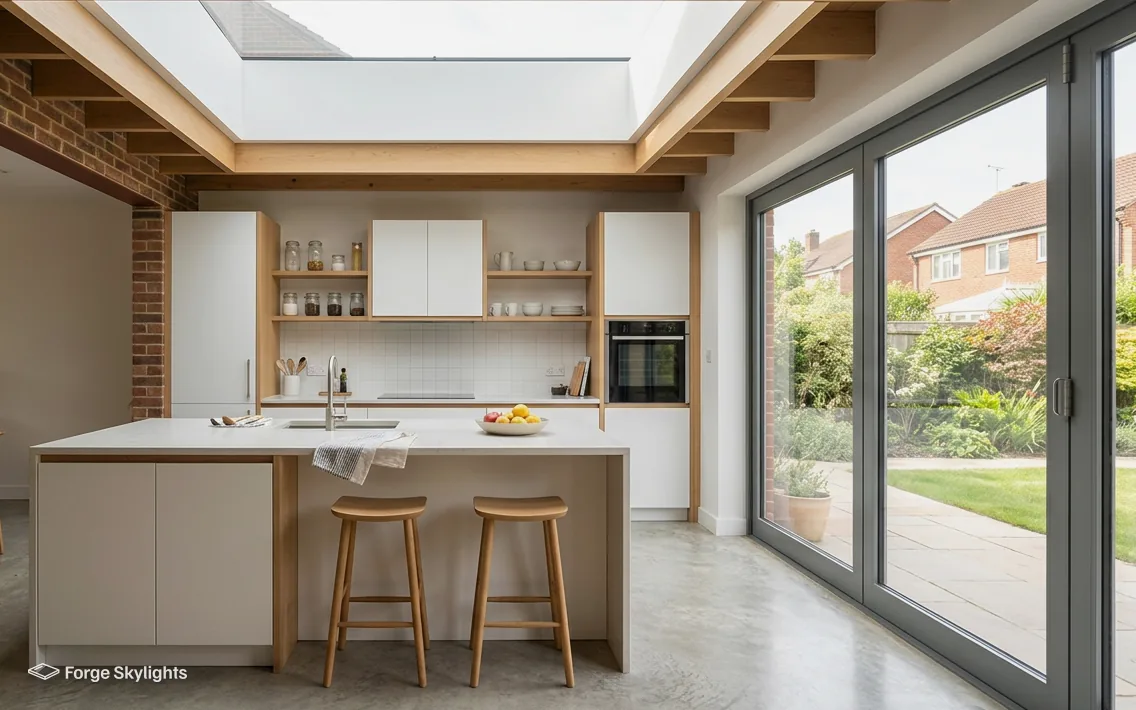
Reglazing or replacing the whole unit
Where the frame is still sound and the sealed glass alone has failed, changing the glass unit by itself can be the more economical route, and that is not notifiable. If the frame is worn, the whole rooflight is the better buy, and that is notifiable, with the Building Control notification handled by us.
Replacing the whole unit is also the point at which the specification can move on. A frame with a thermal break, a warm-edge spacer and a coated inner pane is a different product from one made before those became usual. The quote carries both routes side by side, with the gain and the cost of each one shown plainly so the choice is yours.
On leaving we tidy up, explain how any vent or blind works, and hand you the maker's paperwork, plus a Building Control certificate when the work needed notifying. Our 10-year workmanship guarantee applies to every installation, the unit keeps the maker's own warranty, and our guarantee page sets out what each covers.
- Whole-unit figure stated for each option
- Kerb insulation shown as its own line
- Building Control notification where notifiable
Want the options for your own roof worked through? Book a free survey and you get the glazing options for your roof laid side by side in writing.
Book a free surveyOur simple process
- 1
Free survey
We look at the roof, the room and which way it faces.
- 2
Options side by side
We set glazing, frame and coating options next to each other.
- 3
You choose
You pick the build-up that suits the room and the budget.
- 4
Fitted, signed off, guaranteed
Fitted to current regulations, with a written guarantee.
Energy efficient rooflight questions
What U-value should a replacement rooflight have?
Table 4.2 in Part L 2021 gives an existing dwelling a figure of 2.2 W/m²K where a rooflight is concerned, and a roof window meets 1.4 W/m²K, the limit that applies to windows, or Window Energy Rating Band B. Every unit on our quote states the maker's figure, so you can see how each sits against the limit. Our guide to rooflight U-values explains the measurement.
Is triple glazing always the more efficient choice?
Triple glazing keeps more heat in, and it weighs more and lets a little less light through. Over a cold, shaded room it earns its cost, and over a small landing the saving is slight. Our guide to double and triple glazed rooflights compares them.
Do skylights lose a lot of heat?
An old, failed or single glazed unit can lose a good deal, and a modern sealed unit with a coating and a warm-edge spacer loses far less. Our answer on whether skylights lose heat compares units of different ages.
Will a new rooflight stop condensation?
Better glass and a warm-edge spacer make surface condensation less likely, and they cannot remove the moisture in a damp room. Ventilation does the rest. See our answer on rooflight condensation.
Do I need solar control glass?
Yes, on some roofs. A south or west facing rooflight over a kitchen or a living room benefits most, and a north facing one often does not need it. It is quoted beside clear glass, which lets you compare both the price and the light. See our solar control glass answer.
Does self-cleaning glass work on a flat rooflight?
It works best where rain can run across the glass, so a flat rooflight gets less from it than a pitched one. Our answer on self-cleaning skylight glass explains the limits, and we quote it as an option.
Is replacing a rooflight notifiable work?
Renewing the whole rooflight, meaning the frame as well as the glass, counts as a controlled fitting and so is notifiable, and the Building Control notification is handled by us. A change to the sealed glass unit alone does not count as notifiable. Our page on misted rooflight replacement explains how to tell which you need.
Are you tied to one rooflight maker?
No single maker has a hold on us, and every written quote lines up two or more suitable options next to one another, using units from more than one maker whenever the roof can take them. You choose, and the figures are laid out on the same measures to make the comparison fair. Book a free survey and we will bring the options.
Guides and answers
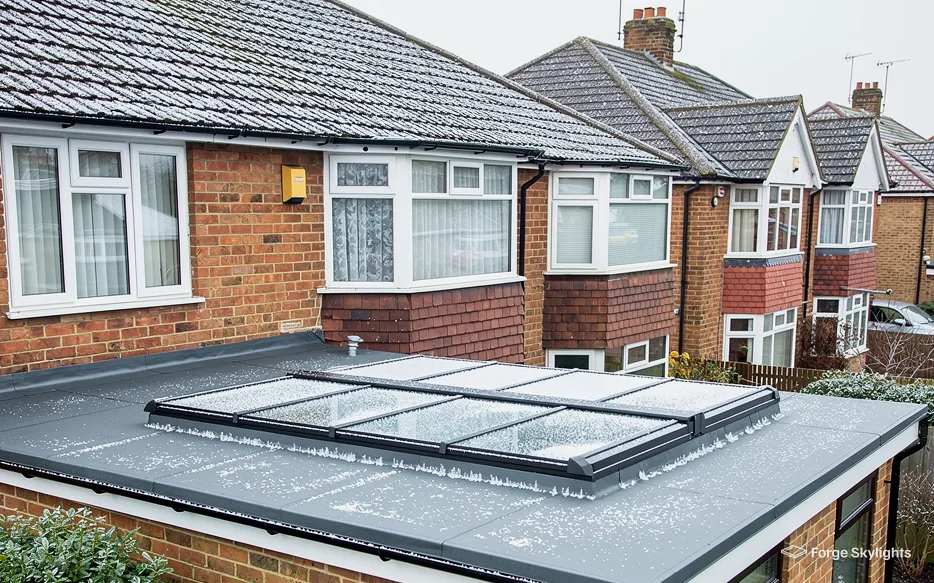 Guide · 10 min readRooflight U-values and Part L explainedA U-value tells you how quickly heat escapes through a rooflight, and a lower figure means less escapes.
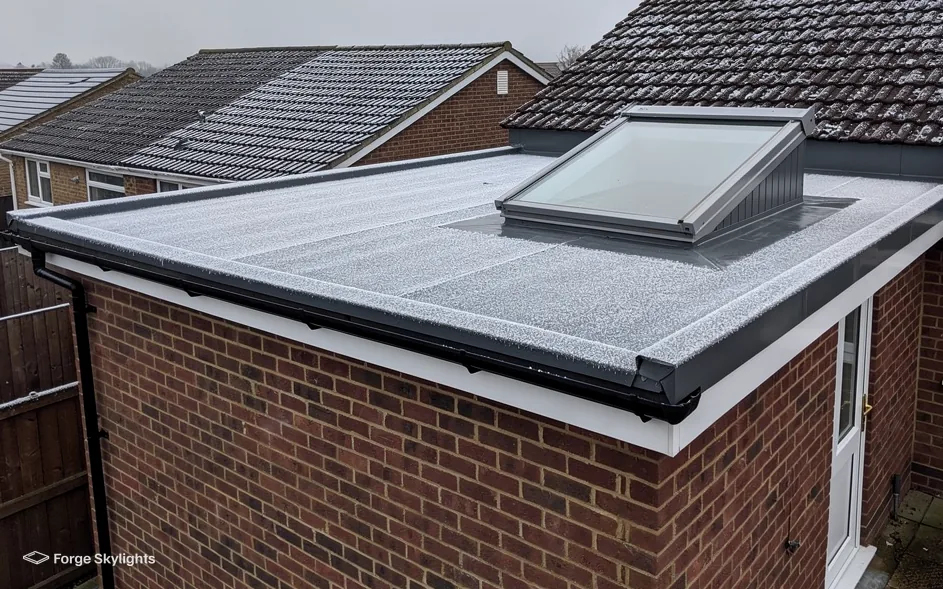 Guide · 9 min readDouble or triple glazed rooflight: the two comparedTriple glazing keeps more heat in and weighs more, costs more and lets slightly less light through.
 Answer · 5 min readDo skylights lose a lot of heat?A modern double glazed skylight loses more heat than the same area of insulated roof, because glass is a thinner barrier than…
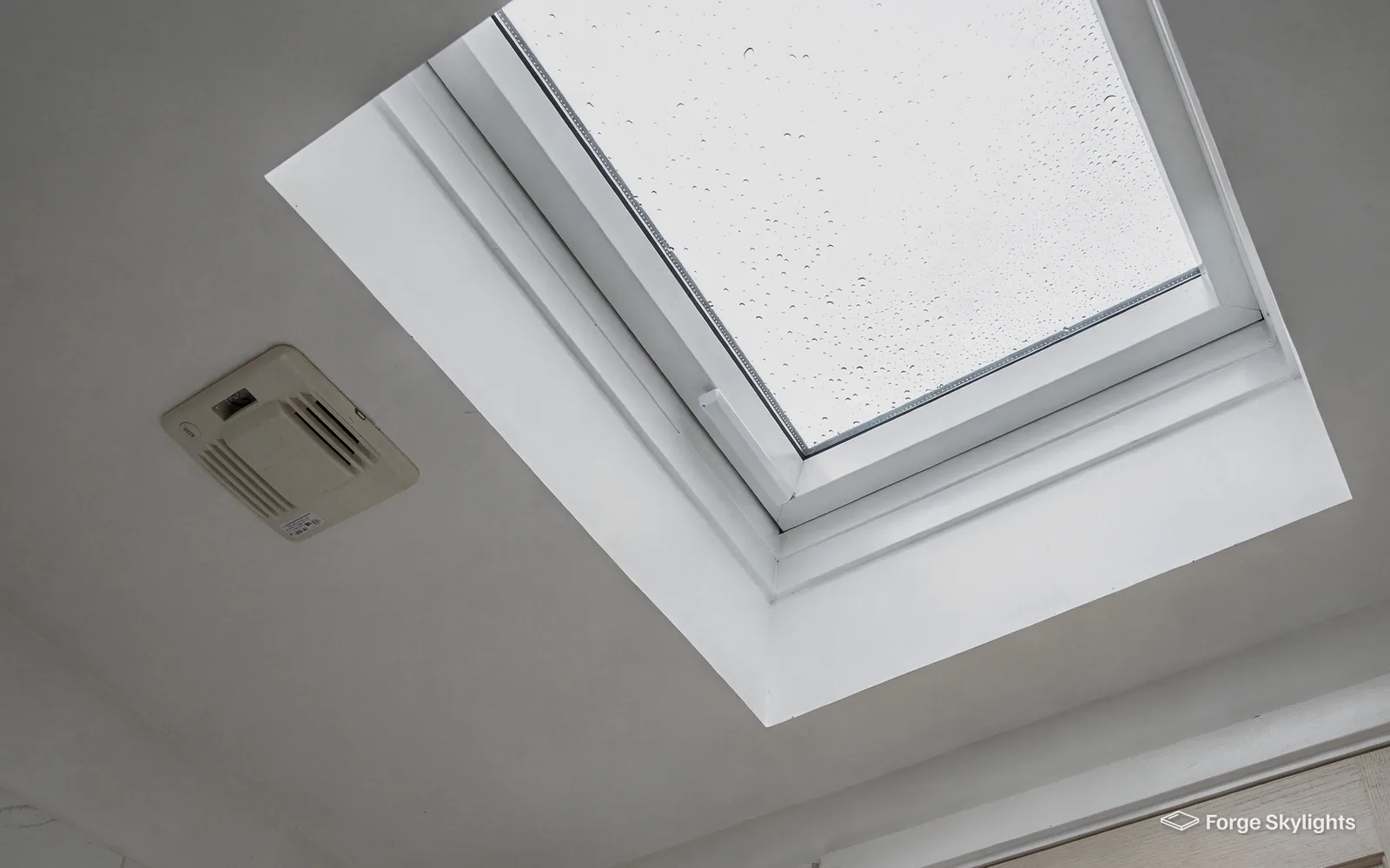 Answer · 5 min readWhy do rooflights get condensation on the inside?Condensation forms on the inside of a rooflight when warm, damp room air meets glass that is cooler than the air can…
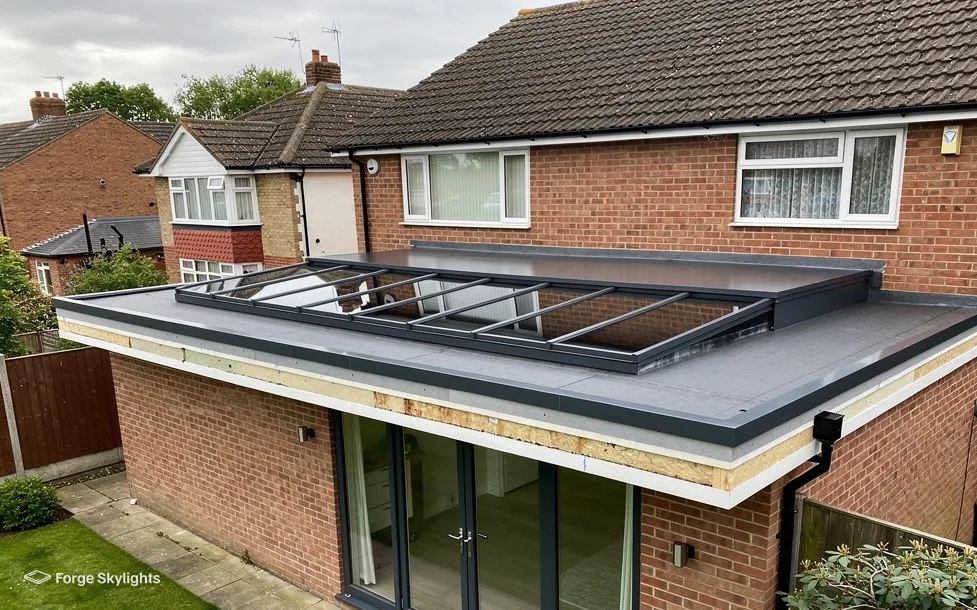 Answer · 4 min readDoes a rooflight need solar control glass?A rooflight does not need solar control glass as a rule, but it is worth choosing where the glass faces south or…
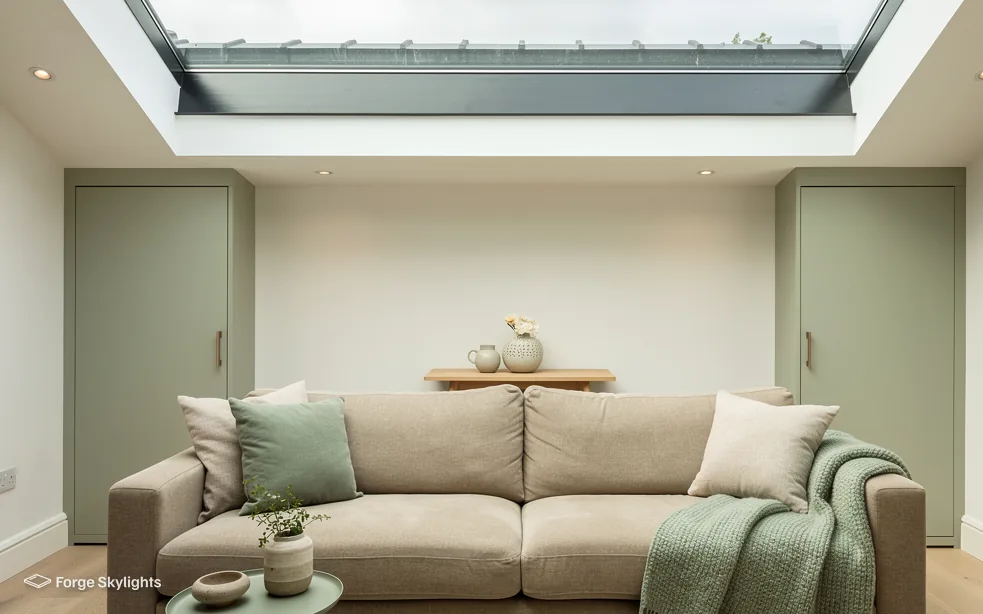 Answer · 4 min readDoes self-cleaning glass work on a skylight?Self-cleaning glass works on a skylight when the roof is steep enough for rain to run off it and the sky does…
Book your free survey
It starts with a free survey and plain advice. No pressure, just clear options for your home.
Fill in the form and we will be in touch to arrange a convenient time.