
Last updated 13 October 2026
The method
Five measures, the same for every option
A skylight quote that names one product leaves you with a yes or a no. Two or three suitable units on one page, described in the same terms, give you a choice you can reason about. We are independent of any single manufacturer, so we pick the units that fit your roof and your room, from more than one maker where the roof allows it, and write them up on five measures in a fixed order.
| Measure | What we compare | What it tells you |
|---|---|---|
| Glass | The number of panes, coatings on them, and the U-value from the maker | How much heat stays in, how the room feels in summer, and how the glass behaves if it breaks |
| Frame | Material, finish and how much of it you see from below | The look inside and out, the upkeep, and the width of the frame around the glass |
| Opening | Fixed, manual or electric, with any rain sensor | Whether you get fresh air through the roof, and how you reach the control |
| Lead time | The maker's typical range for that unit, stated as such | Which option suits a build that is already booked |
| Price | The fitted price, with roof work and inside finish | What each step up in the other four measures costs you |
Under the options you will find the unit we would choose, with a line on why. Sometimes that is the dearer unit, because the room will use what it adds; sometimes it is the simpler one, because the extra would go unnoticed. Either way the facts sit in front of you and the choice is yours. To get yours, book a free survey.
Every option on a Forge quote is described on glass, frame, opening, lead time and price.
Product types
Each type of skylight on the same measures
The first comparison is between product types, because the roof often narrows the field before anything else does. A flat roof takes flat rooflights, lanterns, walk-on glass and some sun tunnels; a pitched roof takes roof windows, conservation rooflights and sun tunnels. Within those groups there is usually more than one sensible answer.
| Product | Roof it suits | Light it gives | Opening | Relative cost |
|---|---|---|---|---|
| Flat rooflight | Flat roofs, on a kerb or upstand | Clean, even daylight falling straight down | Fixed, manual or electric | Usually the lower end for a flat roof |
| Roof lantern | Flat roofs over larger rooms | Light from several pitched panes, with more height above the room | Mostly fixed, with opening vents on some | Usually costs more than a flat rooflight of the same footprint |
| Roof window | Pitched roofs, into tiles or slate | Daylight into a loft room through the slope | Top-hung or centre-pivot, manual or electric | Middle, and lower in standard sizes |
| Conservation rooflight | Pitched roofs on older houses | Similar to a roof window, behind a slim frame and glazing bar | Usually opening | Usually higher than a standard roof window |
| Walk-on rooflight | Terraces, paths and light wells | Light into a basement or the room below a terrace | Mostly fixed, some open | Usually the highest per pane |
| Sun tunnel | Pitched or flat roofs above rooms with no window | A round pool of daylight through a tube | Fixed | Often the lowest overall |
Our guide to the types of skylight goes further into each product, and our answer on whether a skylight can go in any roof covers the structural checks we make at the survey.
Flat roofs
Flat rooflight or roof lantern
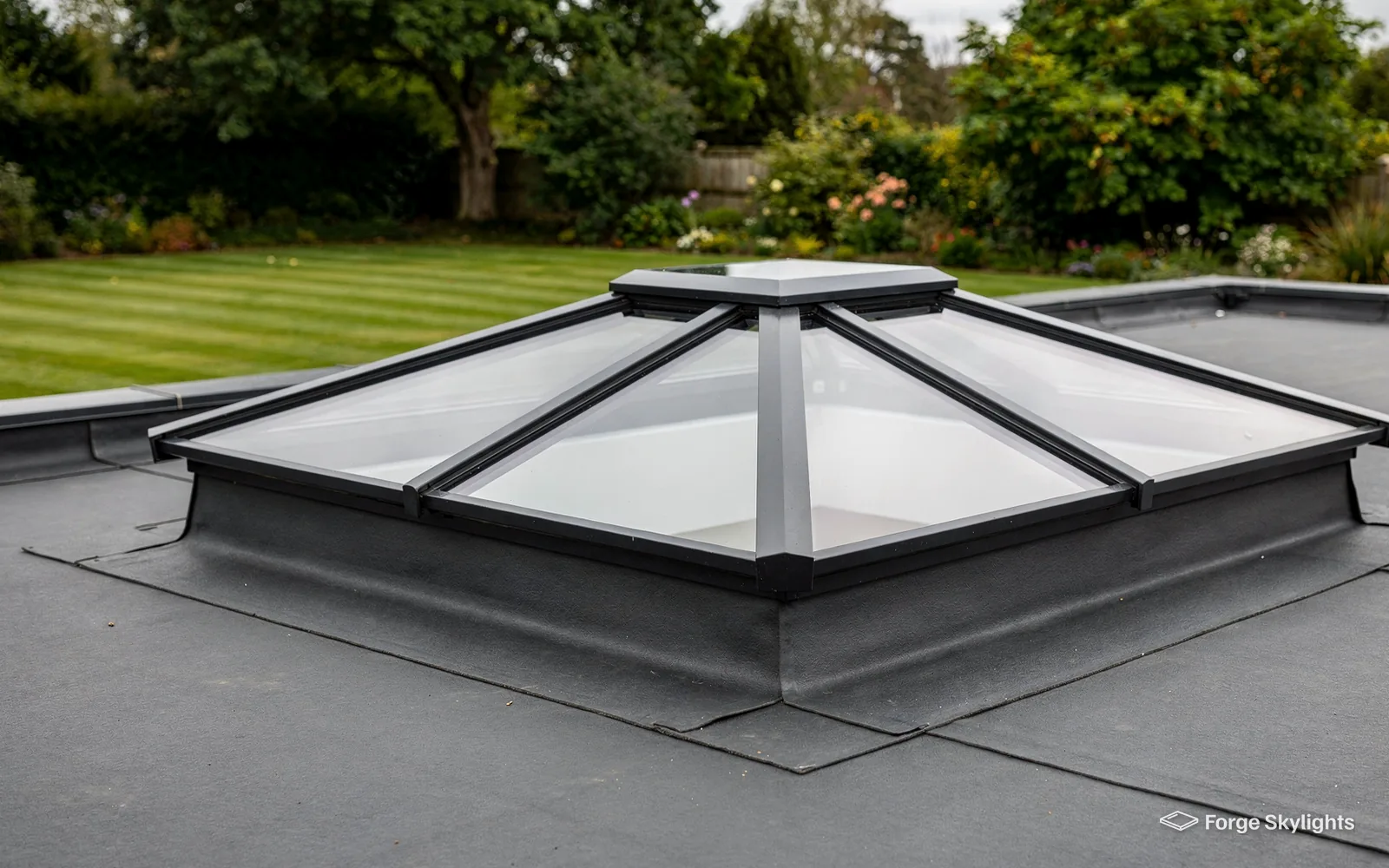
This choice comes up on kitchen and garden-room extensions time and again. A flat rooflight is a single pane on a low kerb, so it reads as a clean opening in the ceiling and costs less for the same size of hole. A roof lantern rises above the roof in a pyramid or ridge of glass, which adds height and a sense of occasion to the room below and catches light from more directions, at a higher price and usually a longer lead time when made to measure.
One opening in a flat roof, two ways to fill it
Flat rooflight
- Glass
- One flat pane, double or triple
- Frame
- Slim, mostly hidden from below
- Opening
- Fixed, manual or electric
- Lead time
- Often shorter in stock sizes
- Price
- Lower for the same opening
More on our flat rooflight installation page.
Roof lantern
- Glass
- Several pitched panes
- Frame
- Ridge and hip bars on show
- Opening
- Fixed, or with opening vents
- Lead time
- Bespoke sizes tend to take longer
- Price
- Higher for the same opening
More on our roof lantern installation page.
Neither one is the right answer everywhere. A low ceiling under a flat roof often suits a flat rooflight, which keeps the line of the room calm, while a deep extension with a dining table at the far end can gain a lot from a lantern. Our answer on choosing a roof lantern or a flat rooflight goes through the common cases, and the roof lantern sizes guide helps with proportion.
Glass
Double, triple and coated glass
Glass is the measure with the most options and the one where the numbers matter. Under Part L 2021, Table 4.2 for existing homes, a rooflight must reach 2.2 W/m²K, and a roof window must reach the window limit of 1.4 W/m²K or WER Band B. Every unit we put on a quote meets the limit for its type, and we write the maker's stated figure next to it so you can compare.
The same rooflight with two glass choices
Double glazed
- Heat kept in
- Good, within the limit
- Weight
- Lighter
- Lead time
- Often shorter
- Price
- Lower
Triple glazed
- Heat kept in
- Better than double
- Weight
- Heavier
- Lead time
- Sometimes longer
- Price
- Higher
Coatings sit on top of that choice. Solar control glass reduces the heat that builds up under glass facing the afternoon sun, and self-cleaning glass helps rain carry dirt off a sloping pane. A laminated inner pane holds together if the glass breaks, which some makers fit as standard. Our guide to double and triple glazed rooflights compares the two in depth, and the answers on solar control glass and self-cleaning glass say where each one earns its place.
Frame
Aluminium, uPVC and timber
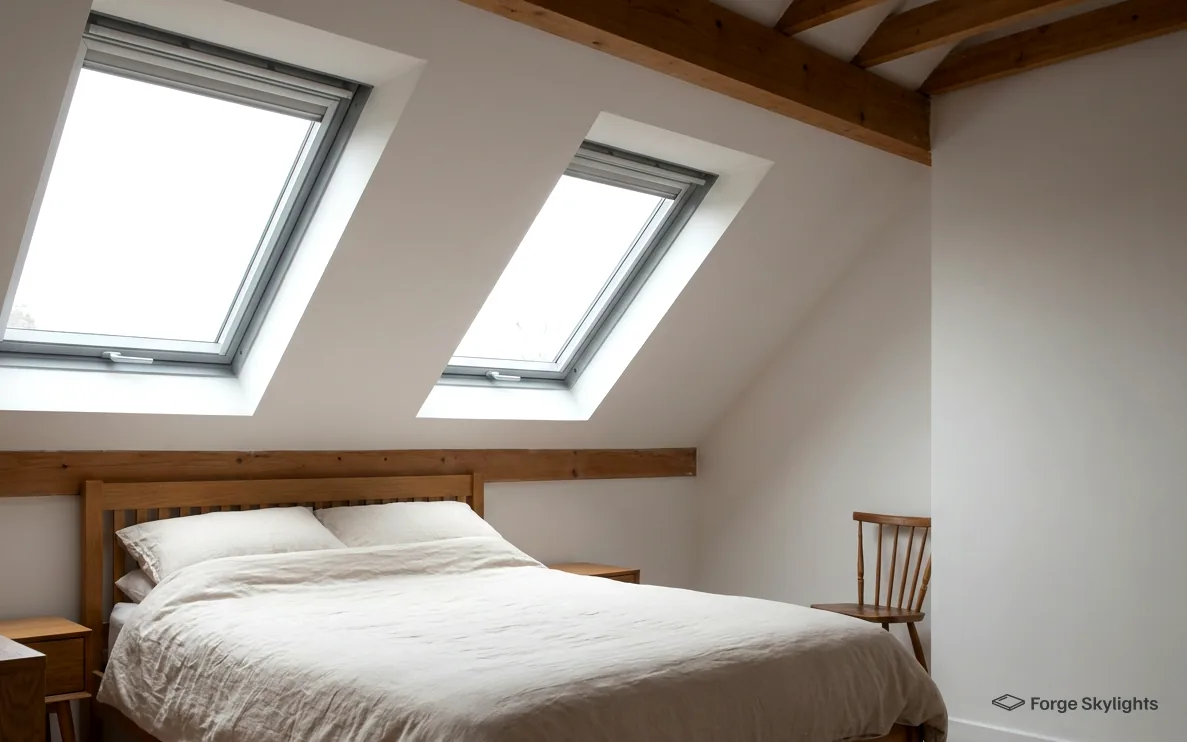
The frame decides how a skylight looks from inside and how much of it you see. On flat roofs and lanterns the choice is usually between aluminium and uPVC; on pitched roofs, roof windows come in pine, white-painted timber or a white polyurethane-coated timber core, with an aluminium or coloured cladding outside.
| Frame | Where you meet it | Strengths | Where it gives ground |
|---|---|---|---|
| Aluminium | Flat rooflights and lanterns | Slim sightlines, a wide choice of colours, strong for large spans | Usually costs more than uPVC for the same size |
| uPVC | Roof lanterns | Usually lower in price, with a broad range of standard sizes | Bulkier bars, a narrower colour choice |
| Pine | Roof windows | Warm natural finish in a loft room or bedroom | Needs the occasional coat of lacquer; less suited to steamy rooms |
| Polyurethane-coated timber | Roof windows in bathrooms and kitchens | A white wipe-clean surface that copes with moisture | Usually costs a little more than pine |
For lanterns, our aluminium or uPVC lantern guide weighs those two frames against each other, and our frameless flat rooflights guide covers the minimal-frame look against framed units.
Opening
Fixed, manual or electric
A fixed unit gives the same daylight as an opening one of the same size for less money, and it has no moving parts. An opening unit brings fresh air in at the highest point of the room, where warm air gathers. Manual openers suit glass you can reach with a pole or a handle; electric openers suit high ceilings and lanterns, and usually come with a rain sensor that closes them when it rains.
Ways to open a flat rooflight
Fixed
- Fresh air
- None through the roof
- Control
- Nothing to operate
- Extra work
- None
- Price
- Lowest
Manual
- Fresh air
- When you open it
- Control
- Handle or pole
- Extra work
- None beyond fitting
- Price
- Middle
Electric
- Fresh air
- From a switch or remote
- Control
- Switch, remote or sensor
- Extra work
- A power supply to the unit
- Price
- Highest
On a pitched roof the question is the hinge. A centre-pivot roof window turns in the middle and opens from a handle on its top rail, so it is easy to clean from inside and suits a window set within easy reach; a top-hung window opens outward from the top with its handle at the bottom and leaves a clear opening below, which suits a window set higher in the slope or one you stand at. Our guide to top-hung and centre-pivot roof windows compares them, and the manual or electric rooflight guide covers the powered options. For loft rooms, our answer on roof windows as a fire escape states the Approved Document B position: an escape window serves only a storey within 4.5m of ground, so a loft conversion on a two-storey house needs a protected stair.
Makes
Comparing one maker's unit with another's
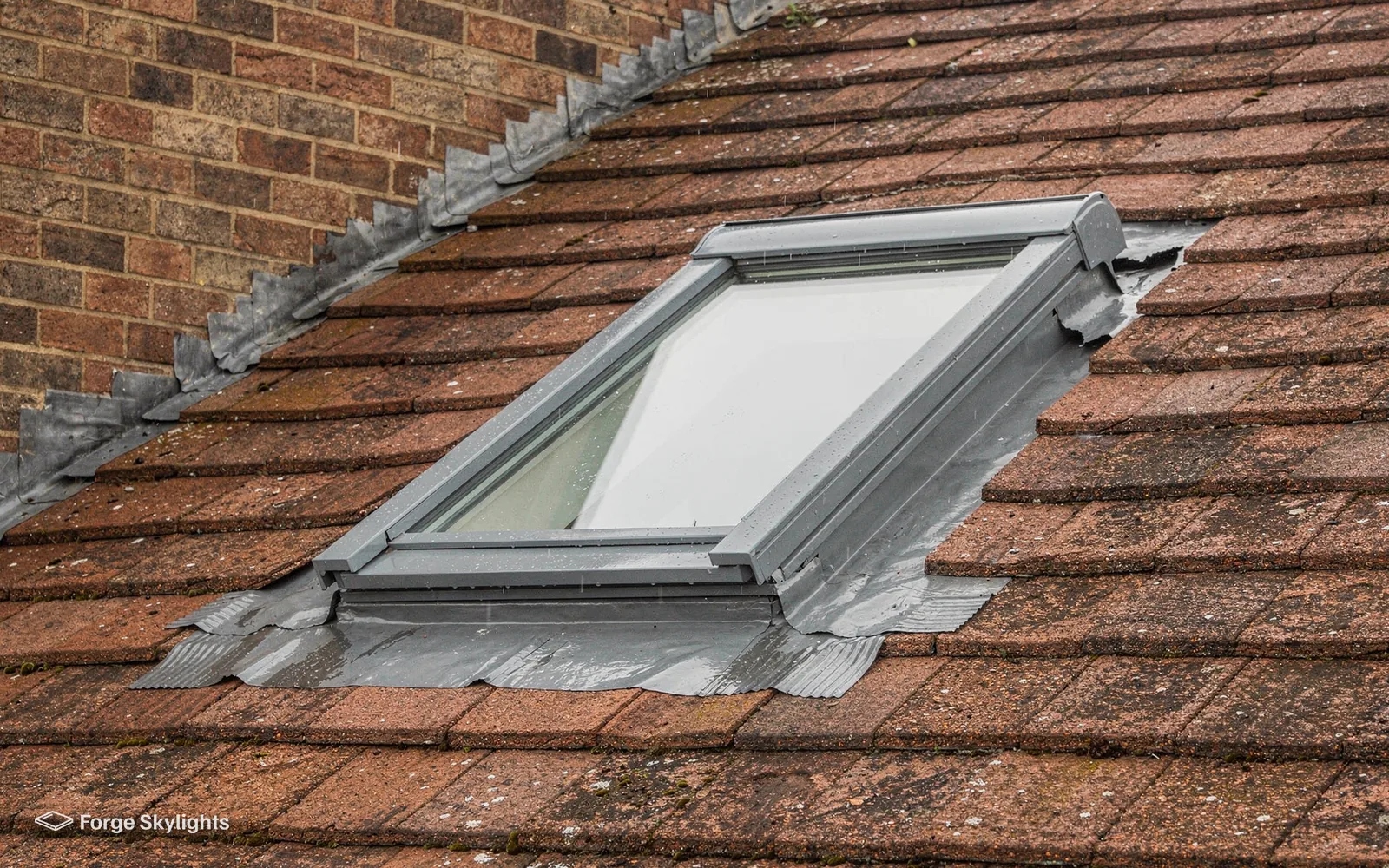
VELUX, FAKRO and Keylite all make pitched roof windows in a range of standard sizes, with flashing kits for tiles and slate, blinds made for their own frames and electric versions. Flat rooflights and lanterns come from a wider group of makers, each with its own frame profiles, glass build-ups and upstand options. We name the maker on each option as a fact about the product, and we compare units the same way whoever makes them.
Between two roof windows of similar size the differences tend to be in the details: how the frame finishes inside, which glass comes as standard, the shape of the handle, how the flashing kit sits in your covering, and how long the maker usually takes to supply that size and finish. VELUX size codes are a common reference point; in a code such as MK04 the letter is the width and the digits are the height, and our VELUX sizes guide explains how to read one. When you are replacing an old roof window, a current unit from the same maker often drops into the existing opening, and another maker's unit may need a slightly different opening, which we measure and show on the quote.
| Point | What we look at | Why it can tip the choice |
|---|---|---|
| Size match | Whether the unit fits the existing opening or needs it altered | Altering an opening adds roof work and inside finish |
| Standard glass | What the base model includes and what costs extra | Two units with the same name can differ in the glass you get |
| Flashing | The kit for your tiles or slate and whether a recessed fit is offered | Decides how the window sits in the roof |
| Extras | Blinds, motors and sensors made for that frame | Easier to add later on some ranges than others |
| Lead time | The maker's typical range for your size and finish | Can decide the choice when a loft build is booked |
Our answer on how VELUX, FAKRO and Keylite compare goes into the makes in more depth, and the guide to replacing an old VELUX window covers like-for-like swaps against upgrades.
Lead time
Stock sizes and made-to-measure units
Lead time is the measure people forget until a builder asks when the unit will arrive. Standard sizes held by a maker or a merchant often arrive sooner; made-to-measure glass, unusual colours, triple glazing on some ranges and walk-on glass usually take longer. We write each option's lead time as the maker's typical range, stated as such, because the maker sets it and it can move. Our answer on how long skylights take to arrive explains what lies behind the ranges.
Asked at the survey
Can I have the opening unit if the fixed one arrives sooner?
Often you can choose a stock size of the opening unit to bring its lead time closer to the fixed one. The quote shows both ranges so you can weigh the gap against what the opening adds.
Price
What each step up costs
The price row is the last on every option, and the one that makes the others concrete. Moving from double to triple glazing, from fixed to electric, or from a flat rooflight to a lantern each adds to the fitted price; seeing the figures next to each other lets you decide whether the step is worth it for your room. Parts of the job that stay the same for every option, such as access and the inside finish, are shown once, so you can see that the unit is what moves.
Our guide to what shapes skylight and rooflight costs explains each driver in more detail, from size and glass to scaffold and Building Control, without inventing prices that would not fit your roof.
A worked example
Three options for a loft bedroom
Here is how a quote might look for a new roof window in the rear slope of a loft bedroom with a tiled roof. The options and their details depend on the roof we find; the format is the same on every job.
| Measure | Option A | Option B | Option C |
|---|---|---|---|
| Product | Centre-pivot roof window, standard size | Top-hung roof window, standard size, from a second maker | Conservation-style roof window with a glazing bar |
| Glass | Double glazed, within the roof window limit | Triple glazed, a lower stated U-value | Double glazed, within the limit for its class on the maker's data |
| Frame | White polyurethane-coated timber | Pine | Slim frame with dark outer cladding |
| Opening | Manual, handle at the top | Manual, handle at the bottom | Manual, side or top hung by model |
| Lead time | The maker's typical range, stated | The maker's typical range, stated | Usually longer, the maker's range stated |
| Price | Fitted price for A | Fitted price for B | Fitted price for C |
In a room like this we might pick option B, because a top-hung window lets you stand at the open frame and the triple glazing suits a bedroom that faces north. If budget leads, option A gives the same light for less. If the house is in a conservation area, option C may suit the street better, and we check the position for the address; the council decides. Planning for a roof window usually falls under permitted development, subject to the conditions in our rooflight planning guide.
Choosing
Questions that settle a choice
- Will you open it? If the room has a window or door nearby, a fixed unit may give you everything you need for less.
- Can you reach it? A window set high in the slope suits a top-hung window with its handle at the bottom, and one out of reach suits an electric opener.
- Which way does it face? Glass that takes the afternoon sun is where solar control earns its cost.
- When is the build booked? If the date is fixed, the option with the shorter typical range may suit.
- What does the room need to look like? A lantern changes the feel of a room; a flat rooflight keeps the ceiling calm.
- Five measures for every option
- More than one maker where the roof allows
- Our pick, with the reason
Whichever you choose, we fit it to current Building Regulations, handle the Building Control notification where the work is notifiable, and back it with our 10-year workmanship guarantee plus the maker's own warranty on the unit. Book a free survey and we can set your options out side by side.
Questions
How many options will my quote show?
Usually two or three suitable units, chosen for your roof and the room. Where the roof only suits one type, we show the choices within that type, such as glass, frame or opening.
Will the options come from different makers?
They do whenever your roof suits units from two or more makers. Some openings suit one maker's sizes best, and we say so when that happens.
Can you compare a unit another firm has quoted me?
Tell us the make and model and we will put a comparable option on our quote, described on the same five measures, so you can see the two side by side.
Which option do you recommend?
Our pick goes on every quote with the reason for it. It is a suggestion, and you choose the unit you want.
Is a dearer rooflight always better?
A higher price buys something specific, such as better glass, a slimmer frame or a motor. Whether that matters depends on the room, which is why each option shows what the extra money pays for.
Does the guarantee change with the option I choose?
Every option carries the same 10-year workmanship guarantee from us, and each unit has its maker's own warranty on top.