Roof lantern installation in Birmingham
Every lantern option, side by side.
Roof lanterns for flat-roofed extensions across Birmingham, compared on glass, frame, shape and lead time in one written quote. Free survey.
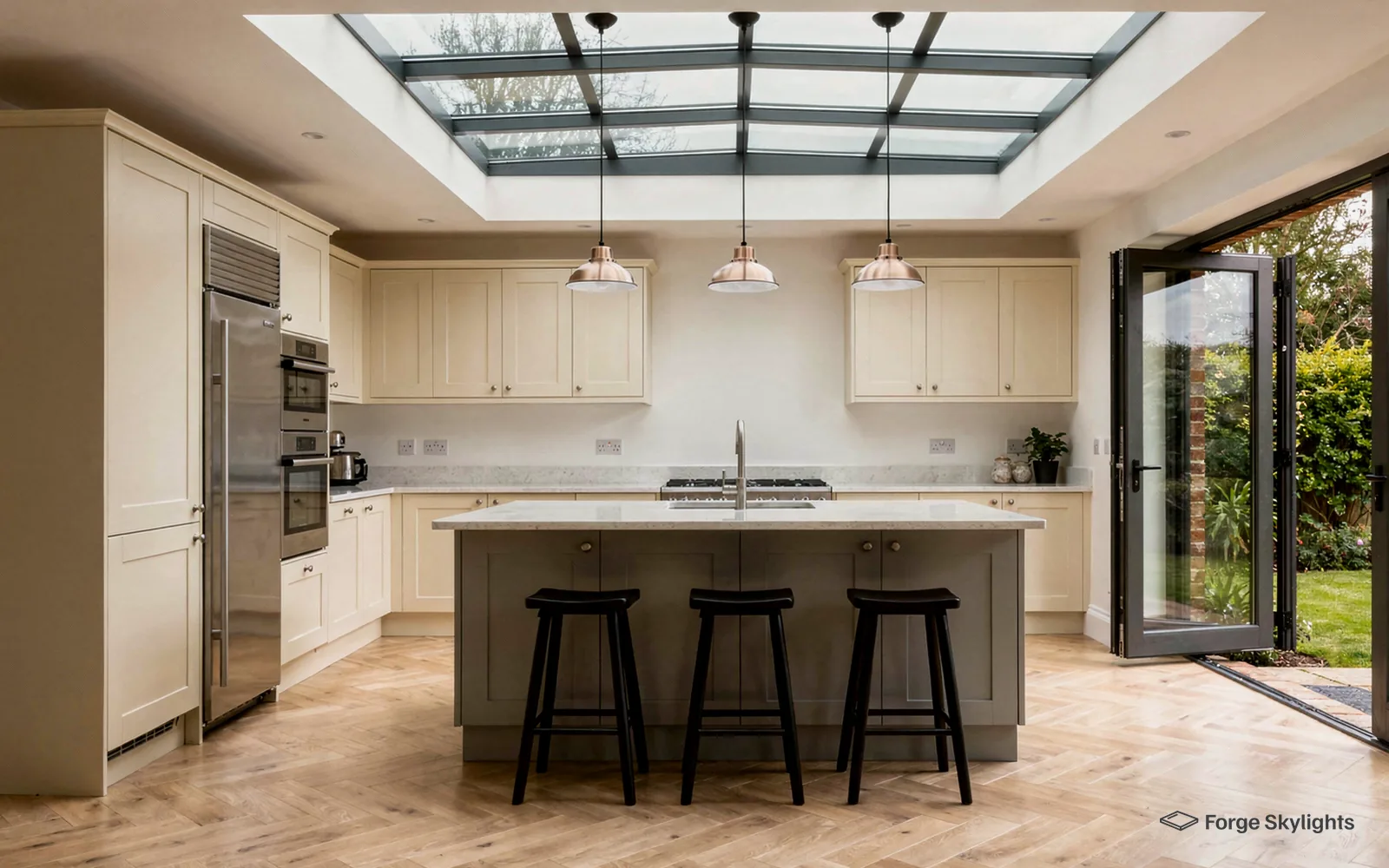
- 10-year workmanship guarantee
- Fitted to current Building Regulations
- Building Control notification handled
- Free survey and written quote
- Not tied to one manufacturer
Choosing a roof lantern
Which shape suits the room?
We look at the room below before the roof above.
Double or triple glazing?
Both are priced on the quote, and the difference between them is explained.
Will my flat roof take it?
We check the deck and the kerb at the survey.
The long read
Roof lanterns in Birmingham, compared
What decides the shape, the frame, the glass and the size of a roof lantern, and the way the options are compared in writing before any money changes hands.
Kerbs, flat roofs and Building Regulations
- Existing roof
- New roof
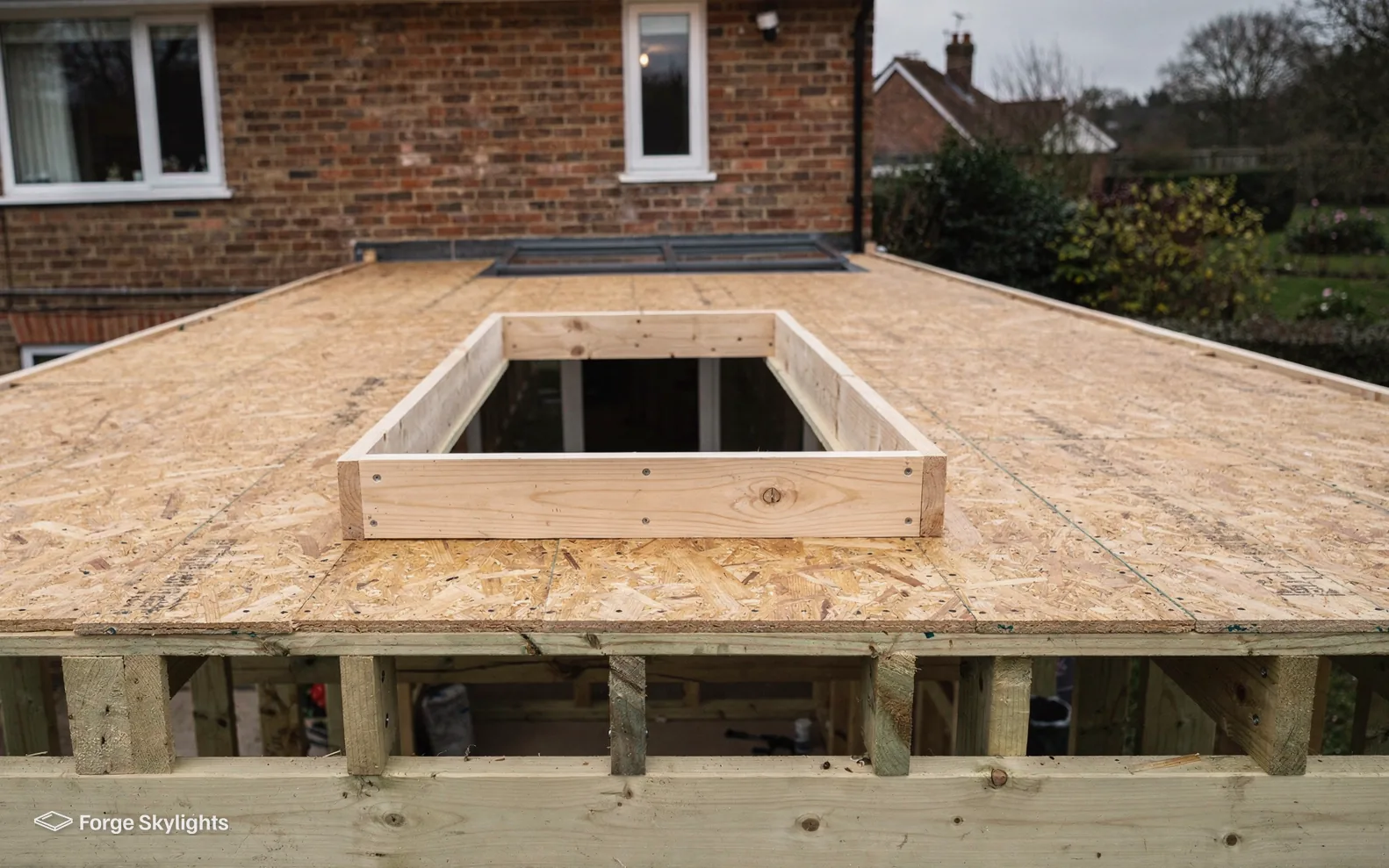
A roof lantern sits on a raised kerb above the flat roof, which keeps the glass clear of standing water and gives the roof covering something to turn up against.
At the survey we check the roof deck, its finish and its fall before we suggest a kerb height. A deck that is sound and dry can usually take a new opening. If the deck has gone soft, or the covering on it is well past its best, the plan for the lantern changes.
Whenever the lantern job is notifiable, the notice to Building Control comes from us.
Asked at the survey
Can a lantern go on my existing extension?
In many cases. It depends on the joists, the deck and the covering. Our answer on adding a lantern to an existing flat roof goes through each one.
New roof or existing roof
The easiest time to fit a lantern is while a flat roof is being built or re-covered. The opening is framed with the joists, the kerb is built on the new deck, and the covering runs up the kerb in one go. A roof that is already finished means cutting the covering back, trimming the opening between the joists, and then joining the new covering to the old all the way round the kerb. Both routes work, though the second asks more of a roof that was not built with a lantern in mind.
Where a builder is putting up your extension, we can supply and fit the lantern on the kerb they build, or build the kerb ourselves to the lantern you choose. Either way we agree the kerb size in writing first, because a lantern only sits right on an opening that matches it.
A lantern needs a new hole in the roof, and the Building Regulations treat forming that opening as building work. The joists either side of the opening carry the load the cut joists used to carry, so the trimming is sized for the span. On a lantern of any real size, the structural detail is requested before the lantern is ordered, not after.
For an existing home, Part L 2021 caps how much heat new glazing may lose. A lantern is classed as a rooflight and must reach 2.2 W/m²K. A roof window by contrast is rated on the WER scale (Band B) or at 1.4 W/m²K. Beside each lantern on the quote you will find the maker's stated figure, so it can be checked against the limit and against the other lanterns.
What the kerb does
The kerb lifts the lantern frame above the roof surface, carries its weight down into the joists and gives the roof covering a clean upstand to seal against.
Its height inside also matters. A taller kerb gives a deeper plastered box between the ceiling and the glass, which changes how the light spreads into the room. We show you the kerb detail on the quote so the finish inside is not a surprise.
Traditional, slimline or pyramid
- Traditional
- Slimline
- Pyramid
The three shapes on the same measures
Traditional
- Shape
- Hipped, with a ridge
- Glazing bars
- More, and deeper
- Sightline
- Busier
- Plan
- Rectangular rooms
- Look
- Suits period houses
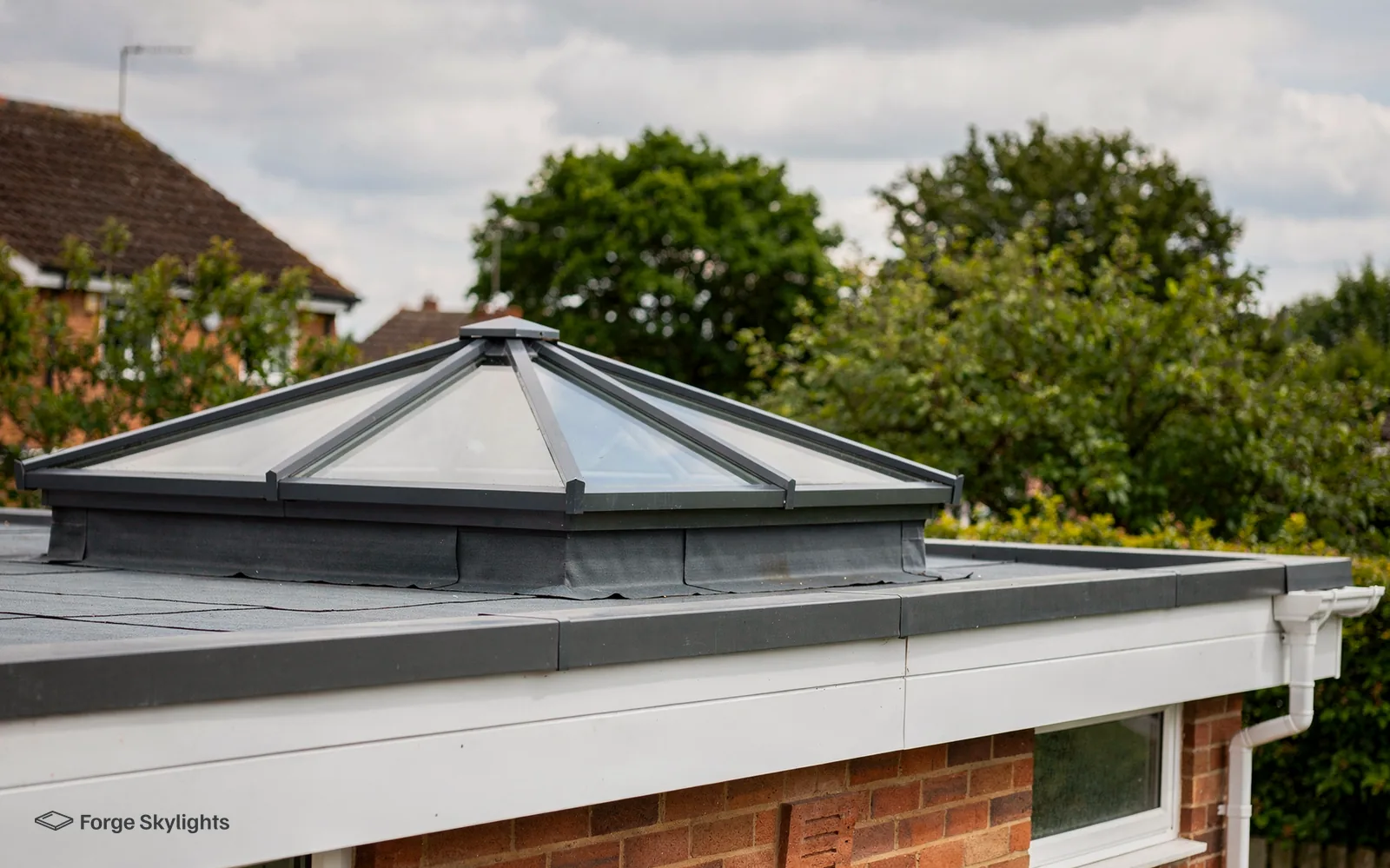
The classic lantern shape, with a ridge and deeper bars.
Slimline
- Shape
- Hipped, with a ridge
- Glazing bars
- Fewer, and slimmer
- Sightline
- Cleaner
- Plan
- Rectangular rooms
- Look
- Suits modern extensions
More glass and less frame for the same opening.
Pyramid
- Shape
- Four sides to a point
- Glazing bars
- Hip bars only
- Sightline
- Clean
- Plan
- Square rooms
- Look
- A strong centrepiece
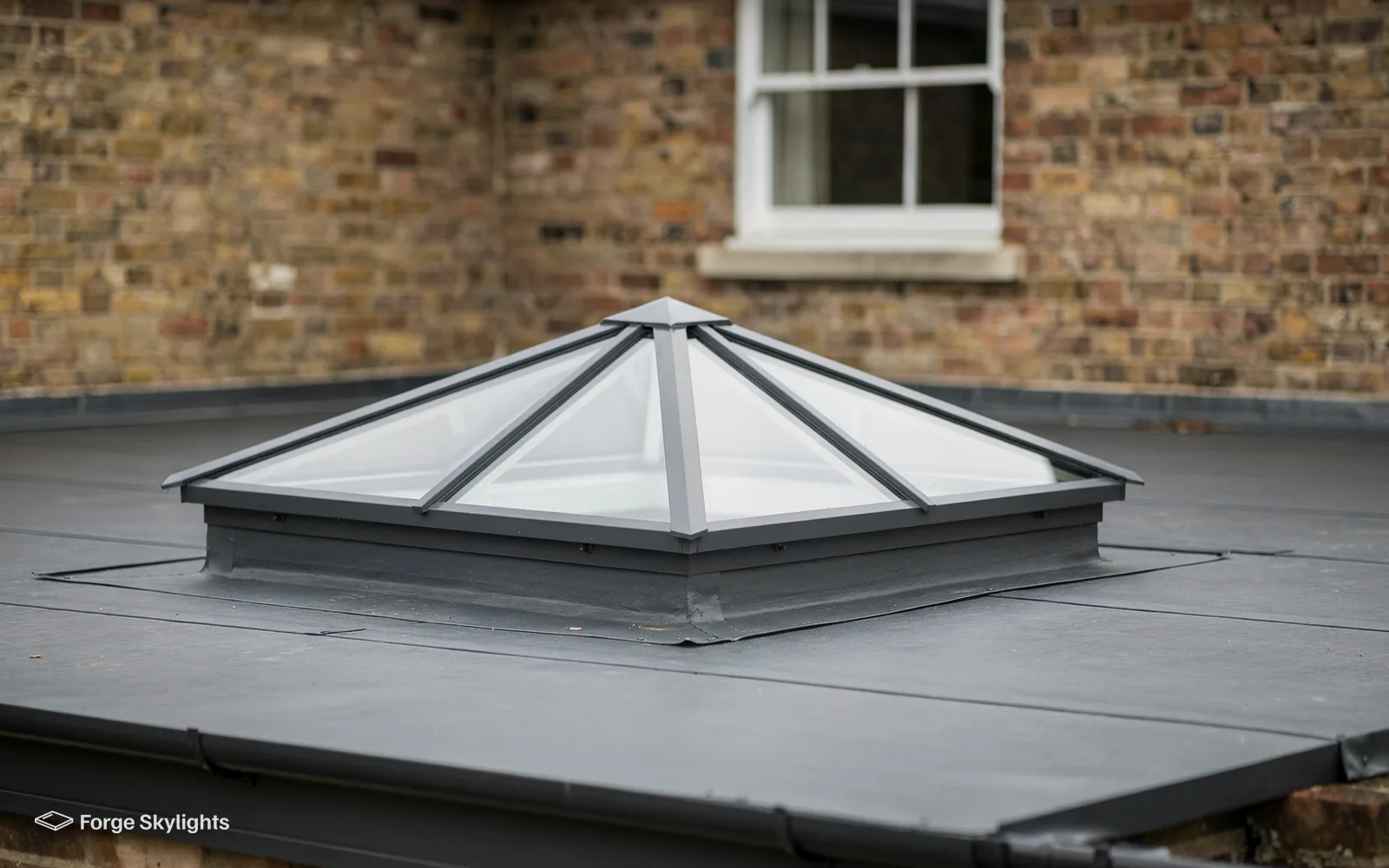
Best where the opening is square or close to it.
How we decide which shapes to quote
We start from the room. A long kitchen and dining room under a rectangular opening suits a hipped lantern, traditional or slimline. A square garden room or the middle of a square extension suits a pyramid. Where the opening could go either way, both go on the quote.
Then we look at the house. A traditional lantern with deeper bars sits comfortably on a Victorian or Edwardian terrace in Moseley or Kings Heath. A slimline frame often looks better on a newer, plainer extension. These are starting points rather than rules, and your own preference counts as much as the house.
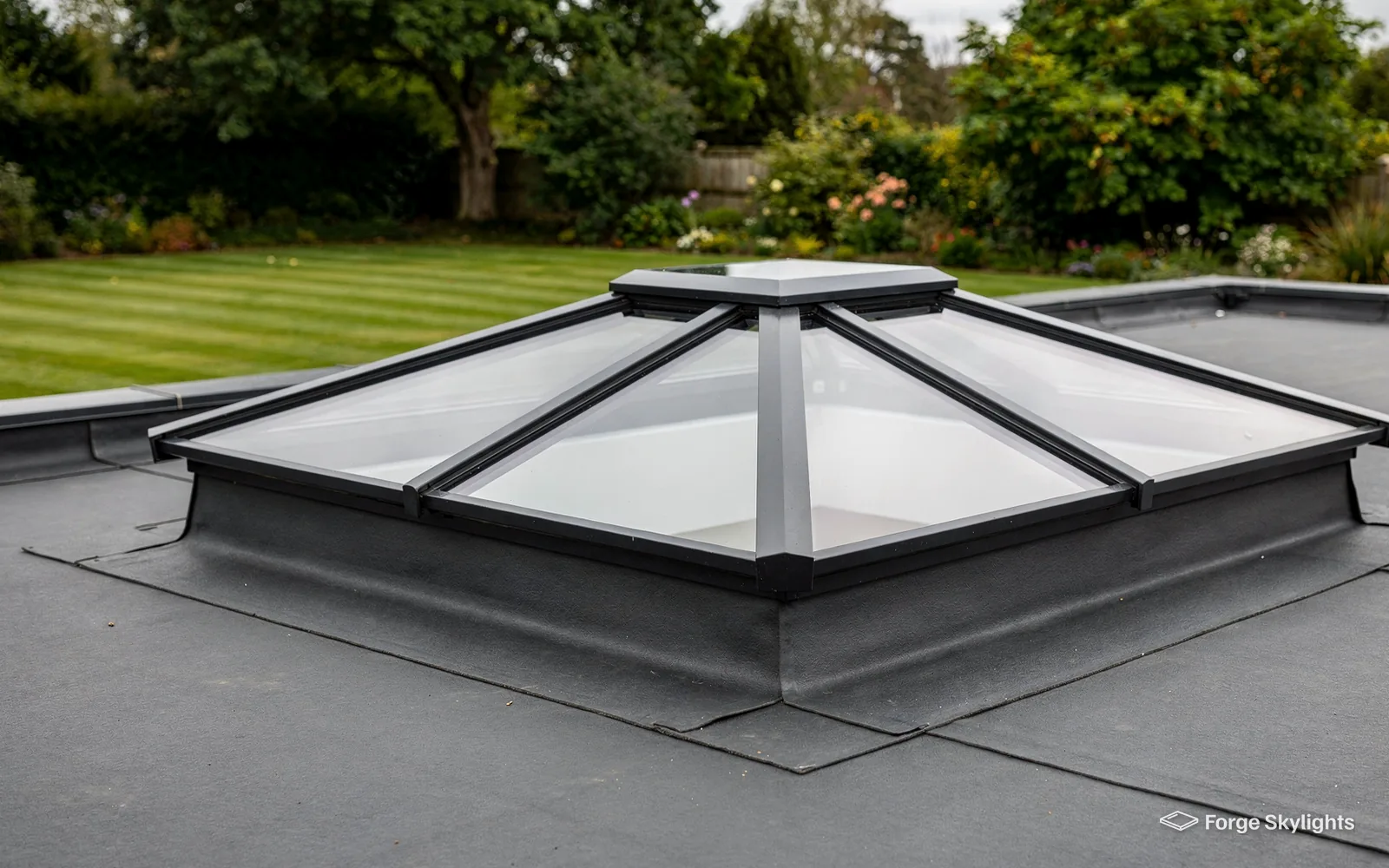
What changes between them
The glass area for the same opening changes with the bar count. A slimline lantern puts less aluminium between you and the sky, so more of the opening is glass. A traditional lantern has more bars, and some people like the rhythm they give the ceiling.
Price and lead time move too. A slimline frame usually costs more than a traditional one of the same size, and a made-to-measure pyramid can take longer to arrive than a standard rectangular lantern. Your quote states both for each option, taken from the maker at the time of quoting.
Height is the other difference you notice from the garden. A pyramid rises to a single point and can look tall on a small roof, while a long hipped lantern keeps a lower ridge over a bigger area. If neighbours look down onto your extension from upstairs windows, it is worth looking at the shapes from their side too, because the lantern will be part of their view as well as yours.
Aluminium or uPVC frames
- Aluminium
- uPVC
Aluminium
- Sightlines
- Slimmer
- Colours
- Wide range
- Strength
- Higher
- Price
- Higher
uPVC
- Sightlines
- Chunkier
- Colours
- Fewer
- Strength
- Lower
- Price
- Lower
Aluminium is strong enough to carry wide glass panels on slim bars, which is why it is the usual frame for a larger lantern. It is powder coated, often in grey or black, and can be ordered in other colours to match your windows and doors.
A uPVC lantern, usually with an aluminium core, costs less. The bars are wider, so you see more frame and a little less glass. On a smaller lantern over a utility room or a modest kitchen the difference is easy to live with, and the saving can be put towards the glass.
Where both frames suit the opening, both appear on the quote. Our guide to aluminium and uPVC roof lanterns lays the two out on sightlines, strength, U-value, colour, lead time and price.
Colour, finish and the view from inside
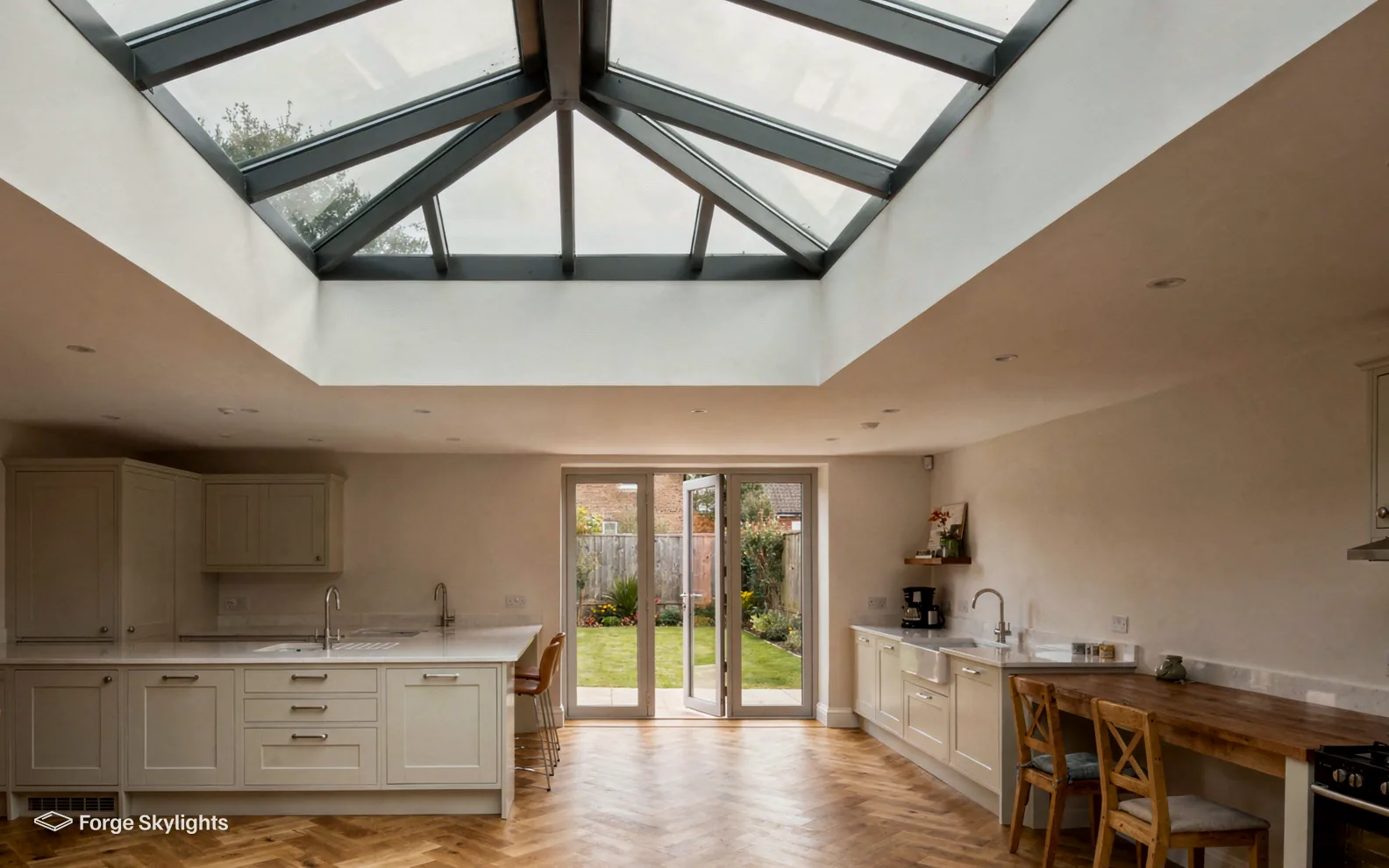
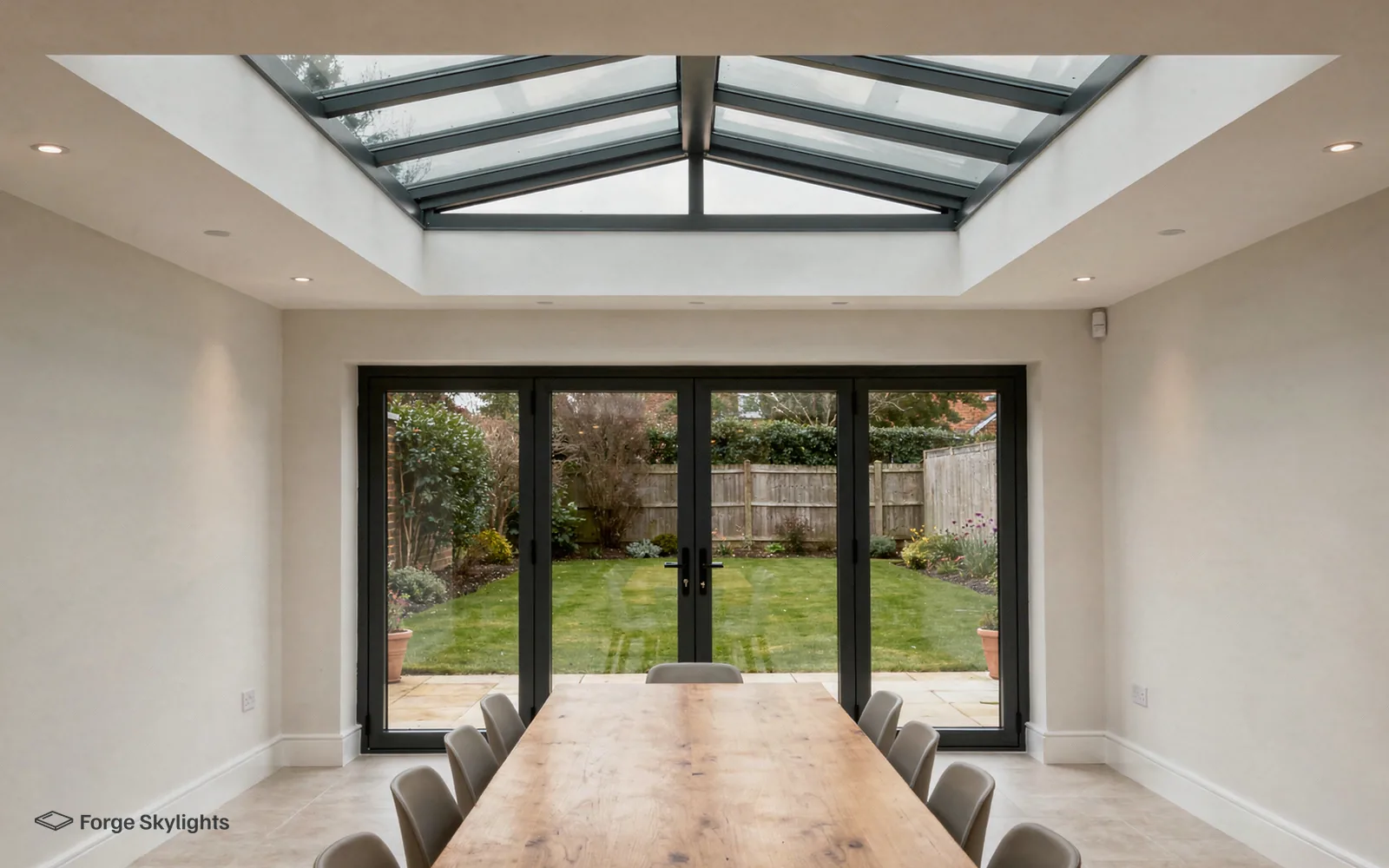
Frames are often a different colour on each face. A grey or black outside face matches the windows and doors, while a white inside face disappears against a white ceiling and makes the bars look slimmer from the room. Dual colour usually costs a little more and can add to the lead time, so it is priced as a separate line.
The inside face is the one you will look at every day. Before you choose, it helps to stand under the opening and look up, or to look at the photographs on the maker's own pages of the frame from below. If the maker supplies frame samples, they come with us to the survey, and you can hold an aluminium bar against a uPVC bar to see how much wider one is.
Whichever frame you pick, the joints between the bars and the ridge are sealed by the maker, and the lantern arrives with its own fixing instructions. We fit to those instructions, because the maker's warranty depends on it.
Glass: double, triple and solar control
- Double
- Triple
- Solar control
| Item | Double glazed | Triple glazed | Solar control coating |
|---|---|---|---|
| Heat kept in | Good | Better | Varies with the unit it is added to |
| Weight on the frame | Lighter | Heavier | No change |
| Summer heat | More gain | Slightly less gain | Much less gain |
| Light through | High | A little lower | A little lower, sometimes tinted |
| Price | Lowest | Higher | Added to either |
Asked at the survey
Which glass stops the room overheating?
A solar control coating does more for summer heat than a third pane. Where the extension faces south or west, our usual habit is to price the lantern with clear glass and with a solar control coating, which gives you the two to compare.
Self-cleaning and safety glass
The outer pane can carry a self-cleaning coating that breaks down dirt in daylight and lets rain wash it away. It helps on a lantern you cannot easily reach, though it still needs an occasional rinse.
The inner pane of a lantern is usually safety glass, and where it is laminated, a broken pane stays in place rather than falling into the room. The quote states which safety glass the maker uses for each unit.
Glass decides most of what a lantern feels like to sit under. A double glazed unit with a warm-edge spacer and argon gas can meet the Part L limit, and the maker states the figure for each lantern. Triple glazing keeps more heat in on a winter evening but adds weight, so the frame and the kerb have to be specified for it.
Glass also decides summer comfort. A large lantern over a south-facing kitchen in Hall Green or Solihull can make the room hot on a bright afternoon. A solar control coating reflects much of that heat while letting daylight through. Our page on energy efficient rooflights explains the coatings and the figures that makers publish for them.
On a north-facing roof, or under trees, the balance shifts. Summer heat matters less there, and some people would rather have the clearest glass and the best winter figure. That is why the glass is chosen for each roof, and why the same lantern can appear twice on a quote with two different glass specifications.
Fixed, or with opening vents
- Fixed
- Hand vent
- Electric vent
Asked at the survey
Does a kitchen lantern need to open?
Whether the room needs it depends on its windows, doors and extract fan, which we check at the survey. Often it is a comfort choice, because a vent at the top of the room is where the warmest air can escape.
Warm air rises, and in a kitchen extension it gathers in the lantern. On a still summer afternoon an opening vent at the top lets that air out while the doors bring cooler air in at floor level. Some households never open a roof vent; others use it every warm day.
A vent is usually one panel on the side of the lantern that tilts open on a hinge. On some lanterns it can be worked by a winding pole, on others by a motor operated from a wall switch or a handset, and on many electric versions a rain sensor closes it when the first drops land.
Each vent adds cost, takes a little glass area out of the side it sits in, and adds a motor or a pole to look after. The fixed and opening versions of the same lantern both go on the quote, so the cost and the lead time that the vent adds are plain to see. A vent can usually be chosen on either side of a hipped lantern, so we suggest the side away from the prevailing wind and clear of any overhanging tree.
The same lantern, three ways
Fixed
- Fresh air
- None from the roof
- Controls
- None
- Upkeep
- Glass only
- Price
- Lowest
Hand vent
- Fresh air
- When you open it
- Controls
- Winding pole
- Upkeep
- Hinges and seals
- Price
- Middle
Electric vent
- Fresh air
- At a switch
- Controls
- Switch, remote, rain sensor
- Upkeep
- Motor and seals
- Price
- Highest
Where the wiring goes
Before the kerb is plastered, a power supply has to reach any electric vent. We agree the switch position with you at the survey, and where an electrician is needed for the circuit we say so on the quote rather than leave it as a surprise on fitting day. Our page on electric and opening rooflights compares the motors and controls the makers offer.
Sizing a lantern to the room
- Stock size
- Made to measure
How we size it
Measure the room
We start from the floor plan and the ceiling height, because the lantern should sit in proportion to the room, not just fill the roof.
Find the joists
We locate the joists and their direction, which sets where an opening can go without trimming more than it needs to.
Set the kerb
The kerb's outside size is the size the lantern is ordered to. Its height comes from the roof build-up and the finish you want inside.
Match to sizes
We check the opening against each maker's stock sizes and price a made-to-measure lantern where no stock size fits well.
Confirm before ordering
After you choose, the opening is measured again on site ahead of the order, which means the lantern turns up ready to fit.
We size a lantern for the room you sit in, then check the roof can take it.
A stock lantern is made in standard sizes and is often quicker to get hold of. If your opening is being built new, we can sometimes size the kerb to a stock lantern and save you money. A made-to-measure lantern is built to the opening you have, which matters when the extension is already finished and the joists set the limits.
A lantern that covers a large share of a small roof can feel bright but overpowering, and one that is too small over a long room leaves the ends dark. Our guide to roof lantern sizes and how to choose one goes through the measurements we take and how they turn into an order size.
We also think about what sits under the lantern. Centring it over an island or a dining table gives the room a clear focus, and lining it up with the doors to the garden ties the inside to the outside. Sometimes the joists make that awkward, and we will tell you where the lantern can and cannot go before you set your heart on a position.
Planning, cost and lead times
- Permission
- Price
- Lead time
Planning permission
Permitted development can cover a roof lantern, and the conditions it has to meet are laid out in our rooflight planning guide. A lantern stands well above its roof, so it is the product most likely to fall outside those conditions and need an application, and our answer on whether a roof lantern needs planning permission applies them to lanterns.
Listed building consent is required for any new rooflight on a listed building, no matter what permitted development says elsewhere. The right can also go if an earlier planning permission carried a condition against it, or if an Article 4 direction applies, so at the survey we look into what governs your address and report back to you. The council makes the decision.
Across Birmingham, some streets in Moseley, Edgbaston and Harborne sit inside conservation areas. A lantern on a rear extension frequently cannot be seen from the street, yet the rules for your address still have to be checked. Should an application be required, we can provide the lantern drawings and product details for it.
What goes into the price
A lantern price is built from the lantern itself, its glass, the kerb, the roof covering around it, any trimming of the joists and the plaster finish inside. The quote itemises every one of those lines under each option, which lets you follow the money from line to line.
Our answer on how much a roof lantern costs to fit explains each part. Torn between a lantern and a flatter unit? Our answer on a roof lantern or a flat rooflight sets the two against each other.
- Each lantern priced on its own line
- Lead time for each lantern, as its maker states it
- The permission position for your address
Lead times
Lead times vary from maker to maker and shift through the year. Stock lanterns often reach site earlier than made-to-measure ones, and a special colour or a solar control coating can add time. For every option the quote shows the range the maker gives on the day it is written, so you can decide if getting a lantern sooner is worth more to you than choosing another model.
We book the fitting once the lantern has a delivery date. Where the lantern is part of a new extension, we agree the date with your builder so the opening is ready and dry when the lantern arrives.
Weather plays its part. Heavy rain or strong wind stops glass being installed, so the fitting date can shift with the forecast. We keep you told, and the opening stays covered until the lantern is in.
Fitting day and the finish inside
- Kerb
- Glazing
- Plaster
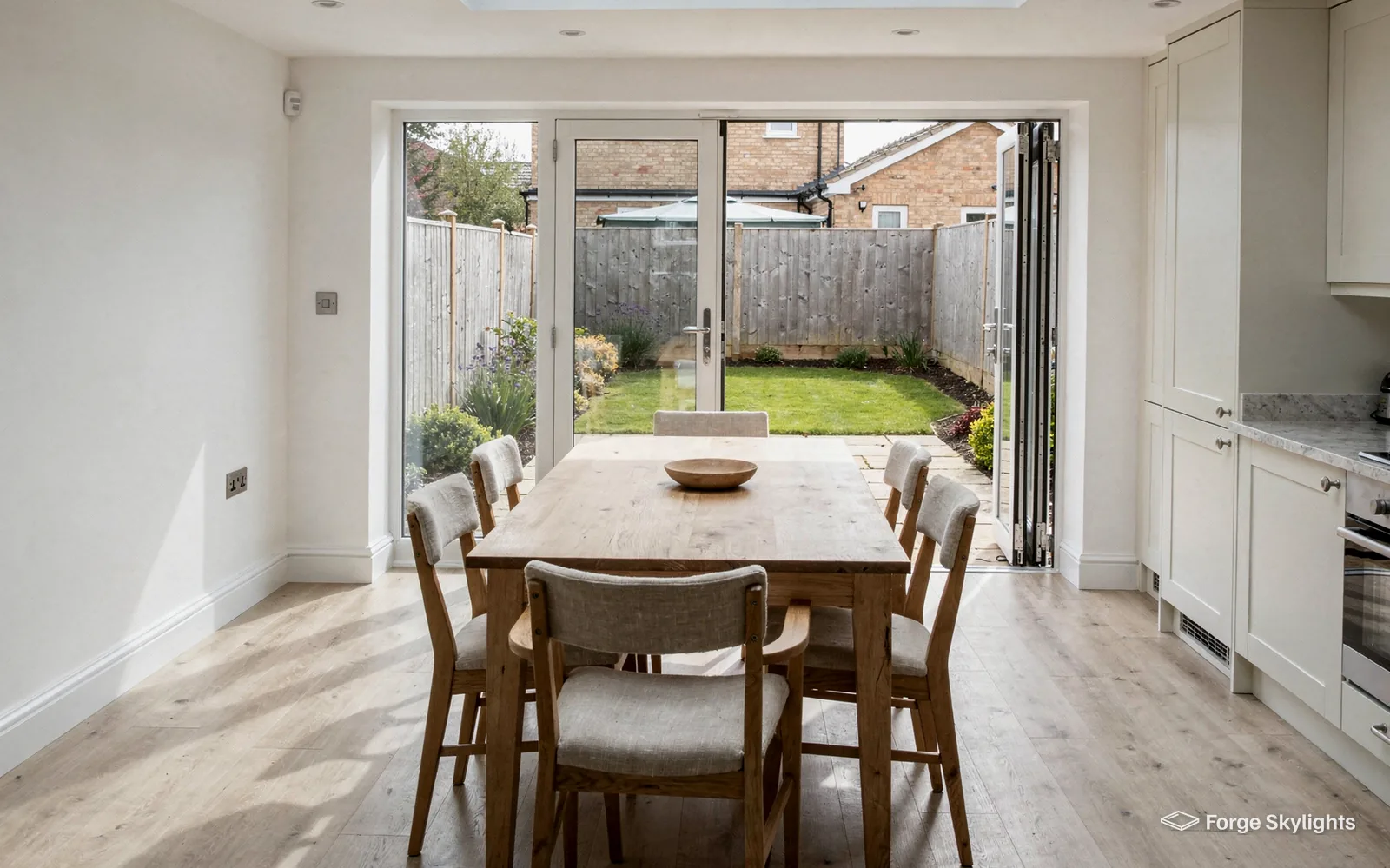
A typical fitting starts by making the opening safe and weathertight, which keeps the room below protected if the weather turns. The lantern frame is fixed to the kerb, the glass goes in, and the roof covering is dressed up the kerb and sealed.
Indoors, the kerb gets a lining and a plaster skim, which makes the light box read as a natural part of the ceiling. Some people add a light strip or spotlights in the kerb. If you want those, tell us at the survey so the cable goes in before the plaster.
Asked at the survey
Can you replace an old polycarbonate lantern?
The old lantern comes off, the kerb and the surrounding roof are inspected, and we quote glass lanterns that fit the opening or a slightly altered one. Taking out the entire lantern, frame and glass together, is a notifiable job, and the notification is ours to make.
After it is fitted
When the visit ends we tidy the site, demonstrate any vent or blind, and pass you the maker's paperwork and, where the work was notifiable, the Building Control certificate.
A 10-year workmanship guarantee stands behind the fitting, while the maker's own warranty continues to cover the lantern and its glass. Details of the cover are on our guarantee page.
Looking after a lantern is simple: rinse the glass now and then, clear leaves from the roof around the kerb, and check the roof covering when you check the rest of the roof.
Replacing a tired lantern
Older lanterns on Birmingham extensions are often timber or early uPVC with polycarbonate sheets, and many have gone cloudy, brittle or draughty. Replacing one is a good moment to rethink it rather than copy it. The opening may suit a slimmer frame and more glass, the kerb may need raising to give the new covering a proper upstand, and the glass specification can follow how the room is used today.
If the sealed glass units alone have misted and the frame is in good order, reglazing the lantern is sometimes possible. That is not notifiable, and it costs less. A frame that has failed itself points to a whole new lantern as the better buy. How we judge which of the two applies is explained on our misted and failed rooflight replacement page, and both routes can sit together on one quote.
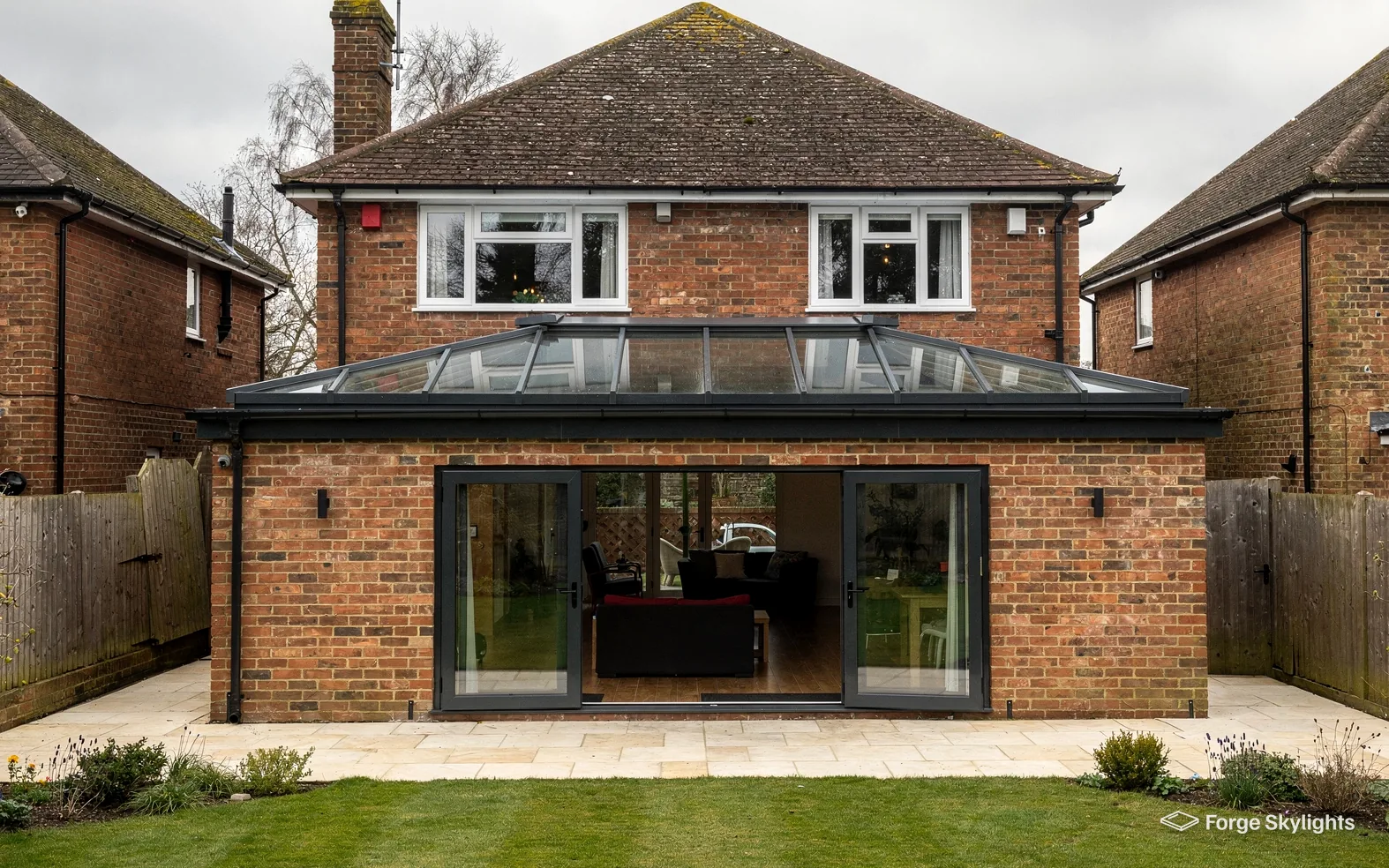
Ready to see the lanterns that suit your extension? Book a free survey and the lantern choices will be set out together in your written quote.
Book a free surveyOur simple process
- 1
Free survey
We measure the room and the flat roof.
- 2
Options side by side
We compare lantern shapes and glazing.
- 3
You choose
Pick the lantern that fits your home.
- 4
Fitted, signed off, guaranteed
Installed to regulations, with a written guarantee.
Roof lantern questions
Could my roof lantern go in without a planning application?
Permitted development may cover it, with the conditions to meet set out in our rooflight planning guide, and since a lantern rises well above its roof we test its height against those conditions with extra care. Listed status, a condition in the property's planning history or an Article 4 direction could alter the picture. Your address is checked on our side, and the final answer comes from the council.
How long does a lantern take to arrive?
How soon it arrives turns on who makes it, how big it is and which glass is chosen. Stock lanterns usually reach you before made-to-measure ones do. On the quote, each option carries the range its maker normally gives at the date of writing.
Can you replace an old polycarbonate lantern?
We can. We take the old lantern out first, inspect the kerb together with the roof covering around it, and then quote glass lanterns to suit the opening. Taking out the whole lantern, frame and glass together, is a notifiable job, and we send the notification to Building Control.
Which glass stops the room overheating?
A solar control coating does the most for summer heat. Clear glass is normally priced beside it, which lets you weigh the cost against the difference in light. See our page on energy efficient rooflights.
Can a roof lantern open?
Many lanterns can have one or two opening vents, worked by hand or by a motor, with rain sensors on some models. If you want fresh air from the roof, we quote opening and fixed versions side by side. Our page on electric and opening rooflights covers the choices.
Should I choose a lantern or a flat rooflight for my extension?
Neither wins in every room: the lantern brings height and a bright centre to the ceiling, and the flat rooflight stays low profile and tends to cost less. Our answer on a roof lantern or a flat rooflight compares them side by side.
How do I keep a roof lantern clean?
Rinse the outside with clean water and a soft brush on a pole from a safe position, or ask a window cleaner with a water-fed pole. A self-cleaning coating helps between rinses. Inside, a damp cloth on the frame and the glass is enough. Avoid abrasive pads, which can scratch coatings.
Will the lantern be the same make as my builder suggested?
It can be, if it suits the roof. No single maker holds us, which is why we also quote alternatives that fit the same opening and leave the choice with you. If your builder has already drawn a particular lantern on the plans, we price that one first, then line the others up against it on the same measures, so the comparison is fair and you can see what, if anything, you would gain by changing.
Guides and answers
 Guide · 9 min readRoof lantern sizes and how to choose the right oneA roof lantern is sized from the room below and the flat roof above, then matched to what the makers build.
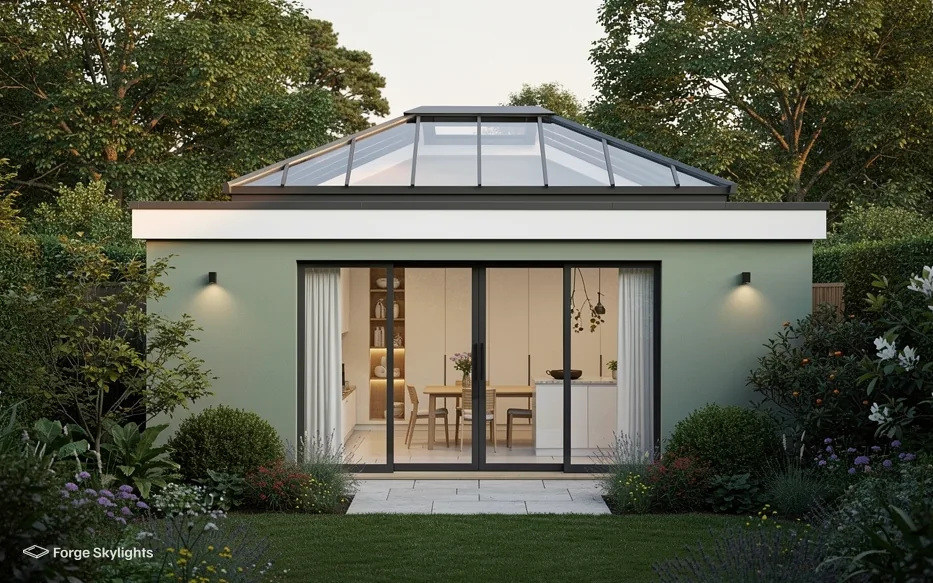 Guide · 12 min readAluminium or uPVC roof lantern: the two comparedAluminium and uPVC both make good roof lanterns, and they give ground in different places.
 Answer · 4 min readHow much does a roof lantern cost to fit?A roof lantern price is built from six parts: the lantern itself, its glass, the kerb, the roof covering around it, any…
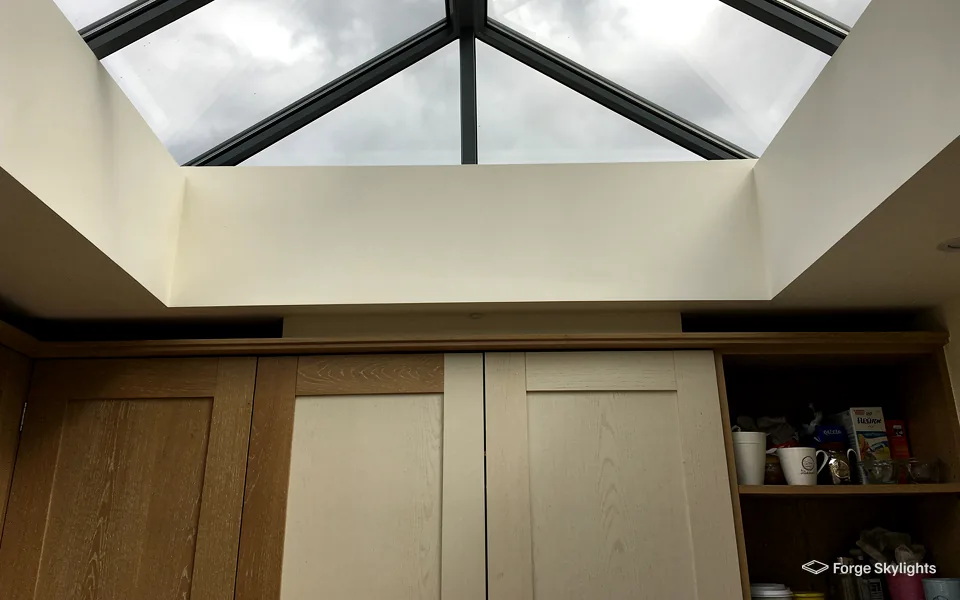 Answer · 5 min readDoes a roof lantern need planning permission?A roof lantern on a house is often covered by permitted development, but only within the conditions of Class C of the…
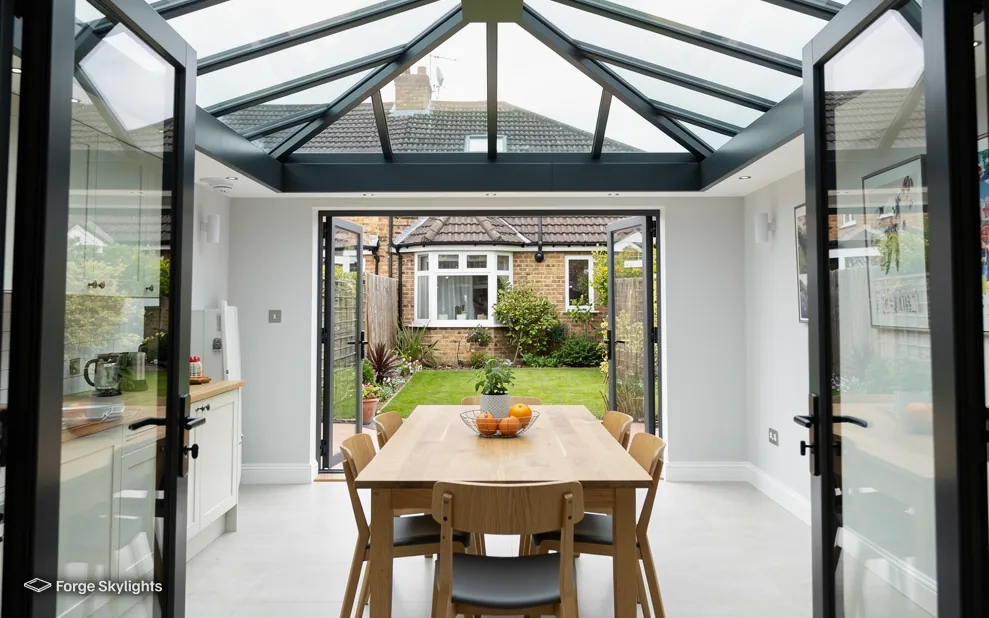 Answer · 4 min readRoof lantern or flat rooflight: which suits your extension?Choose a roof lantern if you want the extension to have a visible feature with light coming in from several sides, and…
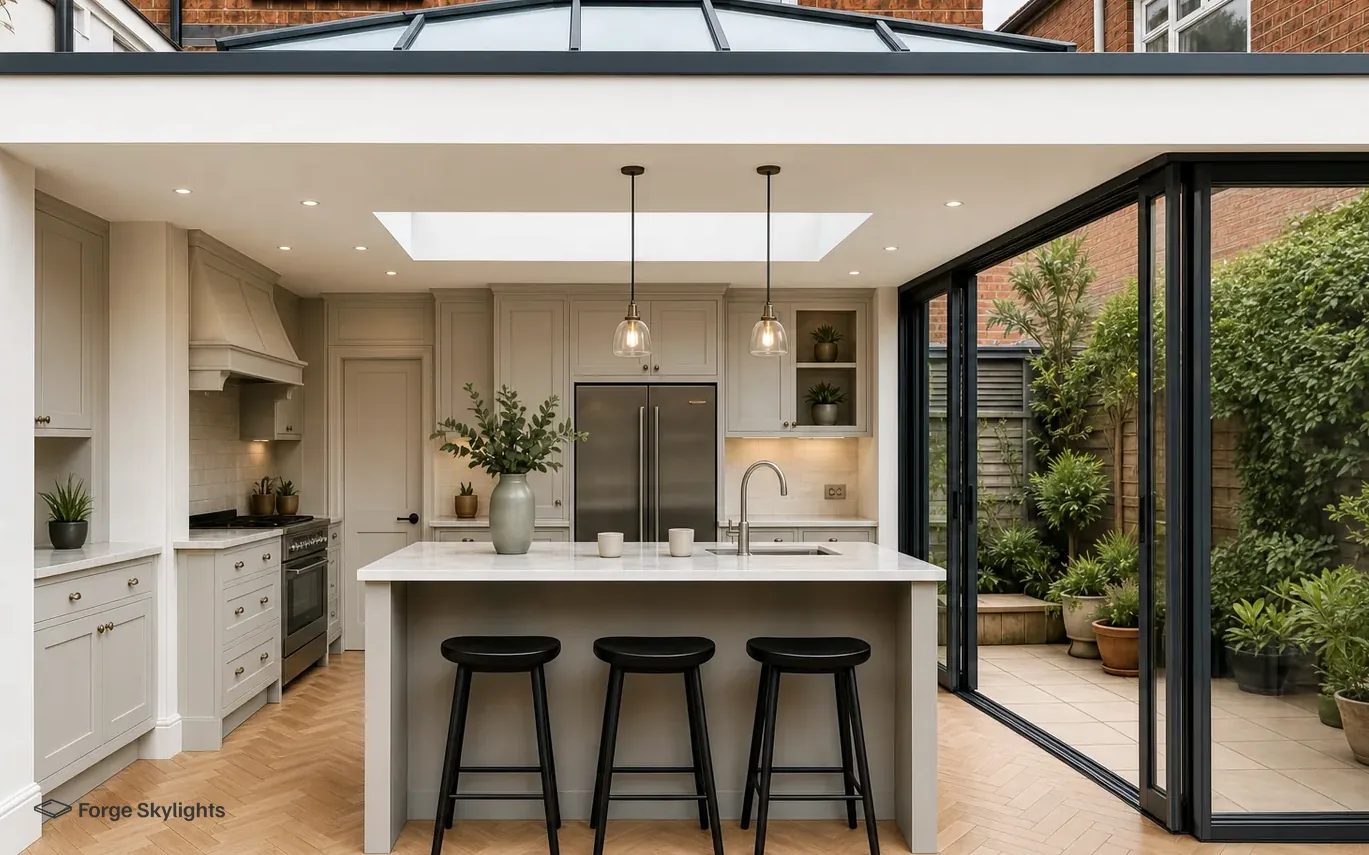 Answer · 4 min readCan a roof lantern be fitted to an existing flat roof?Yes, a roof lantern can be fitted to a finished flat roof, provided the structure under it can carry a new opening…
Book your free survey
It starts with a free survey and plain advice. No pressure, just clear options for your home.
Fill in the form and we will be in touch to arrange a convenient time.