The short answer
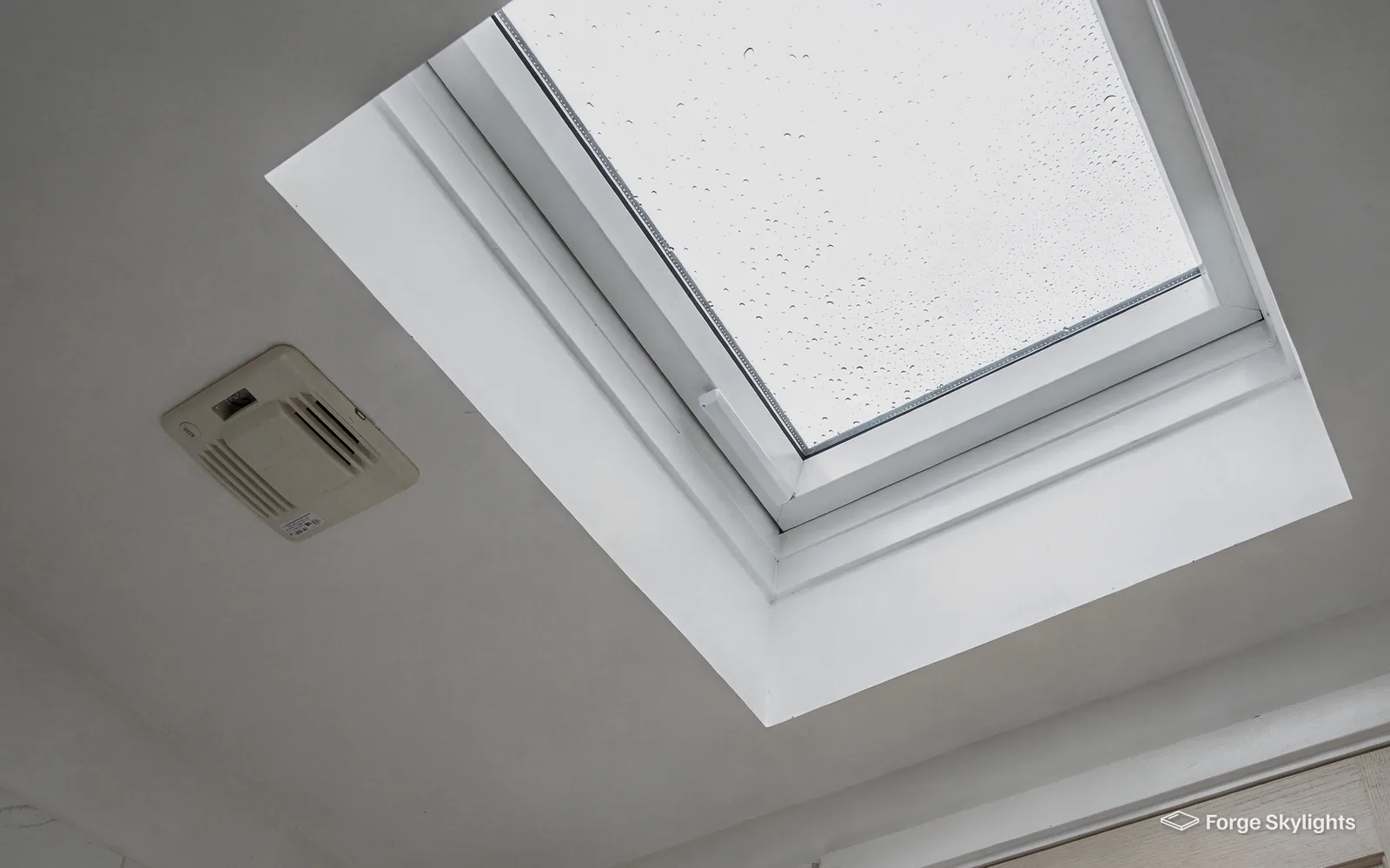
Condensation forms on the inside of a rooflight when warm, damp room air meets glass that is cooler than the air can stay damp at. The glass is usually the coldest surface in the room, so it shows the moisture first. Better glazing and a warm-edge spacer reduce it, and so does moving damp air out of the room, but no rooflight removes it altogether.
What is happening on the glass
Air holds water vapour, and warm air holds more than cool air. When that air touches a surface cold enough, the vapour turns to droplets. You see the same thing on a bathroom mirror or a cold bottle.
A rooflight is a cold surface by its nature. It faces the open sky, loses heat to it overnight, and has less insulation behind it than the ceiling around it. Cooking, showers, drying clothes and simply breathing all add vapour to the room, and it rises toward the roof where the glass is.
A film of moisture on the inner face on a cold morning that clears as the day warms is surface condensation. It is common, and it is not a sign that anything is wrong with the unit.
Inside the glass or outside it
Where the moisture appears tells you what is going on. Our answer on why a rooflight is misted covers the second case in full.
| Item | On the room side | Between the panes | On the outside face |
|---|---|---|---|
| What it looks like | Fine droplets or a mist that wipes away | A haze or marks you cannot wipe | A mist that clears as the day warms |
| Cause | Damp room air meeting cool glass | A failed seal in the sealed unit | Clear night sky cooling the outer pane |
| Does the unit need work? | Usually no | The sealed unit is replaced | No, it shows the glass insulates well |
| What helps | Ventilation and better glazing | A new sealed unit | Nothing is needed |
Mist on the outside face surprises people, but it means the outer pane is staying cold because little heat escapes through it. It is a side effect of good insulation.
What the glazing changes
The warmer the inner pane stays, the less often moisture settles on it. Three parts of the unit decide that: the number of panes, the coating and the spacer.
A double glazed unit keeps its inner pane warmer than a single pane would be. Triple glazing keeps it warmer still, though it costs more and weighs more. A low emissivity coating sends heat back into the room, which also helps the inner pane stay warm.
The spacer is the strip that holds the panes apart around the edge. A traditional aluminium spacer conducts cold across the edge, which is why a ring of moisture often forms at the margin of an older unit. A warm-edge spacer is made from a material that conducts much less, so the edge of the inner pane stays closer to room temperature.
The frame matters too. A frame with a thermal break stops cold from travelling through to the inside face, so the line of condensation that often gathers along an old frame forms less readily.
Our answer on how much heat skylights lose looks at the same glazing choices from the point of view of heating.
What you can do in the room
Glazing does only part of the job, because the vapour has to go somewhere. These habits make the most difference:
- Run the extractor fan in a kitchen or bathroom during use and for a while after
- Keep internal doors closed when cooking or showering so vapour does not drift upstairs
- Dry washing outside or in a vented room where you can
- Open a window for a short spell in the morning rather than leaving a trickle vent closed for days
A blind pulled across a rooflight at night traps a layer of cold air between blind and glass, so condensation can build up behind it. Opening the blind in the morning lets the room air move across the glass and dry it.
A room with a very large glazed area and no way to ventilate it will mist more than one with an opening vent. Electric and hand-opened rooflights both let you clear damp air from a room fast, and the quote puts them next to each other so the difference in cost is clear.
When it is worth asking us to look
Moisture that appears only in cold weather and wipes off is part of living in a house. Moisture that stays, marks on the glass you cannot clean, or damp staining on the plaster around the opening are worth having looked at, because they can point to a failed seal or water getting in at the edge.
The free survey is where we examine the glass, the frame, the kerb or upstand and the plaster around it, then report back on what turns up. A failed sealed unit can often be replaced on its own, leaving the frame as it is, and a glass-only swap of that kind is not notifiable. Taking out the whole rooflight does need notifying, and the notification to Building Control is one we lodge.
- Spacer and coating named in each quote
- Frame checked for a thermal break
- Ventilation options priced alongside the glass
To take the next step, book a free survey and the glass and ventilation options for your roof will be set out together. Our guide to replacing a misted sealed unit explains what that job involves.
Related questions
Is condensation on a skylight a sign it is faulty?
Droplets on the room side that clear during the day are surface condensation, and they come from the room air rather than from a fault in the unit. A haze between the panes is different: that points to a failed seal.
Will triple glazing stop my rooflight misting?
It makes it less likely, since the inner pane stays warmer, but it cannot promise a dry pane in a room that produces a lot of vapour. Ventilation still matters.
Why does my rooflight mist more than my windows?
Warm air rises, so more vapour reaches the roof, and a rooflight faces the cold sky and loses heat quickly. Both push the glass temperature down further than a wall window beside it.
Can condensation damage the plaster around a rooflight?
Water that runs off the glass and sits on a frame or sill can stain or lift paint over time. Wiping it away and ventilating the room reduces this, and a survey will show whether the cause is the room or the rooflight.