Misted and failed rooflight replacement in Birmingham
Every replacement option, side by side.
Misted, cracked or draughty rooflights across Birmingham, with new glass and a whole new rooflight compared on the same measures in one written quote. Free survey.

- 10-year workmanship guarantee
- Fitted to current Building Regulations
- Building Control notification handled
- Free survey and written quote
- Not tied to one manufacturer
Replacing a failed rooflight
Does the whole rooflight have to go?
Sometimes only the sealed glass unit needs to change, and we check the frame before we say.
Does a replacement need Building Control?
A whole new rooflight is notifiable and a glass-only swap is not.
Will the new one fit the old opening?
We measure the kerb and the opening, then quote units that sit on them properly.

The long read
Misted and failed rooflights in Birmingham, compared
A failed seal tells you something specific, and this long read covers when new glass is enough, when the whole rooflight should go, and how the routes are set alongside one another while you have still spent nothing.
What mist between the panes means
- Failed seal
- Surface damp
A modern glass rooflight is built around a sealed double-glazed unit: two panes held apart by a spacer, with sealant round the edge and a drying agent inside. When that edge seal gives up, damp air gets into the gap and the drying agent can no longer cope. The cloud, droplets or water marks that follow sit between the panes.
That is why wiping the glass from inside the room does nothing. The mist is in a sealed space you cannot reach, and it tends to return in cool weather and clear in warm weather until the unit has filled up.
Our answer on why a rooflight mists between the panes goes through the cause in more detail.
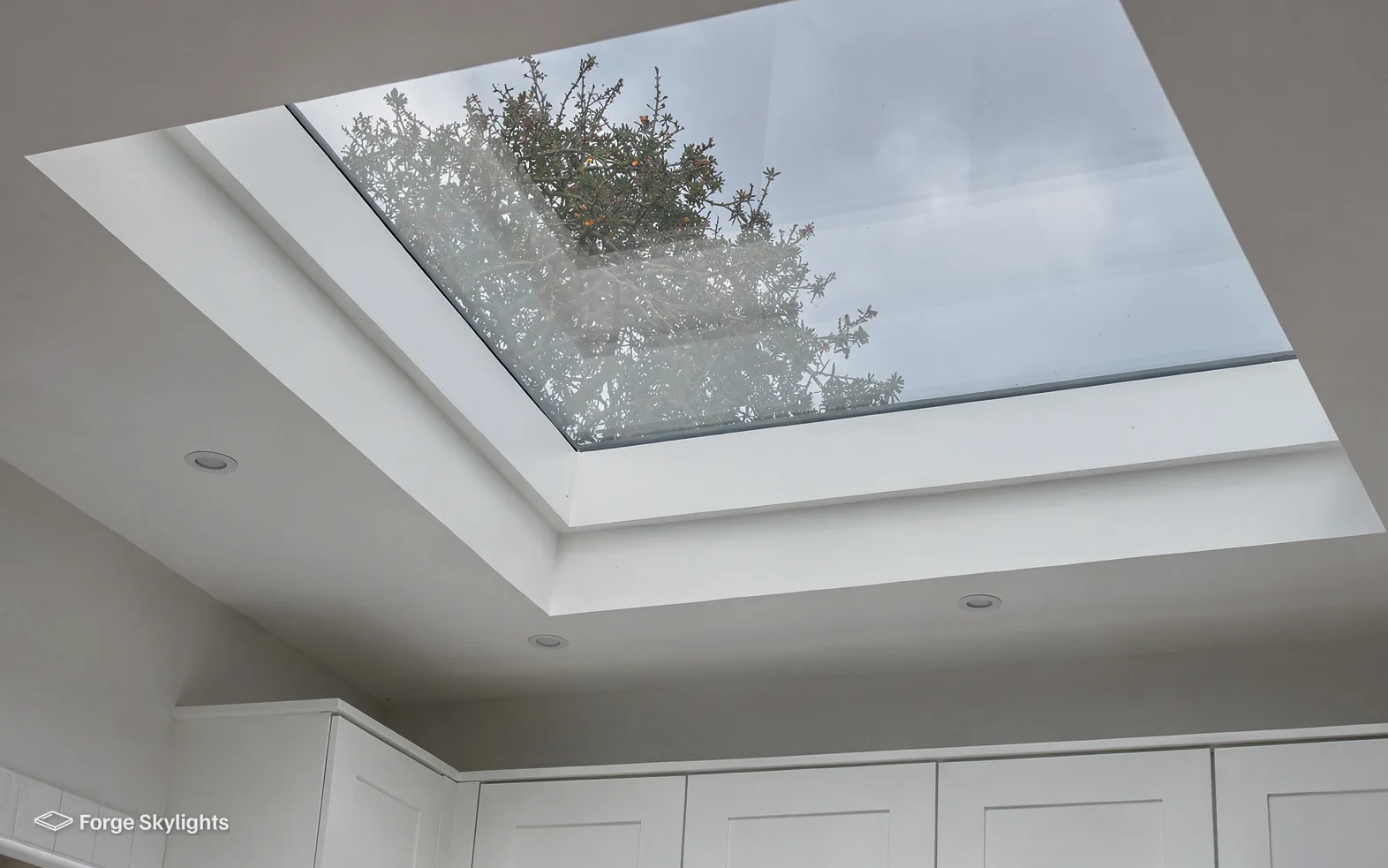
Asked on a measuring visit
Is the mist harming the roof?
The mist itself sits inside the glass. The frame, the kerb and the ceiling around it are what we inspect for damp, because a failed unit can sit in a frame that has its own problems.
Failed seal or surface condensation
Water on the room side of the glass is a different problem from mist between the panes. Condensation forms on the inside face when warm, damp room air meets a cold surface, and it wipes away. It is common in bathrooms and kitchens and on single-glazed or polycarbonate rooflights, and it says something about the room rather than the unit.
Mist between the panes stays whatever you do inside the room. If you wipe the inner face and the cloud is still there, the seal has failed. If the cloud clears under your cloth, you are looking at surface condensation, and the fix is ventilation or better glass, which we cover in our page on condensation on rooflights.
At the survey we look from both sides where we can. A rooflight can have both problems at once, a failed unit above a bathroom, for instance, and the two want different answers.
A quick check you can make before we visit: look at the glass in the morning and again in the afternoon. A unit that is clear in the warm afternoon and cloudy in the cool morning is usually in the early stage of failure. A unit that is permanently cloudy, or shows a tide line of dried residue on the inner pane faces, has gone further.
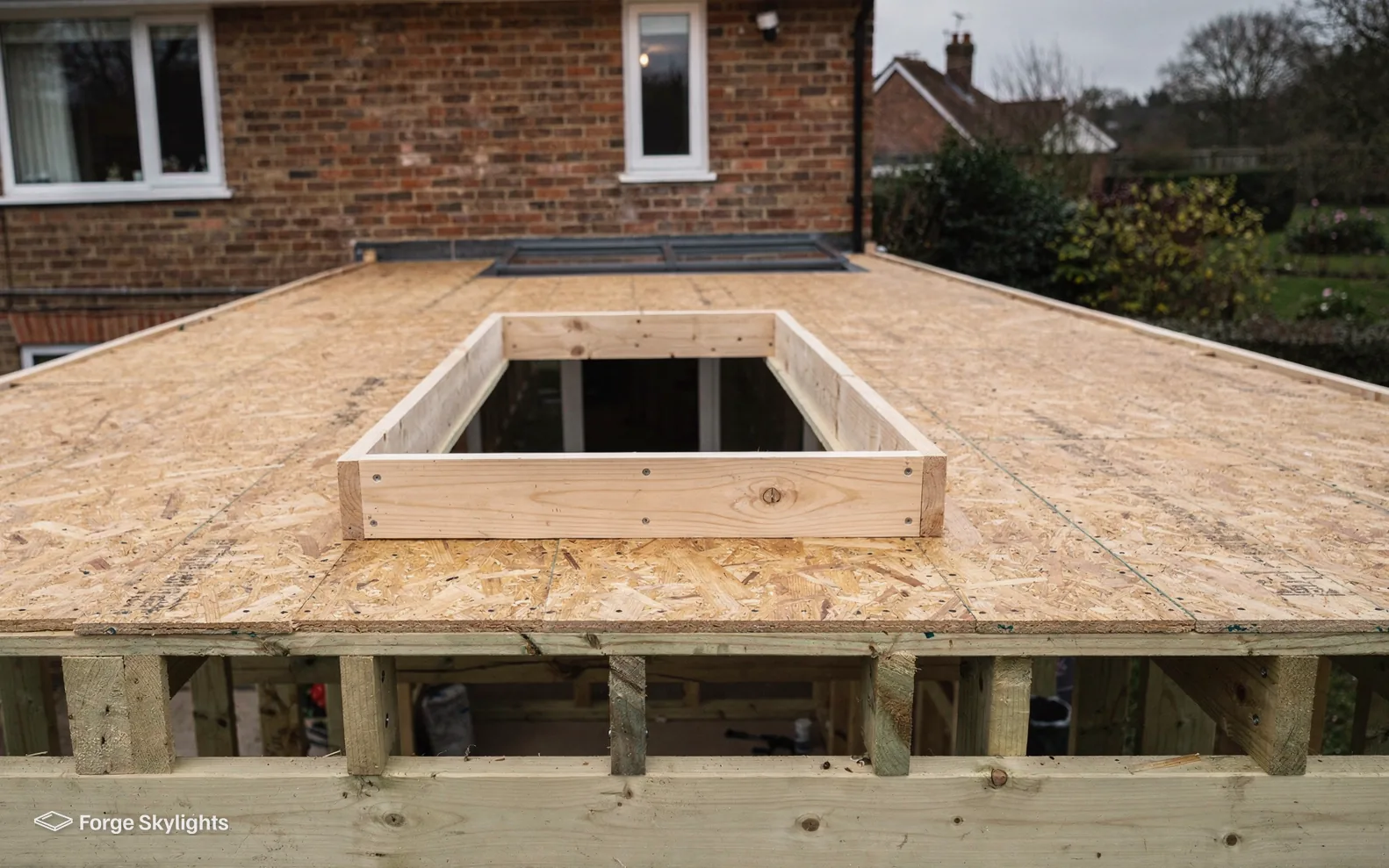
Why the kerb comes into it
A misted unit often belongs to a rooflight that is old enough for the kerb and the roof covering to have aged too. Looking at the glass alone would miss that.
So the survey includes the upstand, the junction with the roof covering and the underside of the ceiling lining. If those are sound, a glass-only job stays on the table. If they are not, the quote shows the whole rooflight and the kerb work beside it.
New glass or the whole rooflight
- New unit
- Like for like
- Upgraded
The three routes on the same measures
New sealed unit
- Replaces
- The glass unit only
- Frame
- Stays in place
- Notifiable
- No
- Cost
- Lowest of the three
- Best when
- The frame is sound
A made-to-measure unit is ordered once we have measured the opening.
Like-for-like rooflight
- Replaces
- Frame and glass
- Frame
- New, same style
- Notifiable
- Yes
- Cost
- Middle
- Best when
- The frame is tired
Same footprint and look, with current glass and a fresh frame.
Upgraded rooflight
- Replaces
- Frame and glass
- Frame
- New, new style
- Notifiable
- Yes
- Cost
- Higher
- Best when
- You want a change
A different type or size, such as an opening or a frameless unit.
When new glass is enough
If the frame is straight, the gaskets and the fixings are in good order and the opening mechanism still works, replacing only the sealed unit gives you a clear rooflight again for less. The frame stays, so there is less to disturb on the roof, and the glass comes in at today's performance.
Our guide to replacing the sealed unit or the whole unit sets the two jobs next to each other in more detail.
When the whole rooflight should go
A frame that has corroded, warped or lost its coating will fail a new unit in time. Some rooflights also have the glass bonded to the frame in a way that makes a glass-only swap awkward or impractical.
In those cases we quote the whole rooflight, and put a like-for-like version beside an upgraded one, so you see what a change of type would bring.
How we decide what goes on the quote
We start with the frame, because it decides whether new glass has anything sound to sit in. We check it for straightness, for corrosion or cracking, for the condition of the seals and for how the rooflight opens, if it does.
Then we measure the opening and the unit so that each option on the quote is sized to the real roof rather than to the drawing from the day it was first fitted. Many older rooflights were made to measure, and the size on the label is not always the size in the roof.
Where only the glass is failing, we still price a whole replacement beside it when the frame is old, so you can see how much more it is and decide with the figures in front of you. Where the frame has clearly gone, we say so and quote the whole rooflight.
No single maker holds us to its range. Where the roof permits, units from different makers sit together on the quote and are lined up measure for measure, covering lead time, opening, frame and glass.
Signs a rooflight has reached the end
- Glass signs
- Frame signs
- Opener signs
Mist is the sign most people notice, but it is rarely the only one. A rooflight that is failing tends to show several, and the mix tells us which route to quote. Our answer on how to tell if a rooflight has failed ranks them from a glass-only job up to a whole-unit replacement.
Glass signs include cloud or droplets between the panes, a dried tide mark inside the glass and a unit that looks different in the morning and the afternoon. Frame signs include rust or flaking on the coating, a gap opening at a corner and damp marks on the ceiling lining round the edge. Opener signs include a vent that sticks, a handle that no longer pulls the sash tight, or a draught you can feel on a still day.

- Glass cloudy between the panes
- Draught round the frame
- Damp marks on the ceiling edge
Reading the signs together
One sign on its own points to the narrowest job. Mist with a sound frame points to a new sealed unit. Mist with a sticking opener and rust at the corners points to a whole rooflight. A draught with clear glass points to the gaskets or the opening mechanism, which we look at before anything is ordered.
Damp marks on the ceiling lining need care. They can come from the rooflight, from the roof covering round it or from condensation in the room, and they look alike. We trace the line of the damp, check the kerb and the junction, and say which we think it is before we quote. Our recommendation follows what the signs show, even where a cheaper route also sits on the quote.
New glass, thermal limits and Part L
- Clear
- Solar control
- Self-cleaning
Clear unit
- Light
- Brightest
- Summer heat
- Most gain
- Cost
- Lowest
Solar control
- Light
- Slightly cooler tone
- Summer heat
- Less gain
- Cost
- Higher
A replacement is a chance to change the glass as well as the frame. New double-glazed units usually carry a low-emissivity coating, and many have a warm-edge spacer as standard, which keeps heat in during winter far better than the unit that is failing now.
In summer, solar control glass cuts the heat coming through, which suits a rooflight facing south or west above either a kitchen or a garden room. Clear glass gives the brightest room and suits a north facing roof, or a position shaded by trees. Our page on energy efficient rooflights compares the glass types in full.
What Part L asks of a replacement
The 2021 edition of Part L sets the limits for replacement glazing in existing homes, as part of the Building Regulations. For rooflights, Table 4.2 sets 2.2 W/m²K as the figure to meet. A roof window is held to the window standard instead, either 1.4 W/m²K or, alternatively, WER Band B.
When we replace a whole rooflight, the new unit has to meet the limit for its type, and the quote states the maker's figure for every option so you can see how each sits against it and against the others. Our page on rooflight U-values explains what the figure measures.
Replacing only the sealed unit is a different case, because it is not notifiable. We still choose a unit with a modern low-emissivity coating, since a new unit with weak performance would waste the opportunity.
Our guide to rooflight Building Regulations covers the wider rules for roof glazing, including new openings.
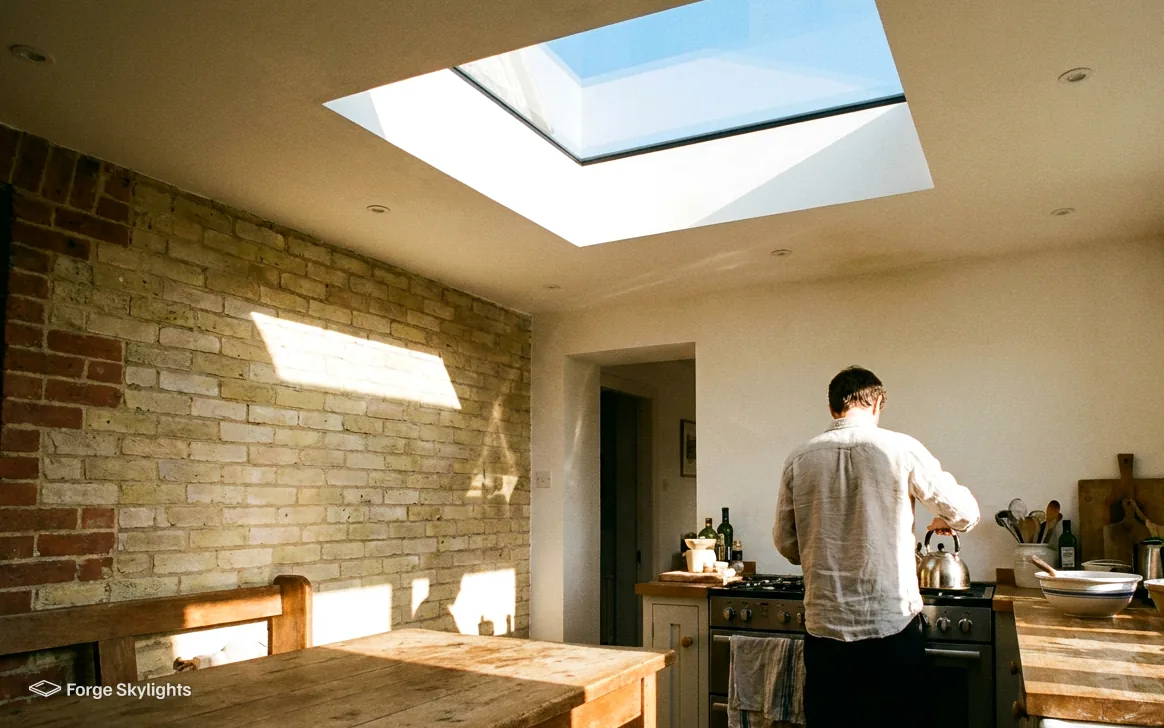
Choosing for the room below
A kitchen with a hob and a sink gives off steam, so a rooflight above it does best with a coating on the inner pane that keeps the room-side face warmer and less prone to condensation. A bedroom with a blind below it has other priorities: heat in summer and glare at dawn.
We ask what the room is for and which way the roof faces, then put clear and solar control units on the quote together when both could work. Where the roof is high or hard to get at, an outer pane with a self-cleaning coating keeps a rooflight that you cannot easily reach looking clear between rinses, and the quote can carry it as a separate line.
Replacing an old polycarbonate dome
- Dome
- Glass rooflight
A yellowed dome and a sealed glass unit are different products, so the opening has to be measured again.
Why domes come to the end
Polycarbonate domes were a cheap and common way to light a flat roof, and many are still up. The plastic yellows and crazes in sunlight, the outer skin can crack, and the thin air gap between skins is not a sealed double-glazed unit. Heat loss through them is high compared with glass.
Our guide to replacing an old polycarbonate dome rooflight covers the kerb, the sizes and the finish when a dome is swapped for a modern unit.
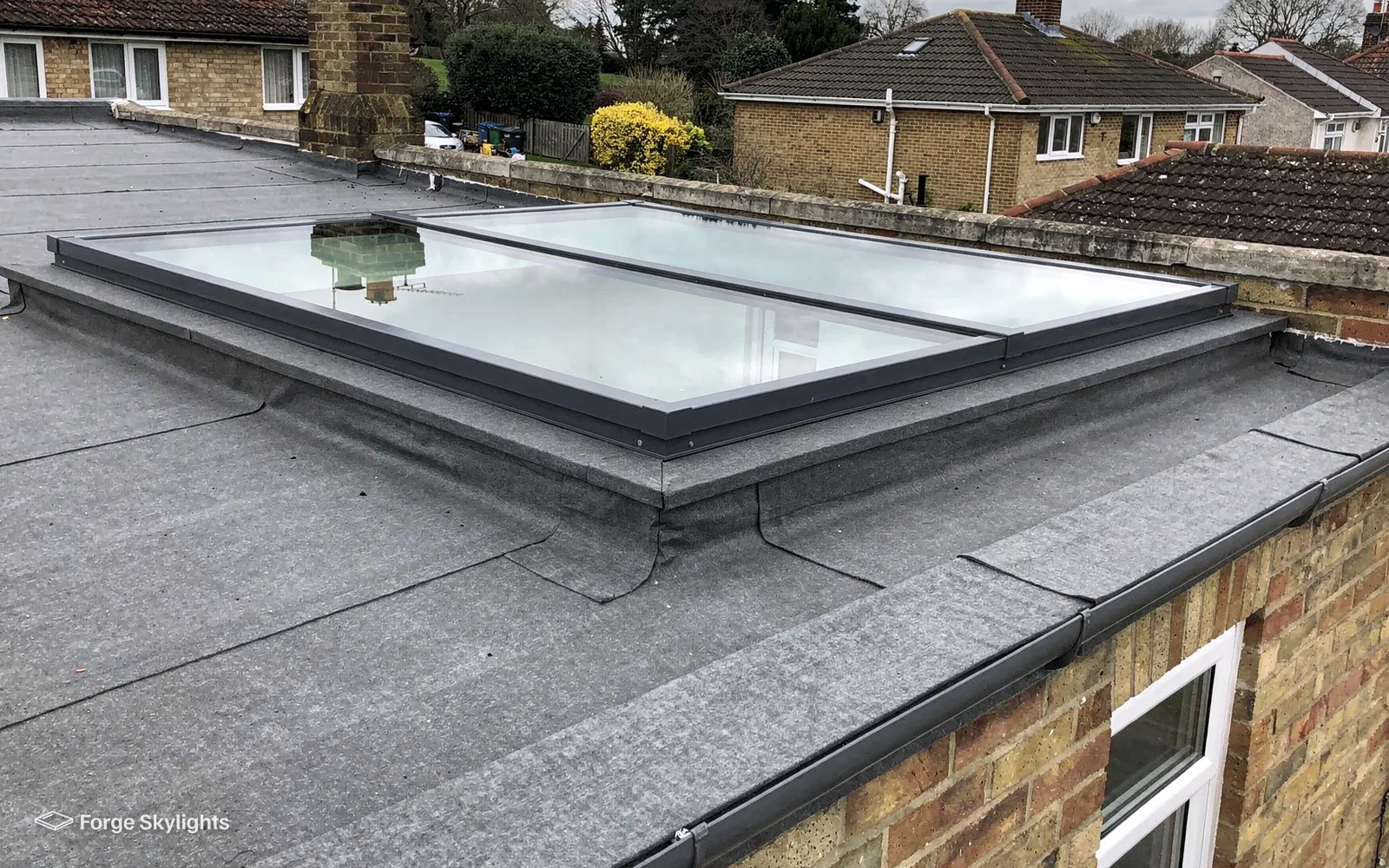
Dome again or glass
Another polycarbonate dome, where one meets the Part L limit, is the lowest-cost like-for-like swap and keeps the existing kerb and look. It brings the same weaknesses, only with a fresh skin, so it suits a utility room or store where light matters more than warmth.
A glass flat rooflight costs more and gives a clearer view, much better heat retention and a longer working life. It usually asks for a new kerb or an upgraded upstand, which we price beside the unit.
Asked while measuring up
Can my old dome kerb stay?
Often it can, if it is sound, level and the right size for the new unit. At the survey the kerb and the roof covering round it get checked, and we say what to keep and what to rebuild.
Measuring across the change
A dome sits on a kerb of a certain outside size, and its curve makes the visible opening look different from a flat unit. A glass rooflight that fits the same kerb can look smaller or larger from inside, because the internal reveal changes.
For each option the quote lists the kerb size and the visible glass size of the unit, which shows what you would be getting from inside the room as well as from outside. Where the room would benefit from a larger opening, we explain what that would involve for the joists, because a bigger hole in the roof is a different job from a swap.
Lanterns, flat glass and roof windows
- Lantern
- Flat glass
- Roof window
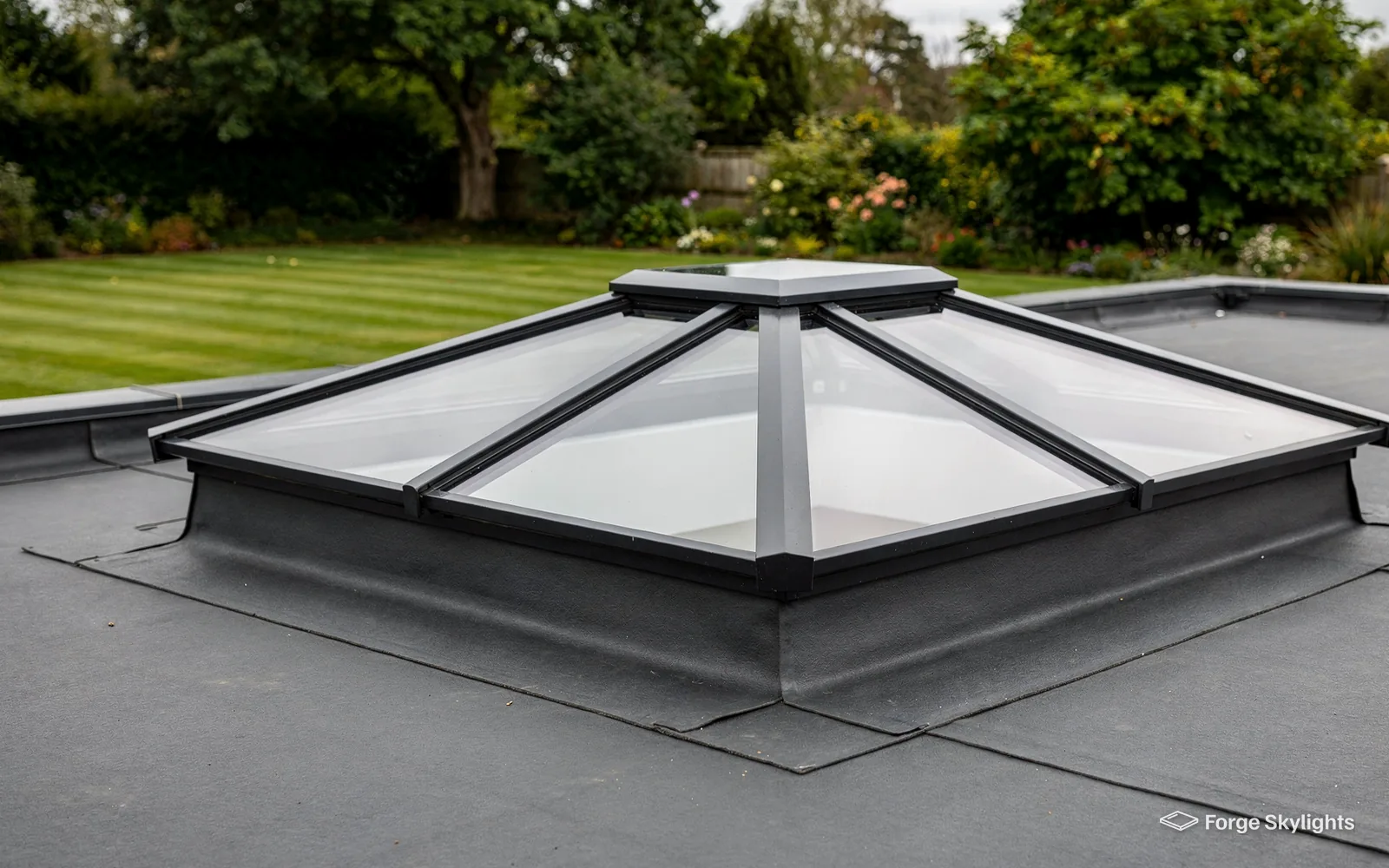
Reglazing a roof lantern
A roof lantern is made of separate glass panels held in a frame, so a misted panel can sometimes be replaced alone while the frame stays. That works when the frame is straight and the panel is a standard size and shape for that lantern.
Where the glazing bars are corroded, the seals have hardened or several panels have failed, replacing the whole lantern gives a better result and a sensible comparison. Our answer on reglazing a misted roof lantern sets reglazing beside replacement, and our roof lanterns page compares new lanterns in full.
Flat rooflights
A flat rooflight on a flat roof is the type most often replaced. The unit sits on a kerb and sheds water by the fall of the roof. Our flat roof rooflights page sets the main kinds next to each other if you want to change type at the same time.
Roof windows in pitched roofs
A failed roof window in a tiled roof is judged by the same signs, but the work differs: the flashing has to be lifted and dressed back into the tiles. Our page on roof windows explains the types, and the sealed pane of many roof windows can be replaced on its own where the maker supplies it.
| Item | Lantern | Flat rooflight | Roof window |
|---|---|---|---|
| Common first sign | Mist in one panel | Mist across the unit | Mist or a stiff sash |
| Glass-only swap | Sometimes, per panel | Often, if the frame is sound | Often, per pane |
| Frame wear | Bars and seals | Corners and coating | Flashing and seals |
| Whole replacement | Notifiable | Notifiable | Notifiable |
Building Regulations, cost and lead times
- Notifiable
- Not notifiable
What needs notifying
A controlled fitting is what a whole rooflight counts as, so swapping the frame and the glass together is notifiable, whereas a lone replacement of the sealed glass is not. Building Control hears from us directly whenever the work is notifiable, and the completion certificate that follows belongs with your house papers once the job is done.
Our answer on whether replacing a rooflight needs Building Regulations approval states the position for each job. Where private building control applies, the body is a registered building control approver, as the system has been since April 2024.
Planning is a separate question, and replacing like for like in the same opening raises little. If the new rooflight is bigger, higher or a different kind, the permitted development position depends on conditions set out in our rooflight planning guide. The address is checked by us before anything goes in, and the council decides.
| Item | New sealed unit | Whole rooflight |
|---|---|---|
| Product | Glass unit, made to size | Frame and glass |
| Roof work | Light | Upstand and flashing checked |
| Access | Often inside and out | Roof access and scaffold sometimes |
| Paperwork | None notifiable | Notification handled by us |
| Lead time | Maker's typical range | Maker's typical range, usually longer |
Cost and lead times
The size of the rooflight, the glass and the access to the roof set the price more than anything else. A glass unit alone usually costs less than a whole rooflight, and a made-to-measure unit costs more than a standard size.
Lead times come from the maker. Made-to-measure units usually take longer to arrive than standard sizes, and each option on the quote states the range its maker typically works to when the quote is written. Our page on what skylight replacement costs explains the main factors.
Asked at the quote stage
Is my old rooflight still under warranty?
It may be, if the unit was fitted not long ago and you kept the paperwork. Tell us the make and the date and we will point you to the maker's warranty terms before you decide. Your new unit comes with the maker's warranty plus our 10-year workmanship guarantee.
Fitting day and the finish inside
- Glass swap
- Whole unit
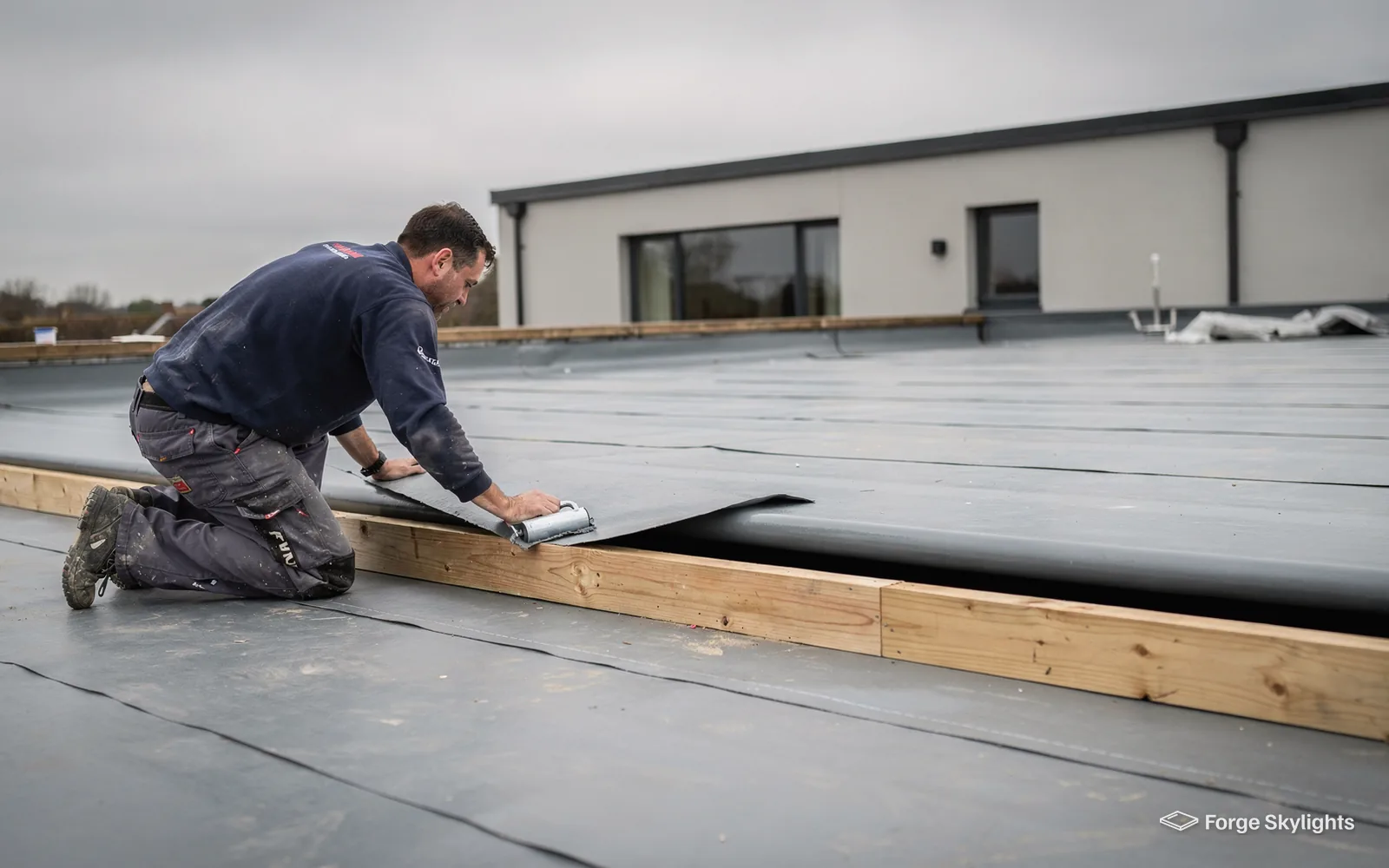
Protect the room
Dust sheets go down below the rooflight and furniture is moved clear before anything is taken apart.
Remove the old unit
For a glass swap, the glazing beads come off and the failed unit lifts out. For a whole unit, the frame is released from the kerb.
Check the kerb
With the old unit out, the kerb and the covering can be examined, and for much of it this is the first time it can be seen.
Fit and seal
The new unit goes in, is levelled and fixed, and the weathering is completed. We test the opener if there is one.
The glass-only day
Replacing only the sealed unit is usually the quicker visit, because the frame stays in place and the roof covering is left alone. The new unit is fitted, the beads and seals go back, and the glass is cleaned off.
A made-to-measure unit is ordered only after we have measured the opening, so the fitting visit follows the lead time stated on the quote.
The whole-unit day
On a whole replacement the old rooflight comes off the kerb, the kerb and covering are checked, and the new rooflight is fixed and weathered. The roof covering is dressed up the upstand so water runs away from the joint.
Weather matters on this kind of job. A rooflight is not left open to rain, so we plan the visit for a settled day and cover the opening if the sky changes.
Making good inside and signing off
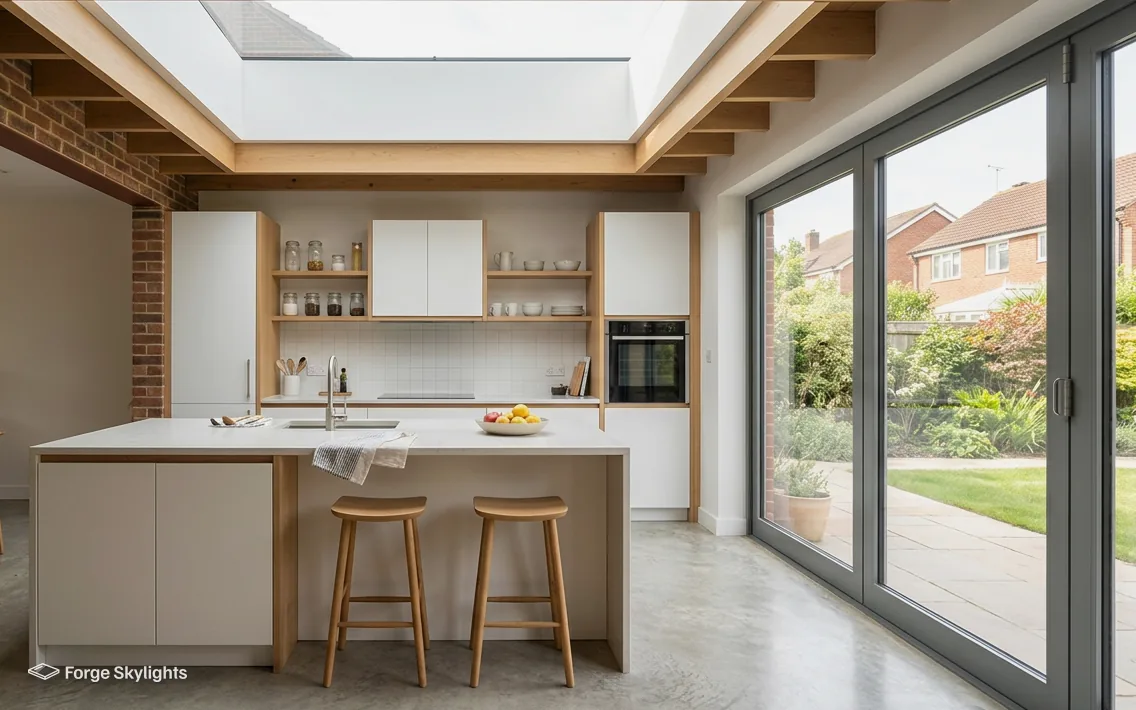
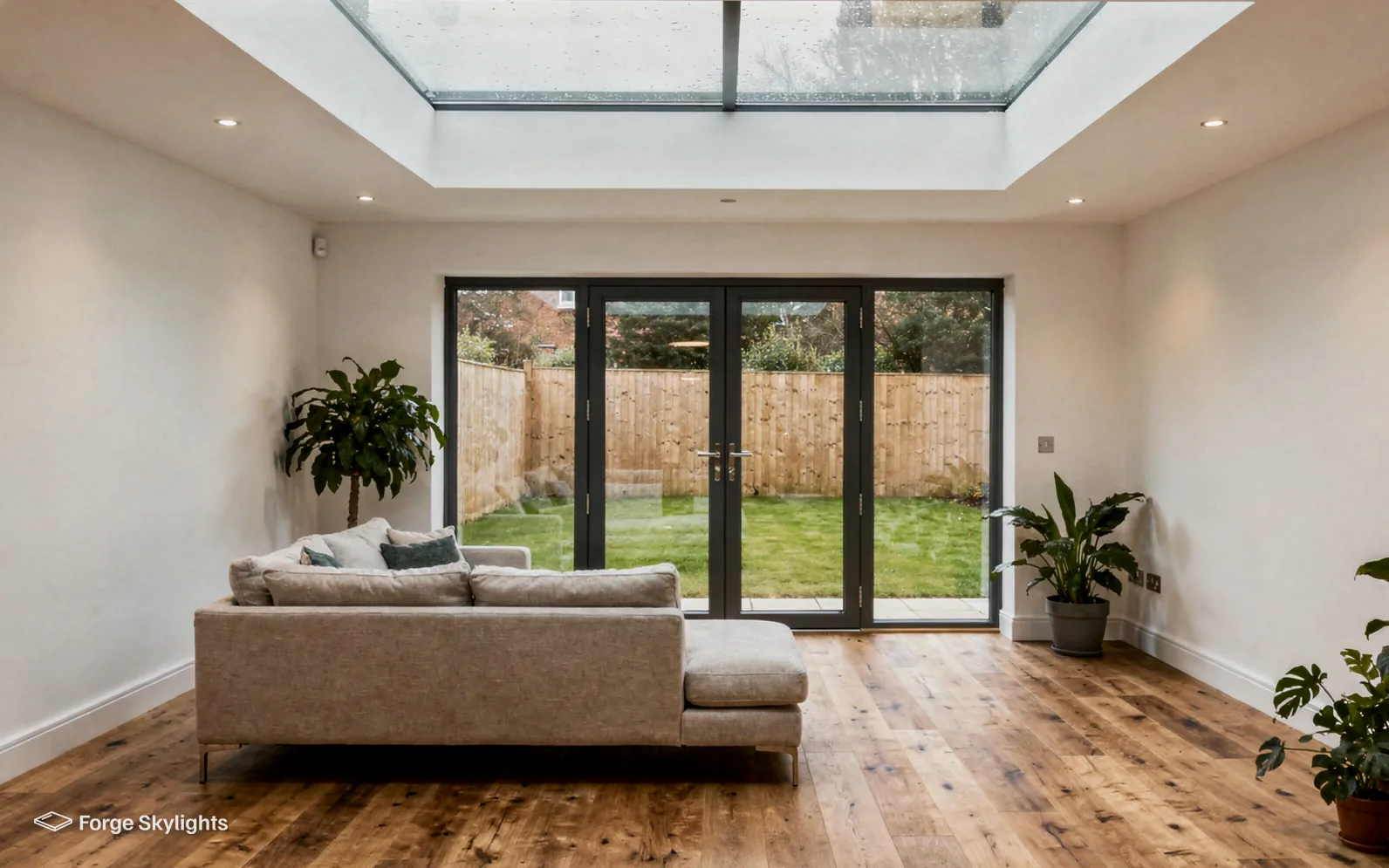
The inside edge of a rooflight is part of the finish. On a glass swap the lining usually stays undisturbed. On a whole replacement, the splay or lining round the opening may need touching up, and we say at the survey whether decoration is likely, so it does not come as a surprise.
When the work is done, we show you how the opener works if there is one, how to clean the glass and what to look for over the next few weeks. In writing, you get the maker's warranty on the unit as well as our 10-year workmanship guarantee.
Looking at a rooflight that has clouded over? Book a free survey and we will put the replacement routes side by side in writing.
Book a free surveyOur simple process
- 1
Free survey
We inspect the rooflight, its frame and the kerb underneath.
- 2
Options side by side
We set new glass and whole replacements side by side.
- 3
You choose
You pick the route that fits the frame and the budget.
- 4
Fitted, signed off, guaranteed
Fitted to regulations, notified where needed, and guaranteed.
Misted rooflight questions
Can a misted rooflight be cleaned?
The mist sits between the panes in a sealed gap, so cleaning the inside or outside face makes no difference. If the cloud clears when you wipe, it was condensation on the room-side glass. If not, the sealed unit has failed and needs replacing. Our answer on why a rooflight is misted explains the difference.
Do you replace only the glass, or the whole rooflight?
Either. We inspect the frame first, then quote a new sealed unit where the frame is sound, and a whole rooflight where it is not. Both go on the quote when the frame is old, laid out on the same lines so the comparison is straight.
Does replacing a rooflight need Building Regulations approval?
Because a whole replacement rooflight is a controlled fitting, it is notifiable, and we send the Building Control notification for you. A sealed glass unit replaced by itself is not notifiable. Our answer on replacing a rooflight and Building Regulations sets this out.
What Part L limit applies to the new rooflight?
Part L 2021, Table 4.2 puts a replacement rooflight in an existing dwelling at 2.2 W/m²K. A roof window is judged against 1.4 W/m²K, the number that applies to windows generally, though Window Energy Rating Band B is accepted in its place. The maker's figure appears against every option on the quote.
Will I need planning permission to replace a rooflight?
A like-for-like replacement in the same opening rarely raises the question. Whether a larger, higher or different kind of rooflight is covered turns on the conditions set out in our rooflight planning guide. The position can shift for a listed building, and also where an Article 4 direction applies or a planning condition has been attached, and the council decides after we have checked your address.
How long will the new unit take to arrive?
Arrival depends on who makes the unit, its size and whether it is standard or made to measure. Standard sizes usually arrive sooner. Every option on the quote shows the maker's typical range as at the date of writing.
My dome has yellowed. Should I replace it with another dome?
A new dome that meets the Part L limit is the least expensive swap and keeps the kerb and look. A glass rooflight costs more and keeps heat in far better. Our guide to replacing a polycarbonate dome compares them.
Can only one panel of my roof lantern be replaced?
Sometimes. If the frame and seals are in good order, a single misted panel can be changed alone. If the bars are corroded or several panels have failed, the whole lantern makes more sense. Our answer on reglazing a roof lantern goes through both.
Will the replacement be the same make as my old rooflight?
It can be, if that suits the opening. Our quote is not tied to a single maker, so units from other makers that fit the same kerb are priced too, and you choose. If you know the make of the old one, tell us and we price it first.
Guides and answers
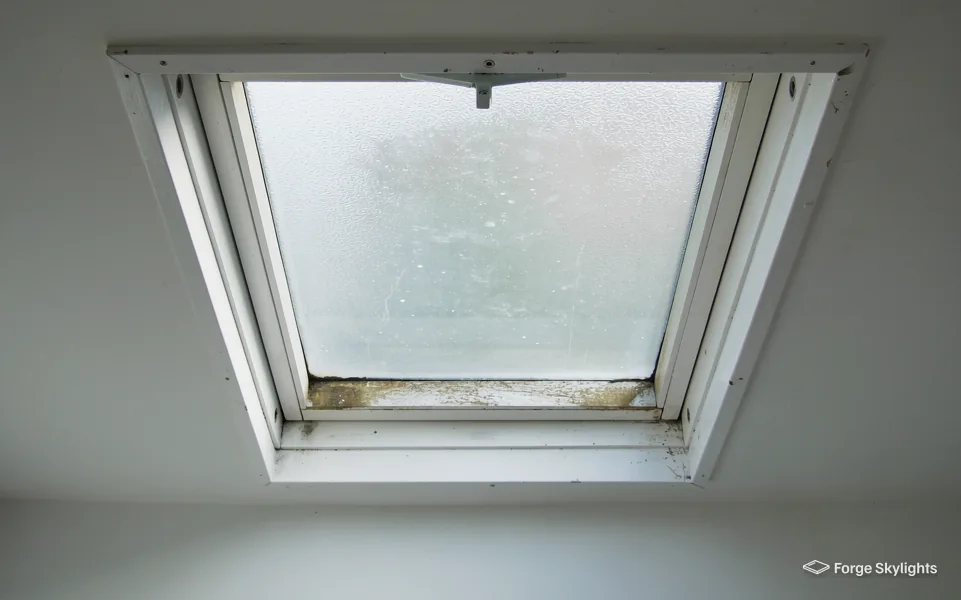 Guide · 11 min readMisted rooflight: replacing the sealed unit or the whole unitWhen the glass of a rooflight has gone cloudy between the panes, you can often fit a new sealed unit and keep…
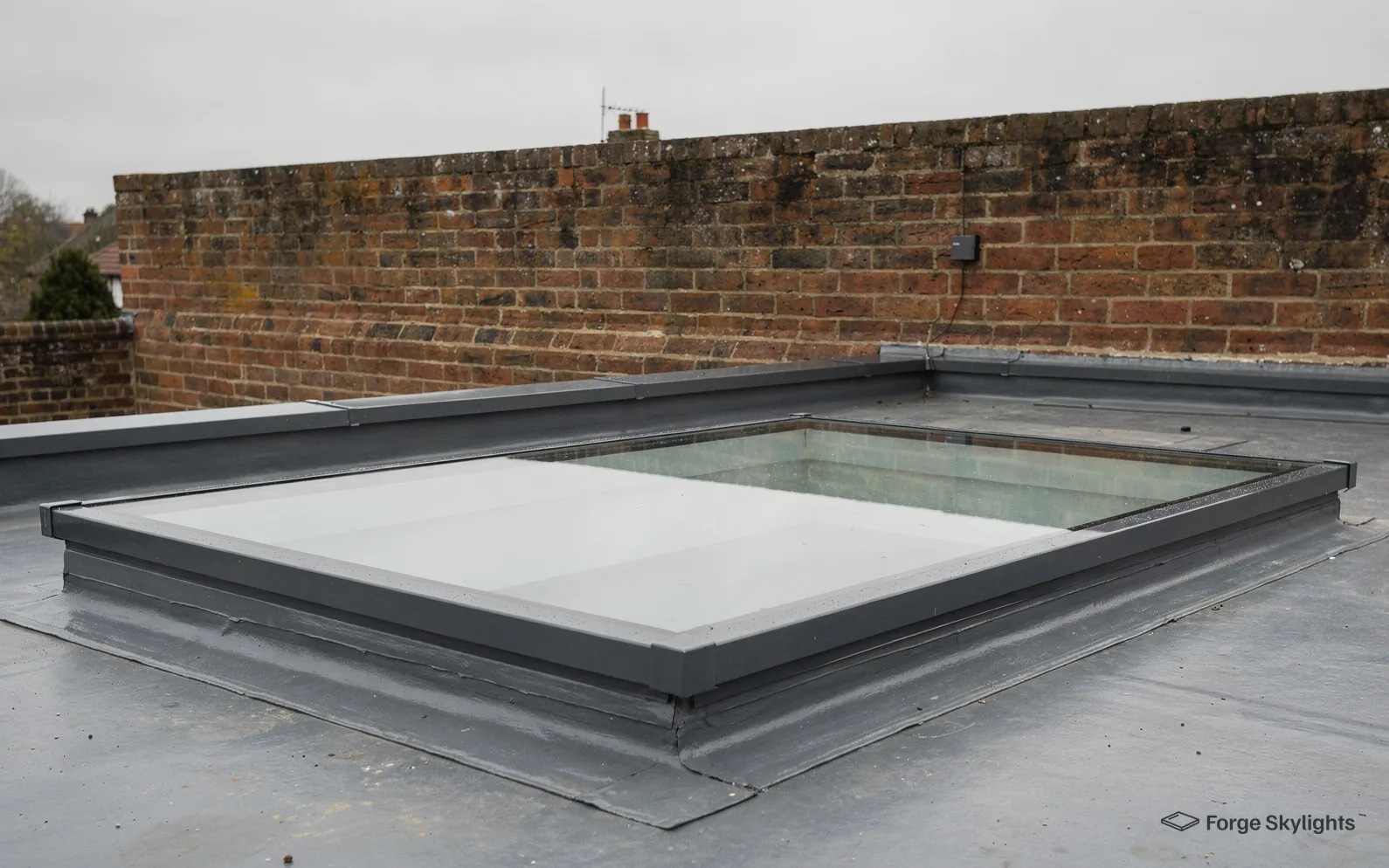 Guide · 9 min readReplacing an old polycarbonate dome rooflightA yellowed, crazed polycarbonate dome can be swapped for a modern glass rooflight, or for a new dome.
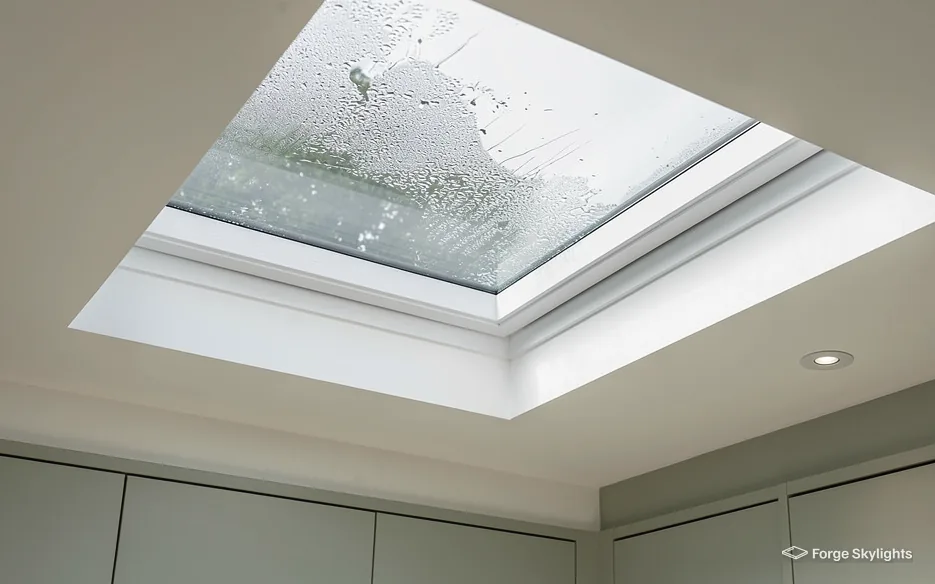 Answer · 5 min readWhy is my rooflight misted between the panes?Mist between the panes means the sealed edge of the double-glazed unit has failed and damp room air has found its way…
 Answer · 4 min readDoes replacing a rooflight need Building Regulations approval?Fitting a new rooflight in place of the old, frame and glass together, is notifiable under the Building Regulations as a controlled…
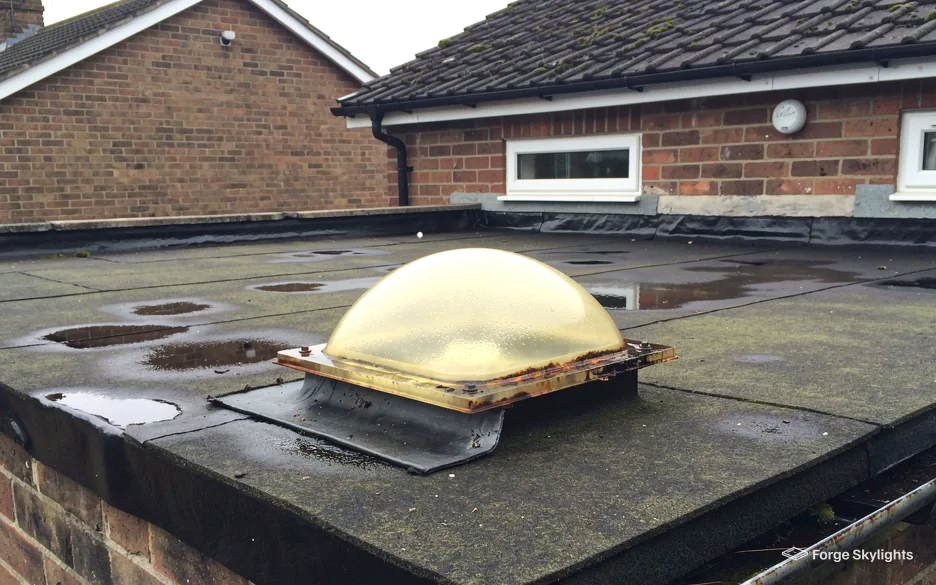 Answer · 4 min readHow can I tell if a rooflight has failed?The clearest signs are mist between the panes, which points to a failed glass unit, and damp marks, draughts or a stiff…
 Answer · 5 min readCan a misted roof lantern be reglazed?A misted roof lantern can often take new glass panels in its existing frame, provided the bars, seals and kerb are sound…
Book your free survey
It starts with a free survey and plain advice. No pressure, just clear options for your home.
Fill in the form and we will be in touch to arrange a convenient time.