Two jobs that look like one
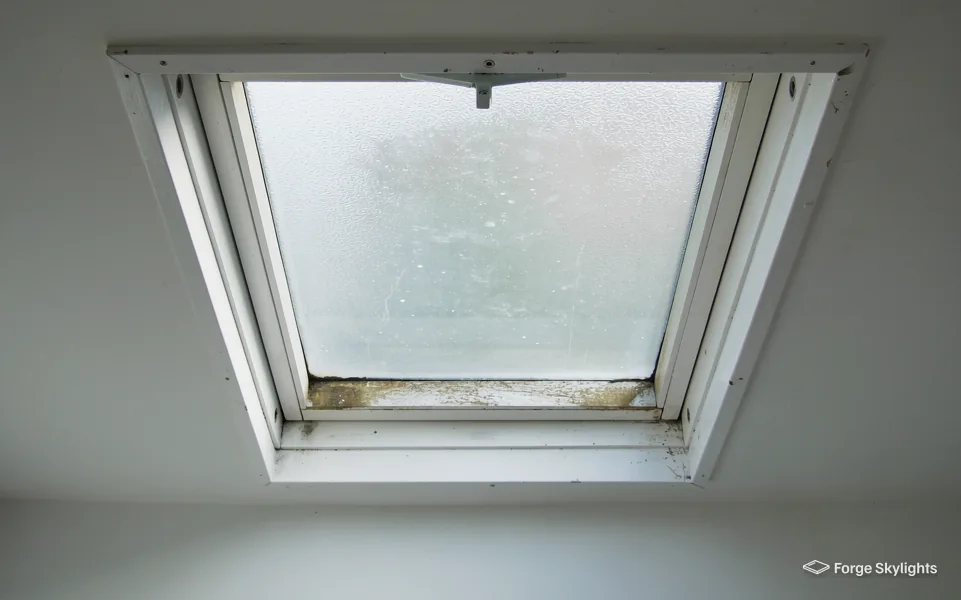
A misted rooflight puts a homeowner at a fork. One road is a new sealed glass unit set into the frame you already have. The other is a new rooflight, frame and glass together. From the kitchen floor the two look alike, because the symptom is identical: a grey haze, a film of droplets or a milky cloud that sits between the panes and cannot be wiped away from either side.
The difference lies in what has failed. A sealed unit is two or three sheets of glass held apart by a spacer and joined by a sealant around the edge. When that edge seal lets go, moist air gets in and condenses on the cold inner faces of the glass. The frame may be perfectly sound. If it is, replacing the unit alone puts clear glass back in the roof without touching anything else, and it is usually the lighter job in cost, in disruption and in paperwork.
If the frame is also tired, the sums change. A frame that has warped, split or lost its finish will let the same moisture straight back into a brand new unit, so new glass in an old frame only postpones the haze. This guide sets out how we decide, what each job involves, and where the Building Regulations draw the line between them. For the wider picture of why glass fails in the first place, our page on why a rooflight mists between the panes goes through the causes.
Whichever you are looking at, whether you call it a rooflight or a skylight, the first step is the same: find out exactly what you have. A rooflight on a flat roof, a roof lantern, a pitched roof window and an old dome all fail in their own ways, and the answer to the glass-or-whole-unit question differs for each.
What a sealed unit actually is
Modern rooflight glass is made as a sealed unit in a factory. Two panes of glass, or in some specifications three, are separated by a spacer bar filled with desiccant, which soaks up any trace of moisture left inside. The gap is filled with air or a gas, and a sealant runs round the edge to close the whole sandwich.
That sealant is the part that ages. Sunlight, heat and the daily swing from a cold night to a warm afternoon move the glass slightly, and flat rooflights take more of that than a wall window does, because they face the sky and sit where water collects. Over many seasons the edge seal can lose its grip, and the desiccant eventually fills up. Once it has, the haze appears.
A failed unit cannot be dried out and closed up again. Drilling and cleaning the gap leaves the seal as weak as it was, and the glass is not designed to be opened. The only lasting cure for the glass is a new unit, made to the size of the opening it replaces.

Sealed units are specified by their make-up: the thickness of each pane, the width of the gap, the coating on the glass and the type of spacer. Matching an old unit means reading those details from the unit itself where we can, and setting a modern specification beside it where we cannot. Glass made today usually performs better than the glass it replaces, so a new unit in an old frame often improves the room even though the frame stays.
When the glass alone is enough
New glass in the existing frame suits a rooflight whose frame is still doing its job. At the survey we look for several things, and each one is a question we can answer from the roof and from inside the room.
- The frame is straight and square. It sits level on its kerb, and the corners have not opened.
- The finish is intact. Aluminium that is chalky but sound is fine. Timber that is rotten or uPVC that has gone brittle is not.
- The glazing system can be opened. The beads, gaskets or retaining strips holding the glass can be released without wrecking them.
- The weathering around the frame is sound. The roof covering and flashings round the kerb are not letting water in, since that would only damage the new unit.
- The size is still right. The room and the roof have not changed in a way that makes you want a different rooflight.
When all of those hold, a new sealed unit is a reasonable choice. It leaves the kerb, the roof covering and the plasterwork or lining inside untouched. The job is quicker, there is less mess, and the roof stays closed apart from the time it takes to lift one unit out and set another in.
There is a second advantage that people overlook. A glass-only replacement lets you improve the glass without choosing a whole new rooflight. A modern unit can add a solar control coating, a self-cleaning outer pane or a different thickness for sound, and these options appear on the written quote beside the plain clear unit, which shows what each one adds.
Ask about the other panes
If one unit in a multi-pane rooflight has misted, its neighbours are the same age and have seen the same weather. We price replacing the failed unit on its own and replacing all of them together, so you can weigh a single visit against the chance of another unit clouding later.
When the whole rooflight should go
Sometimes the glass is the smaller of the problems. A frame that has warped lets in air and water around the glass, and new units set into it will cloud again. A frame that cannot be opened for reglazing without being broken has made the decision for you. And an old rooflight with no thermal break, single glazing in a timber frame or early plastic parts may simply be a poor basis for a long life.
Replacing the whole rooflight lets us deal with the kerb and the junction between the rooflight and the roof at the same time. If the kerb is low, rotten or out of square, or if the covering round it has nearly run its course, fitting a fresh rooflight on a corrected kerb is better than fitting fresh glass into a weak setting. Our page on replacing an old polycarbonate dome covers one common case in detail, where a dome is swapped for a glass rooflight.
A whole replacement also opens up choices that a glass-only job does not: a fixed rooflight or an opening one, a flat glass design or a ridged one, a different size if the room has changed. These are the choices we set side by side, with price and lead time, on the written quote. If you are weighing glass types, our guide to energy efficient rooflights lays them out together.
Roof lanterns are a particular case. Their glass panels are individual units in a bar system, and reglazing a lantern is often possible when the bars are sound. We cover that separately in our page on reglazing a misted roof lantern.
The two jobs side by side
The comparison below shows how the two jobs differ on the points that usually decide it.
| Item | New sealed unit only | Whole new rooflight |
|---|---|---|
| What changes | The glass; the frame stays | Frame and glass together |
| Best when | The frame is sound and can be opened for reglazing | The frame is tired, warped or cannot be reglazed |
| Kerb and roof covering | Left as they are, if sound | Checked, and corrected at the same time |
| Choice of design | Limited to the glass specification | Size, shape, opening and frame all open |
| Cost | Usually lower | Usually higher |
| Disruption | Usually less | Usually more |
| Building Regulations | Not notifiable | Notifiable as a controlled fitting |
| Likely to last | As long as the old frame does | A fresh frame, kerb and glass together |
The last two rows are the ones that tend to surprise people. The Building Regulations treat the jobs differently, and the life you get out of the work depends on the frame, not only on the glass. We write both options on the quote when both are possible, so the choice sits in front of you with the facts.
Why one job is notifiable and the other is not
Under the Building Regulations in England, taking out the complete rooflight, frame and glass together, and fitting a new one is the replacement of a controlled fitting. That makes it notifiable: Building Control has to be told, and the new rooflight has to meet the energy limits in Part L. Part L (2021 edition, Table 4.2) caps the heat loss from a rooflight fitted to an existing dwelling in England at 2.2 W/m²K. A roof window must instead achieve 1.4 W/m²K, which is the ordinary window standard, or be rated Band B for window energy.
Changing just the sealed glass unit needs no notification, because it is a component inside the controlled fitting you already have, not a new fitting altogether. That does not mean the new unit should be second best. We specify replacement units on the same terms as new rooflights and put the maker's figures on the quote.
Any notifiable work is reported to Building Control by us on your behalf, either through the council or by way of a registered building control approver (the private route that has existed under that name since April 2024). You do not chase paperwork. For the fuller picture of what counts as notifiable and what does not, see our answer on whether replacing a rooflight needs Building Regulations approval.
A whole replacement rooflight has to be notified under the Building Regulations, whereas a sealed unit renewed by itself does not.
Planning is a separate matter, and it rarely comes up for a like-for-like swap. If the new rooflight would be bigger, sit higher or change the roof in some other way, the position changes. The address is checked by us, though it is the council that makes the decision. The general rules are set out in our rooflight planning guide.
What happens at the survey
The decision between glass and whole rooflight is made on the roof and in the room, not from a photograph. A survey for a misted rooflight follows a sequence, and each step feeds the next.
Identify the rooflight
Maker, model and age where they can be found, from the frame, the glass or the paperwork you kept.
Inspect the frame
Straightness, finish, corners, drainage and whether the beads or gaskets can be released.
Check the kerb and covering
The upstand, the flashing and the roof surface round the opening, since these decide whether new glass would be safe.
Measure the units
Each sealed unit is measured and its make-up recorded, because replacement units are made to size.
Set the options side by side
Glass only and whole rooflight, where both are possible, with the glass specification, lead time and price of each.
A unit that has been removed to measure can be damaged, so we measure in place wherever we can and confirm the figures before ordering. On a rooflight that is high or awkward to reach, the survey flags it and we describe how the work will be arranged.
Making the decision
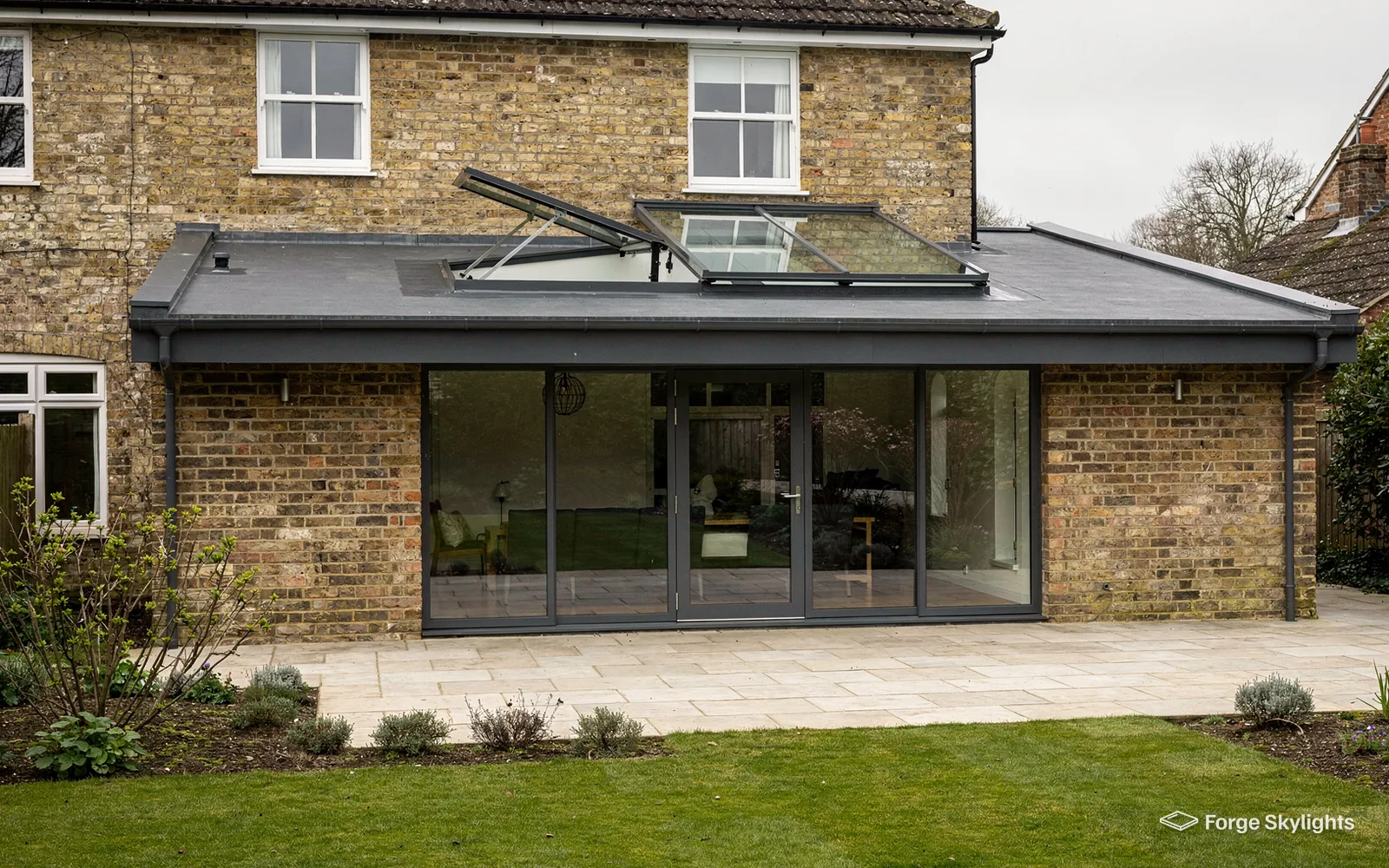
If the frame is sound and can be reglazed, new sealed units are usually the sensible and economical route, and they are the job we would recommend. If the frame is not sound, we say so and show the whole-rooflight option with its figures. In both cases the written quote you receive puts the alternatives alongside one another, with makers beyond a single brand represented when the roof suits, with glazing, frame, style of opening, lead time and price set out on the one page.
Every job is fitted to the Building Regulations in force and comes with our 10-year guarantee on workmanship, as well as the unit maker's warranty. The survey and the quote are free. Book a free survey and we will look at the rooflight, tell you which of the two jobs it needs and put the options in writing.
Common questions
Can a misted sealed unit be cleared without replacing it?
Once moisture is inside, the seal has failed, and the unit has to be renewed to get clear glass again. We measure the existing unit and make up a new one to the same size.
How do I know whether my frame can be reglazed?
We check at the survey. The frame must be straight and sound, and the beads or gaskets holding the glass must come away without damage. An old, brittle or distorted frame often fails that test.
Will a new sealed unit match my other rooflights?
The size will match, and the outer appearance is close. The glass in a modern unit may have a slightly different tint or coating, which we show on the quote so there are no surprises when it is fitted.
Does replacing only the glass need Building Control?
A glass-only swap needs no notification, but fitting a whole new rooflight, frame and glass included, does, and the notification is something we handle when it applies.
Could a misted unit be a sign of a leak?
Mist between the panes comes from the seal of the glass unit, not from water entering the room. If you also see staining or drips inside, tell us when you book, and we will check the kerb and covering as part of the survey.
Is it worth doing one unit at a time?
It can be, if the others are clear and the budget is tight. We price the single unit and the full set together, so you can see what a second visit would cost against doing them all at once.