The short answer
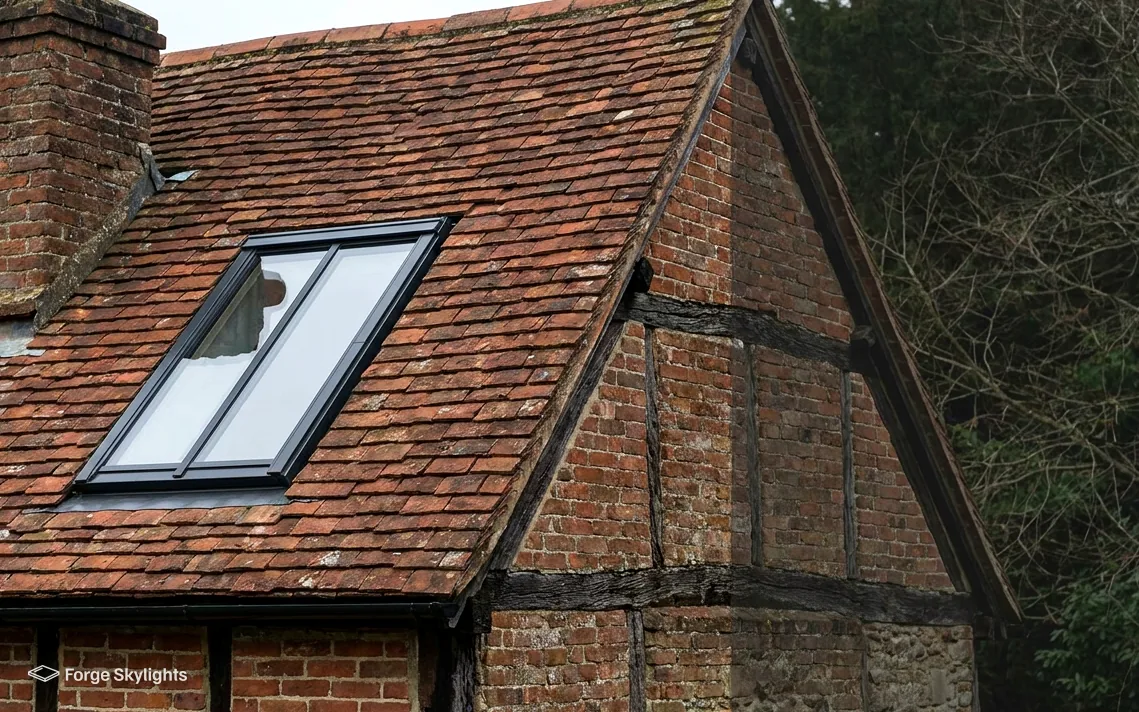
The central glazing bar is a copy of the cast iron rooflights that Victorian and Edwardian builders set into factories, stables and cottages, where a single wide pane was too big or too costly to make in one piece. No rule requires a bar today. It is a design choice, and it is the detail that makes a rooflight read as heritage.
Where the bar comes from
Cast iron rooflights were made in narrow panes because large sheets of glass were hard to produce and easily broken. A vertical bar down the middle held two panes in line with the slope, and it doubled as the support that carried the glass. When makers set out to copy those rooflights in steel and aluminium, they kept the bar, because it is what the eye expects to see on an old slate or clay tile roof.
A rooflight that carries a bar sits in the roof the way the originals did, with the bar running up the slope in line with the rafters. A plain pane of glass, however slim the frame, looks like a modern window set into an old roof. Seen from inside, the bar also gives a loft room a line to the ceiling that echoes old timber, which some owners of period houses choose for that reason alone, quite apart from what the council might ask.
Is a glazing bar required?
Building Regulations do not require a bar, and neither does a planning rule. On a listed building, the council can ask for a design that suits the roof, and in practice a central bar is often what the conservation officer expects. Our answer on consent for a rooflight on a listed building covers what the council looks at.
In a conservation area the council cares about how the rooflight looks from the street, and the position, size and frame matter along with the bar. Permitted development there can be removed by an Article 4 direction or a planning condition, so your address is looked into case by case, and the decision is the council's. Our conservation area guide explains how.
Real bars and applied bars compared
A real bar is part of the frame, and it holds the glass in two panes. An applied bar is a strip stuck to the outside, and sometimes to the inside as well, of a single pane. Both can look right from the street. The differences show close up and from inside.
| Item | Real bar | Applied bar |
|---|---|---|
| Construction | Built into the frame, two panes of glass | Strip fixed to a single sealed unit |
| Seen from below | A bar with glass on each side | A strip against one sheet of glass |
| Look from outside | Closest to a cast iron original | Close, with a slightly flatter line |
| Cleaning | Clean each pane to the bar | Wipe across the face, more joins to catch dirt |
| Cost | Usually higher | Usually lower |
A bar built into the frame is the better match for an exact period look, particularly on a listed building. An applied bar suits a house where the budget is tighter and the rooflight is seen from further away. We set both options out on the quote where both suit the roof, and our conservation rooflight cost answer shows how the bar moves the price.
Bar position and the rest of the look
The bar sits down the middle of the glass, from the top of the slope to the bottom, and lines up with the rafters. Cutting across a rafter to land a bar in the right place means trimming, which is why the survey checks rafter spacing before a size is chosen. At the survey we measure the rafter centres, note which slope the rooflight faces and photograph the existing covering, so the quote shows a bar position that works with the timbers already in the roof. Where the rafters sit awkwardly, the maker's size options and a plain pane are weighed against a bar, and the quote sets them side by side.
- Bar runs up the slope in line with the rafters
- Frame sits flush with the roof covering
- Bar colour matches the frame
A bar is a single detail in a wider picture. The frame depth, the colour and the way the covering is dressed round the edge matter as much, and our guide to conservation rooflights against standard roof windows compares them. The conservation rooflight page shows the full range.
Related questions
Can I have a conservation rooflight without a glazing bar?
Yes, some makers offer a plain pane in the same slim frame. On a roof that is seen from the street, or on a listed building, the council may prefer a bar, so we check what is likely to be asked for before we recommend one.
Does the bar make the rooflight less bright?
The bar blocks a small strip of the opening, and the slim frame leaves more glass than a standard roof window gives. Most rooms feel the difference less than they expect.
Does the bar change how well the rooflight keeps heat in?
A real bar adds a strip of frame and glass edge across the middle of the opening, so it can raise the heat loss of the whole unit slightly. The maker's figure for the complete unit already counts it, so our rooflight U-value guide is the place to compare options.
Which bar is easier to keep clean?
A real bar leaves each pane smooth to the edge. An applied bar adds joins where dirt and moss can gather over time, so give it a wipe with the rest of the glass.