The short answer
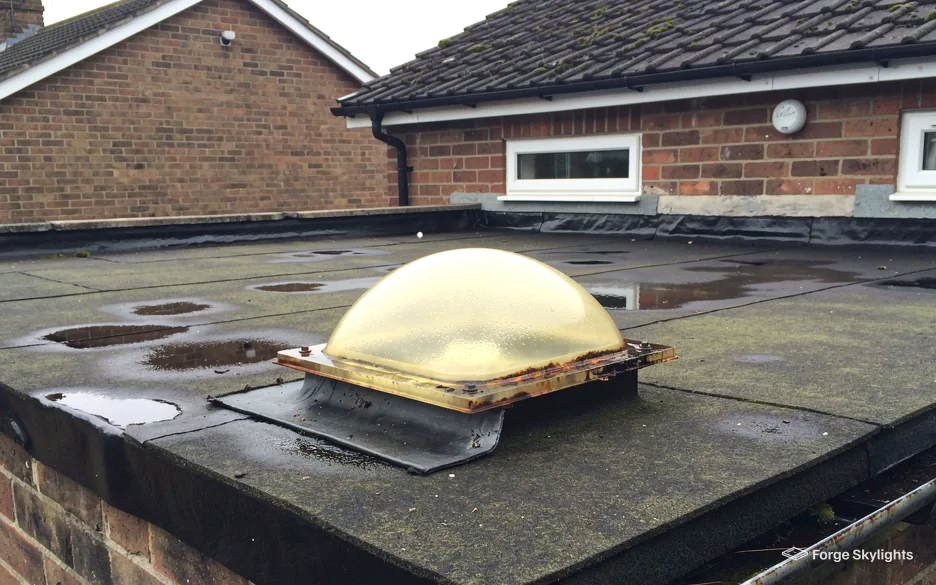
The clearest signs are mist between the panes, which points to a failed glass unit, and damp marks, draughts or a stiff opener, which point to the frame or its seals. Signs in the glass alone usually mean a new sealed unit, while signs in the frame mean replacing the whole rooflight.
Signs in the glass
Glass problems are the mildest, because the frame and the roof round it are still doing their job. Mist or a cloudy film between the two panes is the commonest one, and our answer on why a rooflight mists between the panes explains the cause. A skylight with a cloudy unit still keeps the rain out, but it lets more heat through and dims the room.
Look also for water droplets or tide marks that stay in place when you wipe the glass, a pane that has cracked or crazed, and a thin line of light or colour along one edge of the unit. Any of these usually means the glass unit can come out and a new one go in, with the frame kept. Our page on replacing a misted sealed unit describes that job.
Signs in the frame and the seals
Frame signs are more serious, because they usually mean water or cold air is getting past the unit and into the building.
- Stained or bubbling plaster round the opening, or a brown tide line on the lining after rain.
- A draught you can feel on your hand on a windy day, or a whistle from the opening.
- Perished rubber or sealant, gaps at the corners and cracked or flaking paint on a timber frame.
- Rot that gives under a screwdriver, or a metal frame with corrosion bubbling under the finish.
- A rooflight that is stiff or sticky to open, or that no longer closes tight against its seal.
A frame in this state is unlikely to take a new glass unit well, and putting new glass into a failing frame tends to move the problem on. The usual answer is a whole new rooflight, frame and glass together, which is notifiable work, with the Building Control notification handled by us.
Ranked from glass-only to whole unit
The table lines the signs up against the job they usually lead to. A survey confirms it, because a roof often shows more than one sign at once.
| Sign | Usual cause | Usual job |
|---|---|---|
| Mist between the panes | Failed edge seal | New sealed unit |
| Cracked or crazed glass | Impact, thermal stress or age | New sealed unit |
| Condensation on the room face only | Damp air or a cold edge | Ventilation first, glass later if needed |
| Draught round the frame | Worn seals or a distorted frame | Whole rooflight, sometimes new seals |
| Damp stain on the lining | Failed flashing, upstand or frame joint | Whole rooflight, with work to the roof covering |
| Rot or corrosion in the frame | Long exposure to wet | Whole rooflight |
| Stiff or stuck opener | Worn hinges or a swollen frame | Whole rooflight, or a new opening mechanism |
Condensation on the room side is not a failure of the rooflight, and our answer on rooflight condensation explains what to try before replacing anything.
Age, comfort and energy
A rooflight can look sound and still be poor value to keep. Older single-glazed units, or early double-glazed ones with a wide, cold edge, let heat out in winter and in during summer. A room under one can feel clammy in the cold months and hard to cool in the warm ones.
Part L's current limit for a rooflight in an existing dwelling is 2.2 W/m²K, and a whole replacement has to meet that figure in full, so a new unit is likely to insulate better than an old single-glazed or early double-glazed one. That is a good reason to replace an ageing unit before it fails outright, though it is not a reason to replace one that still performs. Our guide to energy-efficient rooflights compares the glass options.
What to do next
Take a few photographs of the signs, inside and outside if you can reach the roof safely, and note when they appear: after rain, on frosty mornings or all the time. Please do not climb onto a roof to look at it. We check from the roof ourselves at the survey.
- Photographs of the signs and the date they first showed
- Any paperwork from the original fitting
- The approximate size of the opening, if you know it
The survey costs nothing, and the written quote lays the glass-only and whole-unit routes next to each other, with more than one suitable option included if the roof allows it. Our hub on misted rooflight replacement sets out both routes, and when you are ready you can book a free survey.
Related questions
How long should a skylight last?
It depends on the quality of the unit, the pitch and the exposure, so the answer is read from the unit itself rather than a single figure. A frame that is sound and well sealed can outlast several glass units, which is why we look at each part.
Can a failing rooflight cause damp in the ceiling?
Water getting past the frame or flashing can stain the lining and, over time, damage the plaster and timber behind it. A stain that grows after rain is worth having looked at soon.
Is one misted rooflight a sign the others will fail?
Units of the same age and exposure tend to age alike, so it is reasonable to look at the others. We check each rooflight on the roof separately at the survey.
My opener is stiff. Does the whole rooflight need replacing?
Not always. A stiff opener may come from worn hinges or a paint build-up, but if the frame has swollen or twisted, a whole replacement is the dependable fix.