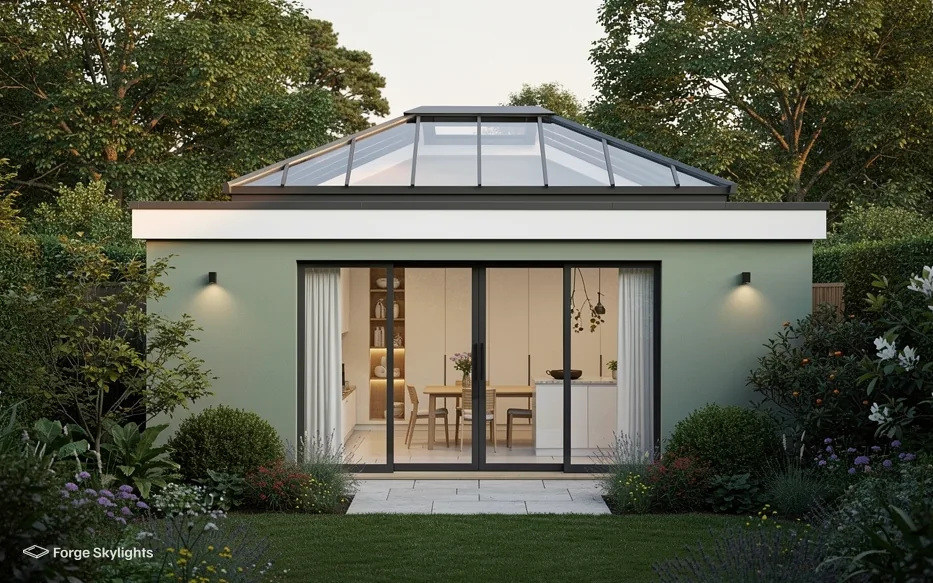
Which frame suits which roof lantern
Aluminium gives you the slimmest bars, the widest choice of colour and the strength to carry big panes of glass, and it usually costs more. uPVC gives you a warm, quiet frame at a lower price, and its bars are chunkier, its colours fewer and its largest sizes more limited. Both are sold by well-known makers, and both can be specified well or badly.
A roof lantern is a small glass building on your roof, so the frame is the part you will notice every time you look up. It decides how much of the sky you see, how the lantern looks from the garden, how it ages and what it adds to the quote. Most of the questions we hear at a survey come down to one of three things: the look, the budget, or the size of the opening.
If the opening is large, or you want the thinnest bars you can get, aluminium is usually the answer. If the opening is modest, the budget is firm and a white or grey frame suits the house, uPVC deserves a proper look before you rule it out. If you are somewhere in between, which is where most kitchens end up, the rest of this guide shows where the line falls.
The same frame question comes up when you are choosing the shape and size of the lantern itself. Our hub page on roof lantern installation compares the shapes, and our guide to roof lantern sizes explains how the opening is worked out. Frame, shape and size are decided together, so it helps to read them side by side.
Sightlines: how much frame you see
The sightline is the width of the bars as you see them from inside the room. It matters more than most people expect, because the bars sit between you and the sky. On a slim aluminium lantern the bars read as fine lines and the glass dominates. On a uPVC lantern the bars are visibly wider, and the frame becomes part of the picture.
The reason is material. Aluminium is strong enough to be drawn into thin, hollow sections that still carry the weight of the glass, and a thermal break inside the section keeps the inner and outer faces from conducting heat straight through. uPVC is a plastic extrusion that gets its stiffness from a multi-chamber section and, in many frames, a steel reinforcement inside, so it needs more depth and width to do the same job.
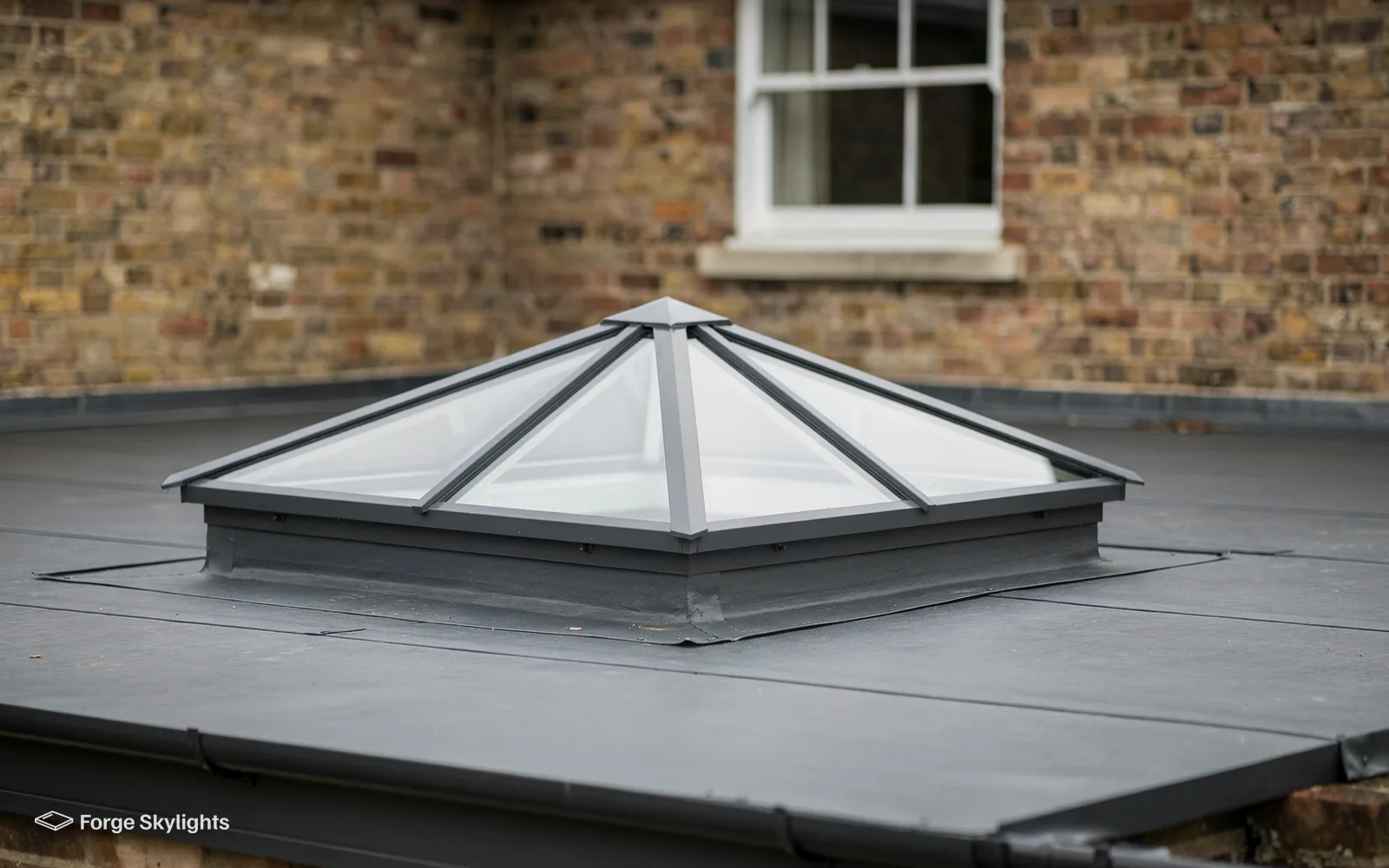
None of this makes uPVC a poor choice for appearance. On a traditional hipped lantern over a period-style extension, a heavier bar can look right, and a white frame against white-painted internal reveals can look deliberate. Where the sightline starts to matter is on a large, modern lantern over a kitchen island, where you want the glass to do the talking. There the slimmer bars of aluminium earn their price.
The maker's drawings show the bar width for each frame, and we put those figures on the quote when we set the options next to each other, so you are comparing real dimensions rather than adjectives. A sample corner section at the survey helps too, because bar width is easier to judge in your hand than on a page.
Strength, span and the largest sizes
Glass is heavy, and a roof lantern holds its panes at an angle, so the frame has to carry the weight and resist wind. Aluminium is stiffer than uPVC for a given bar size, which is why bigger lanterns are usually aluminium. Makers set maximum sizes for each frame and glazing combination, and the largest sizes tend to appear only in aluminium ranges.
That does not leave uPVC out of the running at normal domestic sizes. A lantern over a dining table or a small kitchen sits comfortably inside what a uPVC frame can span. The limit shows when the room is long, when you want a single lantern to light a wide open-plan space, or when you want triple glazing, which adds weight to every pane.
Where the lantern is close to a maker's maximum, the stronger frame is the safer specification, because the margin for wind and for the roof's movement is bigger. We read the maker's published limits for each lantern we quote, and we tell you plainly when a size sits near the edge of what a frame is designed for.
Size comes before frame
We work out the opening from the room and the roof first, as our sizing guide describes, and only then ask which frames can build it. A frame you like may not be offered at the size you need, and it is better to find that out before the quote than after it.
Aluminium and uPVC, row by row
The brand device on this site is the side-by-side comparison, so here are the two frames on the same measures. The words are relative on purpose: the real figures come from the maker's data for the specific lantern, and they go on your written quote.
| Item | Aluminium | uPVC |
|---|---|---|
| Bar width | Slimmest | Wider |
| Strength for the size | Higher | Lower |
| Largest sizes | Available | More limited |
| Colour choice | Wide, inside and out | Narrower |
| Warmth of the frame | Good with a thermal break | Naturally warm |
| Upkeep | Wipe clean, paint finish is durable | Wipe clean |
| Lead time | Often longer | Often shorter |
| Price | Usually higher | Usually lower |
| Best for | Large or modern lanterns | Modest openings and tighter budgets |
A table flattens detail, so two cautions. First, the rows interact: if the bar width is the thing you care about most, the price and the lead time follow from it. Second, the specification inside each material varies a great deal between makers and ranges. A well-made uPVC lantern can beat a poorly made aluminium one on warmth and finish, and the reverse is also true, which is why every written quote from us puts more than one suitable lantern from more than one maker next to each other.
If a row on the table decides it for you, say so at the survey. A firm budget makes uPVC the starting point, and a wish for the thinnest possible bars makes aluminium the starting point. Either way we price the other frame beside it, so the cost of the choice is visible.
Colour, finish and how the frame ages
Aluminium takes a powder-coated finish, and makers offer a wide palette, with the option of a different colour inside and out. A common specification is a dark grey outside to sit with modern windows and doors, and a white or pale grey inside so the ceiling stays light. Matching the lantern to the colour of your bifold doors or your window frames is a simple way to make an extension look planned.
uPVC frames come in white as standard, with a smaller range of coloured and woodgrain-effect foils from many makers. The foil is applied to the surface, and the colour on the inside can differ from the outside, though the choice is narrower. White works well on a traditional property, and a grey foil can give a modern look at a lower price than aluminium, although the bar width still reads as wider.
Both materials hold their colour well when specified properly, and both wipe clean with water and a mild cleaner. The care that matters most is on the glass, where dust and bird mess collect on a roof, and on the drainage channels around the lantern. A pitched glass roof sheds most of it in the rain, and a low-pitch lantern may need a wipe over from time to time. Powder coating can chip if it is knocked, and a mark on a coloured aluminium bar is touched up with the maker's paint. A uPVC bar that is scratched is harder to disguise.
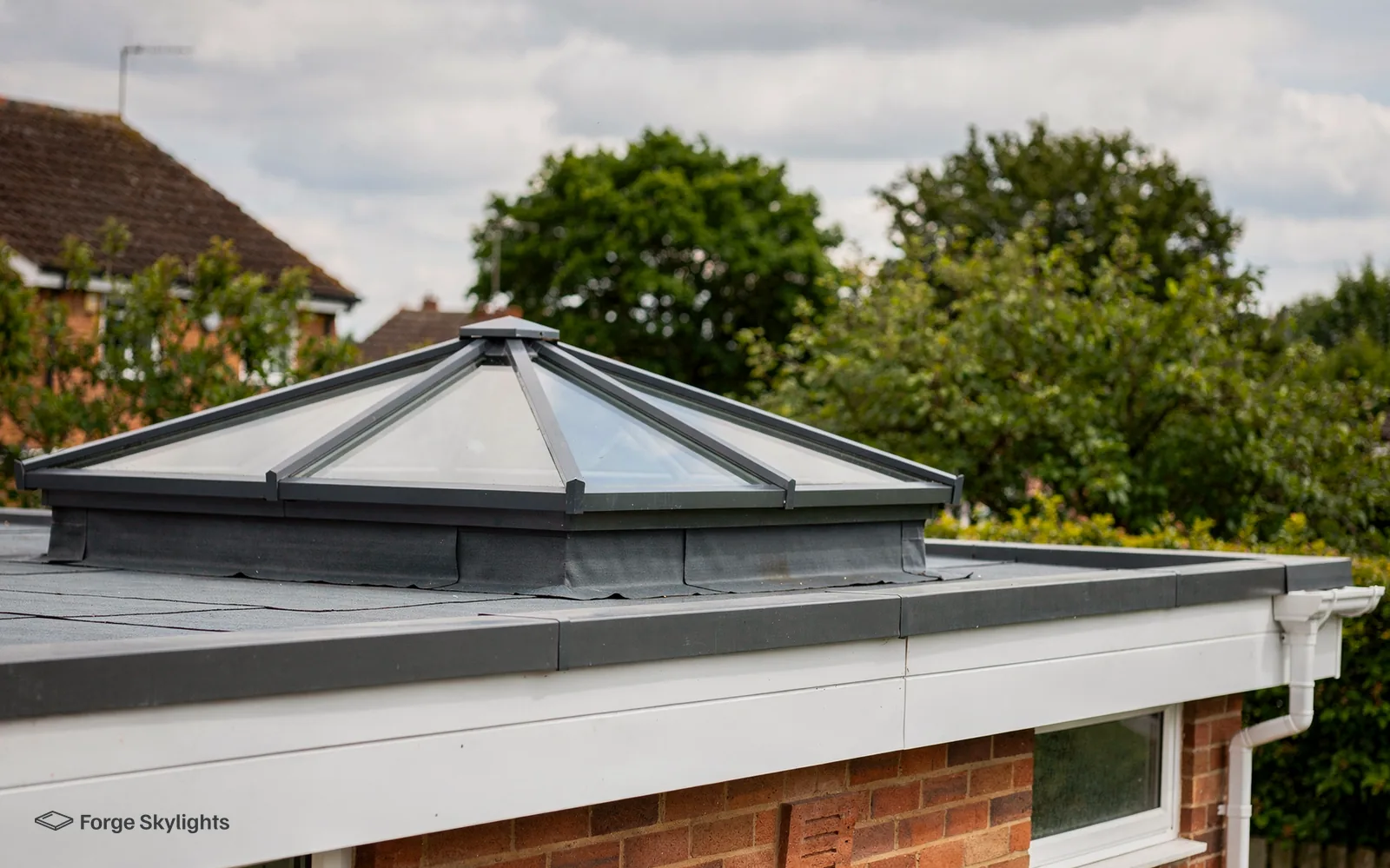
Before you choose, ask to see the colour on a sample section outdoors. A colour that looks right on a swatch in a showroom can look different on a roof in a grey sky, and a dark frame shows its width against light cloud in a way that a pale one does not.
Warmth, glass and building regulations
The frame is only part of how a lantern performs. The glass makes up most of the area, so the specification of the double or triple glazed unit, the spacer between the panes, the coating on the glass and the gas fill matter at least as much as the bar material. Aluminium lanterns rely on a thermal break to stop the cold outer section from conducting heat to the inner one, and a good break makes them perform well. uPVC is a poor conductor of heat by nature and needs no break, though its steel reinforcement is a place where heat can travel if the section is poorly designed.
New glazing on an existing house has to satisfy Part L 2021, and for a rooflight that figure is 2.2 W/m²K; exchanging the whole unit, frame and glass at once, is notifiable under the Building Regulations. Notification to Building Control is arranged by us when a job requires it, and the maker's declared figure for the lantern is printed in the quote, showing how it measures up. Both aluminium and uPVC lanterns can meet the limit when specified well.
Solar gain is a separate question from the frame. A large lantern over a south or west facing room can warm up on a bright afternoon whatever its frame is made of, and a solar control coating applied to the glazing reduces it. We price coated and uncoated versions next to each other where the roof faces the sun, because the coating changes the colour tint and the cost.
A lantern is a roof as well as a window, which also affects the condensation story. Any glazed roof can collect condensation on cold mornings, and a warm, well-fitted frame with a good spacer helps, though no frame or glass removes the possibility altogether. Ventilation in the room and, where it suits the lantern, an opening vent section are the practical help.
Lead time and price
Aluminium lanterns are usually made to order, often to your exact kerb size, so the quote gives the lead time as the usual range from the maker. uPVC lanterns are sometimes available in stock sizes, and where a stock size fits your opening they often arrive sooner and cost less. That is a pattern rather than a rule, and it varies by maker and by how busy the factories are, so we quote each maker's own range instead of promising a date.
On price, aluminium usually costs more than uPVC for a comparable size, since the material, the thermal break and the finish all add cost. The gap changes with size, glass, colour and any opening vents. A slim aluminium lantern with solar control triple glazing sits at one end of the range, and a plain white uPVC lantern with standard double glazing sits at the other. Most real quotes sit between the two.
The lantern is not the only cost. The kerb, the roof covering turned up around it, the plasterer's finish on the inside reveals, any structural steelwork or trimming, and scaffold access all add to the total. Our answer on what a roof lantern costs to fit explains each part, which helps you judge how much of the total the frame choice really affects.
Each written quote puts two suitable lanterns or more beside one another, giving the glazing, frame, lead time and price of each.
If budget is the main constraint, there is usually a middle path. A stock-size aluminium or uPVC lantern, sized to suit a well-planned opening, can give the look you want at a price that stays in reach. Ask us to quote the stock and the made-to-measure versions next to each other and the difference will be plain.
Choosing, and what we check at the survey
Most households end up weighing the same few questions. Do you want the bars to disappear? How wide is the opening? How firm is the budget? Does the lantern need to match other frames on the house? The answers point one way or the other, and the survey is where they turn into a recommendation.
Measure the room and the roof
The opening size, the joists and the kerb set what is possible before any frame is considered.
Agree the look
Bar width, colour inside and out, and the shape of the lantern, with sample sections to hold.
Check the size against the frame
The maker's limits for each frame and glass combination, so no option on the quote is at the edge of its range without saying so.
Compare in writing
Two suitable lanterns or more, made by different manufacturers if the roof permits, with glazing, frame, opening, lead time and price in rows.
Confirm the kerb
Once you choose, we measure the kerb again before the lantern is ordered.
Because no single manufacturer holds us to its own range, the comparison here is a real one: if aluminium is the better answer for your roof we say so, and if uPVC will do the job and save you money we say that too. Planning matters as well. A lantern is a rooflight in the planning sense, and permitted development depends on meeting the tests in our rooflight planning guide. Your address is the first thing we examine, and the council then makes the decision.
If you are still weighing a lantern against a flat rooflight, our comparison of a roof lantern and a flat rooflight covers that choice. When you are ready for the frame question to be answered for your own roof, book a free survey and we will bring sample sections and put the options side by side.
Common questions
Which lasts longer, an aluminium or a uPVC lantern?
Both last for many years when they are made and fitted well. Aluminium does not warp or discolour in sunlight, and its powder-coated finish is durable, while a good uPVC frame holds its shape and wipes clean. Fit, kerb and drainage matter as much as the material, and the warranty the maker offers on the lantern is written into the quote.
Can a uPVC lantern be grey on the outside and white inside?
Many makers offer a coloured foil on the outside with a white inside. The range of colours is narrower than for aluminium, so we show you the samples available for the lanterns on your quote.
Do aluminium lanterns feel cold in winter?
A lantern with a proper thermal break and a good glass specification should not. The bars stay close to room temperature on the inside, and the glass is the larger source of any chill. We put the maker's figure for each unit on the quote so the options can be compared.
Is a thin frame always the better choice?
A thin frame is the better choice when you want the glass to dominate, usually on a modern, larger lantern. On a traditional extension a heavier bar can look right. We bring sample sections so you can judge the width in your hand.
Will a lantern frame need replacing separately from the glass?
The glass unit can usually be replaced on its own if it fails and the frame is sound. Changing only the sealed unit is not notifiable work, whereas changing the entire rooflight, glass and frame, is. We advise on which applies to your lantern.
Does the frame material change whether I need planning permission?
The material does not decide it. Position, size and the character of the property do, and any permitted development right turns on the tests in our rooflight planning guide. Your address is checked by us first, and the decision is the council's.