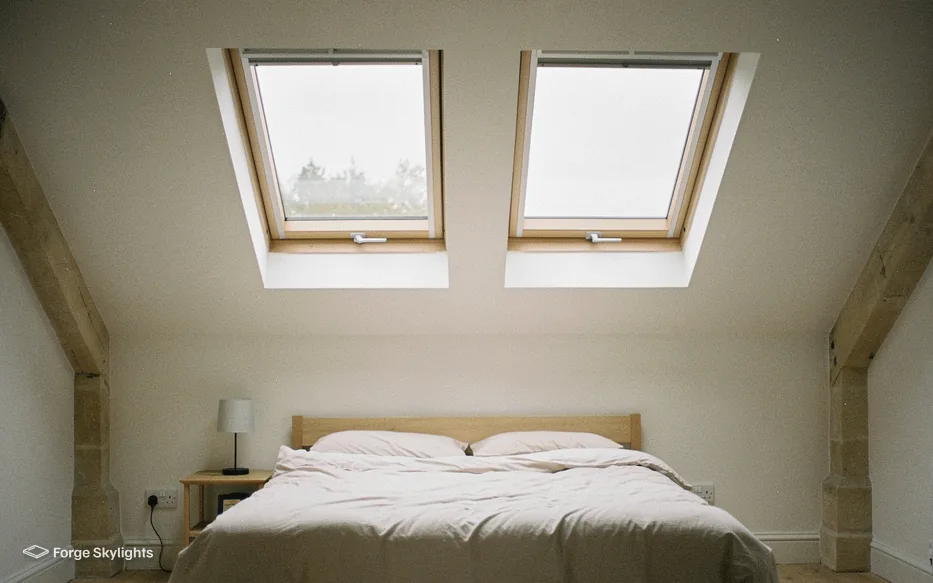
Can the old window simply come out and a new one go in?
In most cases, yes. A roof window sits in an opening framed between rafters, and a sound opening of the right size takes the new window in the same space without any alteration to the structure. The sash, the frame and the flashing are removed and replaced, and the tiles or slates around the frame are lifted and relaid. The rafters, the battens and the inside lining are kept where they are in good order. That is why a like-for-like swap is among the tidier jobs on a pitched roof: the structure does not move, and the work is concentrated on the window and its weathering.
People often ask whether they can keep the old frame and only change the glass. Sometimes they can, and we cover that case further down. When the whole window has reached the end of its useful life, because the seals have failed, the hinges have worn or the frame has gone soft, the better route is a full replacement, so the new glass, the new frame and the new flashing are all designed to work together.
A skylight that was fitted decades ago also tells us something about the roof. Older windows were often installed in roofs built to the standards of the day, with thinner insulation and no thought for the glass beside it. When we take the window out we see the opening properly for the first time, and that is when any surprises show up. We look at the rafters, the timber trimmers around the opening and the condition of the roofing felt, and you are told exactly what we find before anything is ordered.
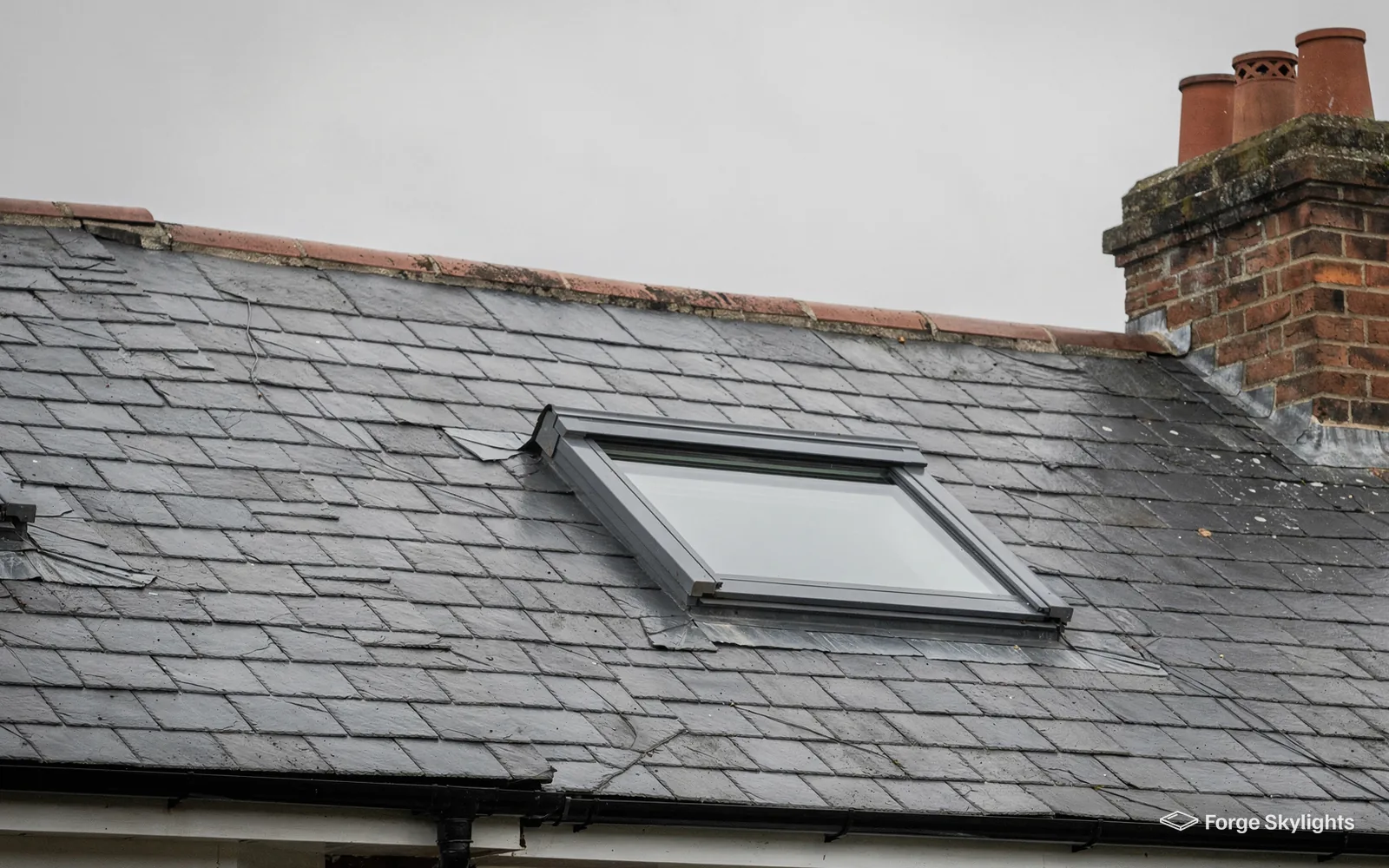
This page is about a pitched roof window, the kind the trade calls a roof window and a homeowner calls a skylight or a VELUX. If yours is a rooflight on a flat roof, with a kerb rather than a flashing kit, the process differs and our page on misted and failed rooflight replacement is the closer match.
Finding out what you have
Before we can quote a like-for-like swap, we need to know exactly what is in your roof. The first clue is the label. Most roof windows carry a sticker on the inside edge of the sash, or on the frame when the sash is opened, with the maker's code for the size and type. On a VELUX window the code looks like MK04 or CK02. In the code, the first part stands for width and the numbers stand for height, which together describe the outer frame size in the form the maker's ordering system understands. Our guide to VELUX window sizes and codes explains the whole system.
If the sticker has gone, we measure the frame instead. We measure the outer frame, the visible glass and the gap between the window and the rafters either side, and we compare the figures with the maker's size tables. Older windows do not always match current sizes exactly, because ranges have changed over the years. A close match is usually available, and when it is not, a slightly different size can be fitted by adjusting the timber around the opening. Whether that is needed is something you hear from us at the survey.
The type matters as much as the size. Roof windows differ in how they open and how they are hung, and each style has a modern equivalent:
- Centre-pivot windows turn on a pivot about halfway up the sash, and are a common type in older lofts.
- Top-hung windows open outwards from the top edge and are often chosen where a taller opening or a view out is wanted.
- Fixed windows do not open at all and are used for light alone, often paired with a window that does open.
At the survey we also note how the window is operated now. A handle at the top of the sash suggests a centre-pivot unit; a handle at the bottom suggests a top-hung one. We then ask whether you want the same action in the new window, or whether the room would suit a different one.
The flashing is the part people forget
The flashing is the set of metal pieces that seal the gap between the window frame and the roof covering. It is made to suit a particular covering, whether that is plain tiles, interlocking tiles, slate or profiled sheets, and it is made in a size that matches the frame. The flashing from an old window cannot be reused with a new one, because the two are designed as a pair and the new frame will not necessarily share the old frame's exact outline.
This is also where most of the extra care goes on a replacement. The tiles or slates surrounding the opening have first to be lifted, the old flashing taken away, the new one fixed in sequence from the bottom of the frame upwards, and the covering laid back over it. It is slow, precise work, and the quality of it decides how well the window keeps the weather out over the following decades. Our page on which flashing kit your roof needs lays the covering types out side by side.
Where the surrounding tiles are brittle or have lost their nibs, we say so at the survey. Some old tiles break when they are lifted, and it is better to know in advance, so that replacement tiles can be sourced to match as closely as possible. We carry out the roof covering work around the window as part of the job, and the quote shows it as a separate line.
Flashing and insulation go together
A modern flashing kit usually comes with an insulating collar that wraps the frame, filling the gap between the window and the roof structure. That collar is part of what lets a new window perform better than the one it replaces, so we quote the kit and the window as a pair.
What changes inside the room
The inside lining is the finished surround you see from the room: the angled plasterboard or timber boards that run from the window frame to the ceiling and the wall. When the window comes out, the lining often stays. When the new window goes in, the lining is trimmed back or re-finished where the frame has moved by even a small amount.
A new window is rarely identical to the old one in thickness. Modern frames are deeper because they hold thicker insulation, and the glass units are thicker too. That means the visible frame inside the room may change, and the lining may need a fresh edge. We make good the plasterwork and leave the area ready for paint. If you would rather have the lining replaced altogether, for example with a white-painted board, we put that on the quote as an extra option.
A different issue is the blind. If you have a blind or a shutter on the old window, it will not fit the new one unless the new unit is the same size and from the same maker. Blinds are cut to the frame, and a different frame calls for a different blind. If you plan to refit blinds, the best moment to choose them is when the window itself is chosen, as our page on fitting VELUX blinds with the window explains.
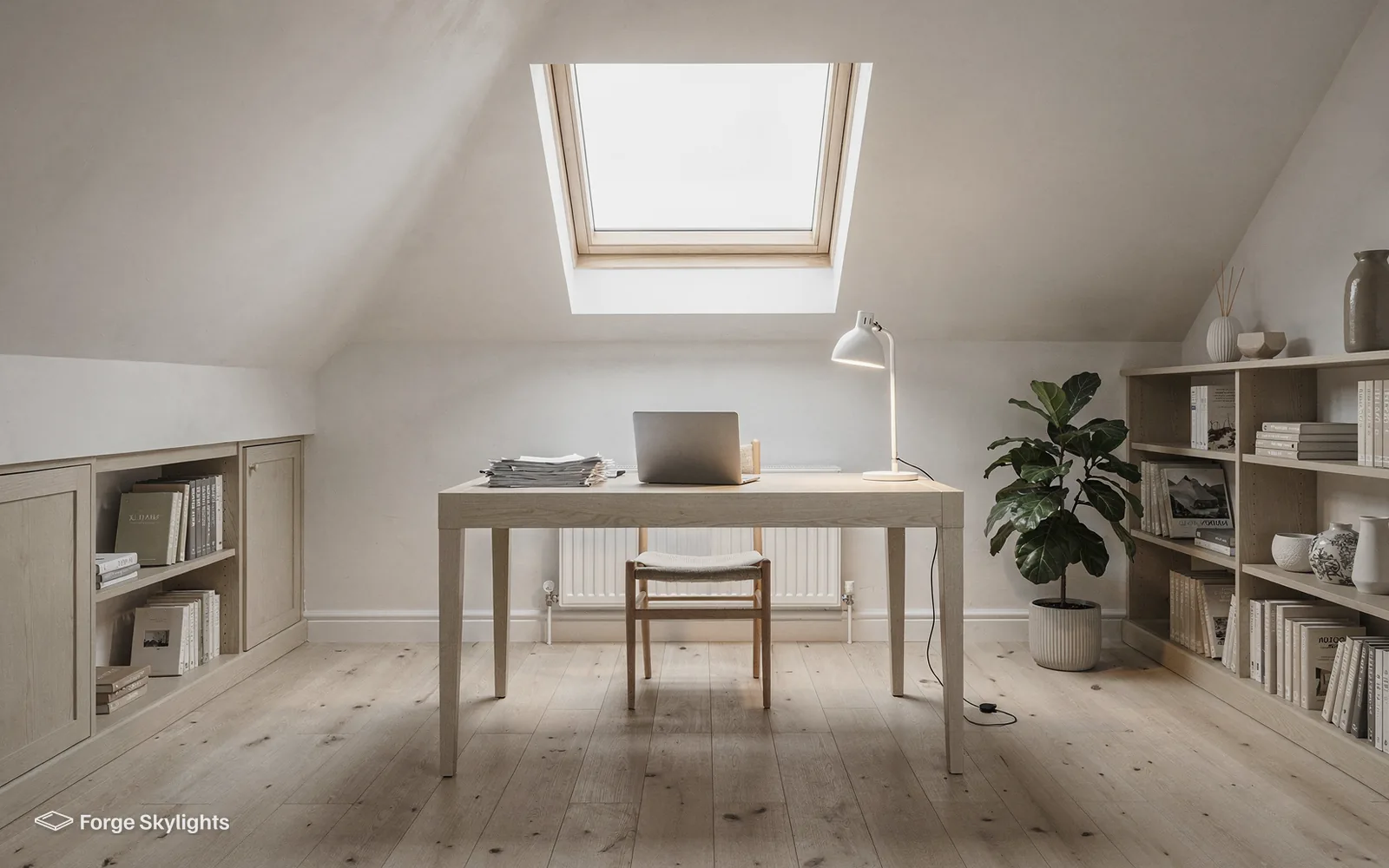
Like for like, or something different?
A replacement is a good moment to look at what the old window did badly. If the room was always too warm in summer, price a window whose glass carries a solar control coating alongside the plain one. If it was noisy in rain, there are glazing options that damp the sound. If the old window was awkward to reach, a top-hung unit with a handle at a better height may be a better answer. These are changes to the specification of the window, not the opening, so they cost less than a structural alteration.
We set the options side by side so you see what each one gives and what it costs relative to the others. Here is how a like-for-like replacement compares with an upgraded specification and a comparable unit from a different maker:
| Item | Same maker, same spec | Same maker, upgraded glass | Comparable unit, other maker |
|---|---|---|---|
| Fit to the opening | Closest, if the size is still made | Closest, if the size is still made | Close, sometimes with small timber adjustments |
| Glass | As the old one, updated to current standards | Coated or acoustic glass available | Equivalent options from that maker |
| Flashing | Maker's kit for your covering | Maker's kit for your covering | That maker's kit for your covering |
| Blinds | Existing sizes may carry over | Existing sizes may carry over | New blinds usually needed |
| Price | Middle | Higher | Can be lower or higher, varies by maker |
| Best for | A quick like-for-like swap | Rooms with heat or noise problems | Value, or a different look |
Comparable units from other makers are available in the same openings in many cases, from makers such as FAKRO and Keylite, whose ranges include sizes close to or matching the VELUX ones. Where a different make suits the roof, we put it on the quote right next to the VELUX option, so you can compare the glazing, the frame and the lead time all on the same page. Where a maker's unit would not suit your roof, we leave it off.
On thermal performance, a new roof window in an existing home falls under the 2021 edition of Part L, which asks for 1.4 W/m²K or, on the energy rating label, Band B. Every window we quote meets that limit, and the quote shows each unit's figure.
Is replacing a window notifiable work?
Yes. Swapping a roof window as a whole, with its frame and its glass, makes it a controlled fitting and notifiable under the Building Regulations. We send Building Control the notification, and a registered building control approver or your council's building control team checks the work as it goes. The paperwork reaches you at the end and belongs with your house documents, since a purchaser's solicitor may ask to see it when you sell.
Where the frame is sound and just the sealed glass unit has failed, changing only the glass is not notifiable. That is a smaller job and a lower price. It only suits some windows, because the glass has to be available for the existing frame and the frame has to be in good condition. When we visit, we tell you honestly whether a glass-only change would last or whether the frame is also near the end.
Planning is a separate question. Replacing a window like for like in the same position normally keeps the roof's appearance unchanged, but houses that are listed, or where an Article 4 direction made for the area, or a condition on the planning permission, has removed permitted development, can have different rules. Your address gets checked against the position of the new window, and the council is the one that decides. Our rooflight planning guide sets out the general position.
A swap of both frame and glass is notifiable work, so the notification to Building Control comes from us.
What happens on the day
A like-for-like replacement is arranged so that the roof is open for as short a time as the work allows. We bring the new window, the flashing kit, the insulation collar and the materials for the lining, and we set up the access before we touch the roof. Inside the room, we protect the floor and furniture, and we remove the old sash first to reduce the weight we handle at height.
Protect and prepare
Dust sheets inside, access set up outside, and the old sash taken off its hinges.
Strip the covering
The tiles or slates around the frame are lifted and set aside, and the old flashing is removed.
Remove the old frame
The frame is released from the rafters and lifted out, and the opening is checked for damage and size.
Fit the new frame
The new frame is fixed to the rafters, set level and square, with the insulation collar around it.
Flash and re-cover
The new flashing is fitted piece by piece, and the roof covering is laid back over it.
Finish inside
The lining is trimmed, the sash is hung and tested, and the room is left clean.
Weather matters, since the opening is exposed once the old window is out. We choose the day with the forecast in mind, and we cover the opening if the weather turns. The job is planned so that it can be finished and made weathertight on the same visit.
Once it is done, we show you how the new window opens, how to clean the outside from within, and where the ventilation is. Our workmanship guarantee of 10 years begins at that point, with the warranty the manufacturer gives on the window running beside it.
Getting a quote for your window
The quickest way to a firm figure is a survey. We look at the window from inside and outside, read the code if there is one, measure the opening, check the covering and the lining, and note anything that may change the price. We then write up two or more suitable options side by side, taken from several makers if the roof allows it, covering glazing, frame, opening action, the maker's lead time and the price.
A written quote means that any extra work, such as replacing broken tiles or reworking a damaged trimmer, is stated and priced before you agree. The survey is free, and you are not obliged to go ahead. If you want to compare more widely first, our page on what VELUX installation costs explains the main parts of the figure, and our hub on VELUX windows gathers the rest of the guides.
Book a free survey and we will measure the window you have and set out the replacement options next to each other.
Common questions
Will a new window fit the hole the old one left?
Usually it will. If the old size is still in the maker's range, it fits the same opening. If not, a close size is chosen and small adjustments are made to the timber around the opening, which we state on the quote.
Can I swap a VELUX for a different make?
In many roofs, yes. The opening, the pitch and the covering decide whether a unit from another maker suits, and we price it next to the VELUX option wherever it does.
Do I need new flashing every time?
A full window replacement is fitted with a new flashing kit for your roof covering, because the kit is made as a pair with the frame. Reusing the old flashing would leave a gap at the weakest point of the roof.
Will my old blind still fit?
A blind is cut for one frame size. If the replacement matches the old window in size and in make, the existing blind may carry over. A different make or size needs a new blind.
Is a glass-only change possible?
Sometimes, when the frame is sound and the sealed unit is available for it. A glass-only change is not notifiable work. At the survey we assess the frame properly and say plainly whether it can stay in place.
Does replacing a window affect my planning position?
A like-for-like replacement normally leaves the roof looking as it did. Listed buildings, planning conditions and Article 4 directions can change the position, which is why your address is looked at by us and the final decision stays with the council.