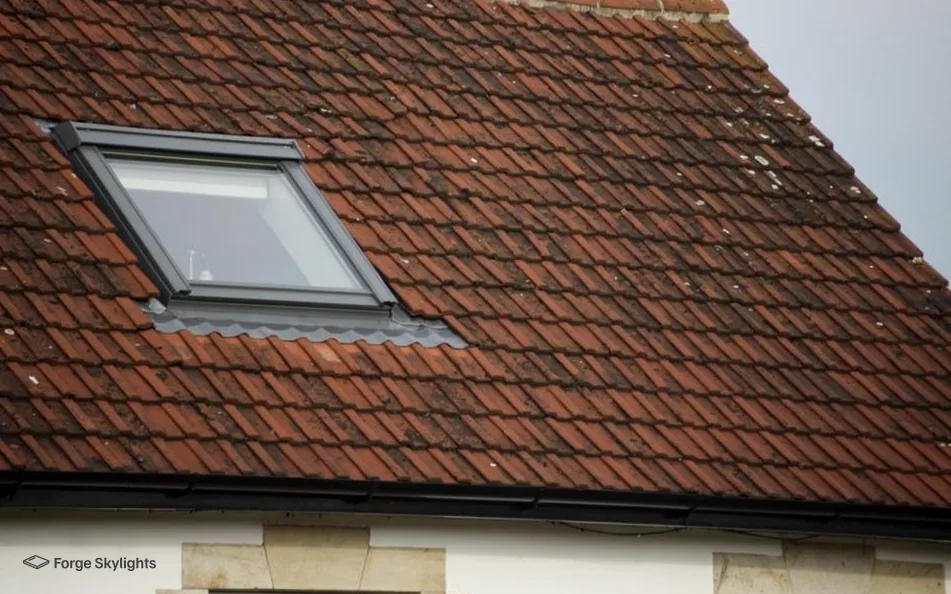
Reading a code such as MK04
Take the code MK04. The first letter, M, is the width of the window. The digits, 04, are the height. The second letter, K, is part of the code as the maker prints it on current windows, and it changes neither the width nor the height. Written out in that order, a code is a short description of how wide and how tall the window is, which is why the code is the first thing we ask for when someone wants a like-for-like replacement.
People often read the code the other way round, taking the digits for the width because the number feels like a measurement. Width comes from the letter, and height comes from the digits. A mistake here matters, because a window ordered a width band too wide or too narrow will not sit in the opening or between the rafters.
The letters do not spell anything. They are a band on the maker's chart, running from narrower windows to wider ones as you move along the alphabet. The digits work the same way: a higher number means a taller window. So an MK06 is the same width as an MK04 and taller, and a CK04 is the same height as an MK04 and narrower.
You do not need to memorise the chart. You need the code from your own window, and a tape measure to check it. We read the code at the survey, confirm it against the opening, and write the actual width and height on the quote, which leaves nothing to guess when the window is ordered. If you are weighing up the whole range, our VELUX window installation page covers the types and what we fit.
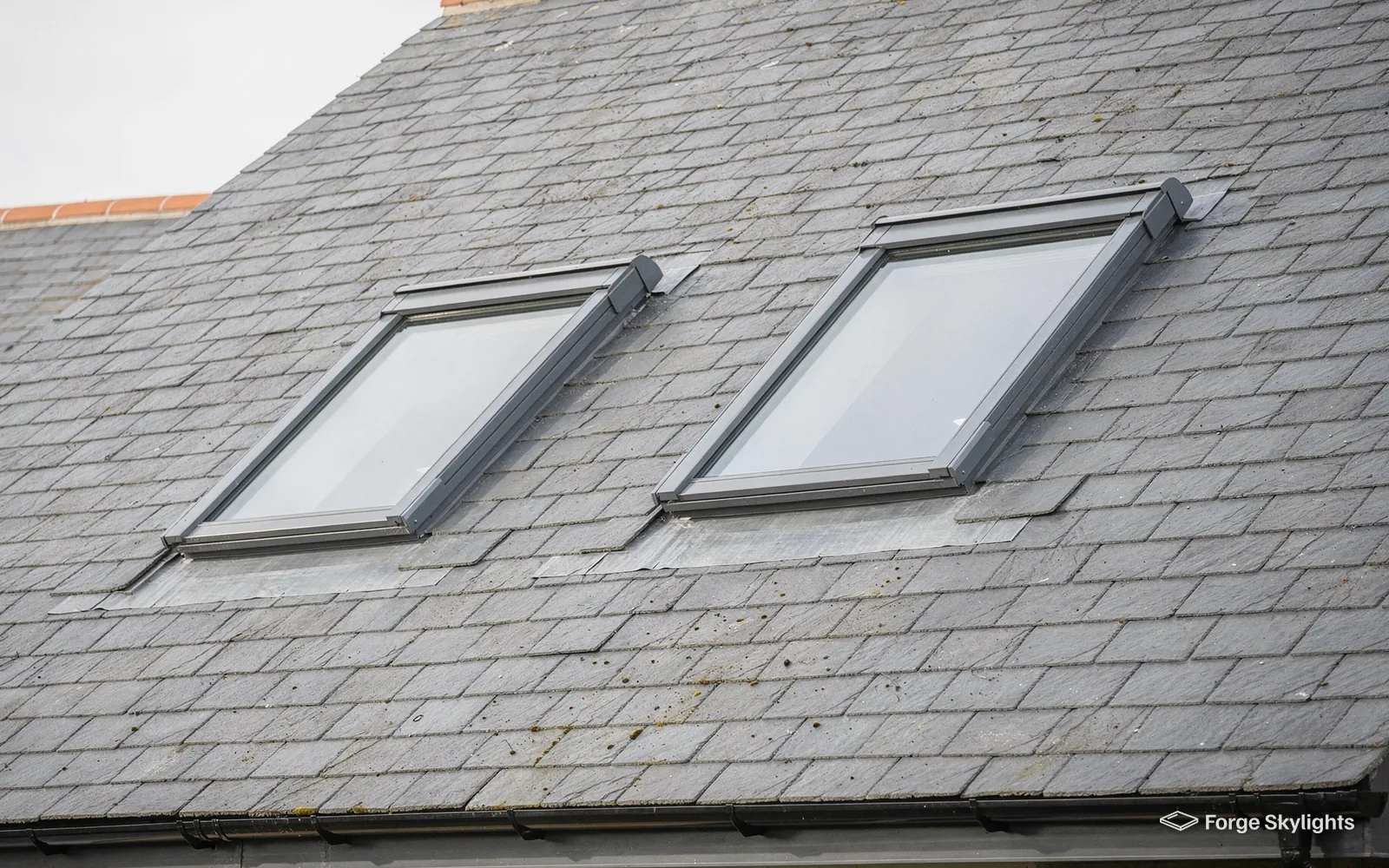
Where to find the code on your window
The code is printed on a label fixed to the window itself. On most roof windows it is on the frame, on the inside, and you can see it when the sash is opened. Look at the sides of the frame and at the top edge of the sash, as the label sits in different places on different generations of window.
If the label is painted over, worn or lost, there are other places to look. The paperwork from the original fitting may carry it. The box or the manual, if it survives in the loft, will have it. A flashing kit left in the roof space often has the matching code on its packaging.
- On the window: a label on the frame, inside, usually visible with the sash open.
- In the paperwork: the original invoice, the guarantee card or the manual.
- In the loft: the flashing kit box or the blind box, if either was kept.
When none of these turns up a code, you can measure the window instead and we match the measurements to the chart. The sizes that matter are the outside width and height of the frame, measured from the outside edge to the outside edge, not the glass alone. A photograph of the window from inside, with the sash open and the label area visible, also helps us if you are sending details before the survey.
Older windows can have codes that are no longer on the current chart, because the maker has changed its range over the years. In that case we measure the opening, find the nearest current size and tell you what the difference is on the quote.
Do not go by the glass
The glass is smaller than the frame, and the frame is smaller than the opening cut in the roof. A tape across the visible glass will give a number that matches no code. Measure the outside of the frame, or send us the label.
How the standard sizes fit between rafters
The standard sizes are made to sit between the rafters of an ordinary pitched roof. Rafters in houses of the last century or so were laid at fairly regular intervals, and the maker's widths are chosen so that common sizes slot into the gap with a little room at each side for the frame and the flashing.
That is the reason a like-for-like replacement is the cleanest job. If the new window matches the old one for size, the opening is already cut to suit, the rafters on either side are already trimmed, and the flashing sits where the old flashing sat.
The difficulty comes with roofs that do not follow the pattern. Older houses, and some extended ones, can have rafters at uneven or wider spacings. Where the gap is wider than the window, the frame is packed out with timber. Where the gap is narrower than the window needs, a rafter has to be cut and the load carried on a new timber either side, which is structural work and needs doing properly.
A glance at the rafters from the loft usually tells us which case we are in. We measure the clear gap between them, and we compare that with the widths on the chart. A window that fits the gap needs no structural change. A window that is wider will.
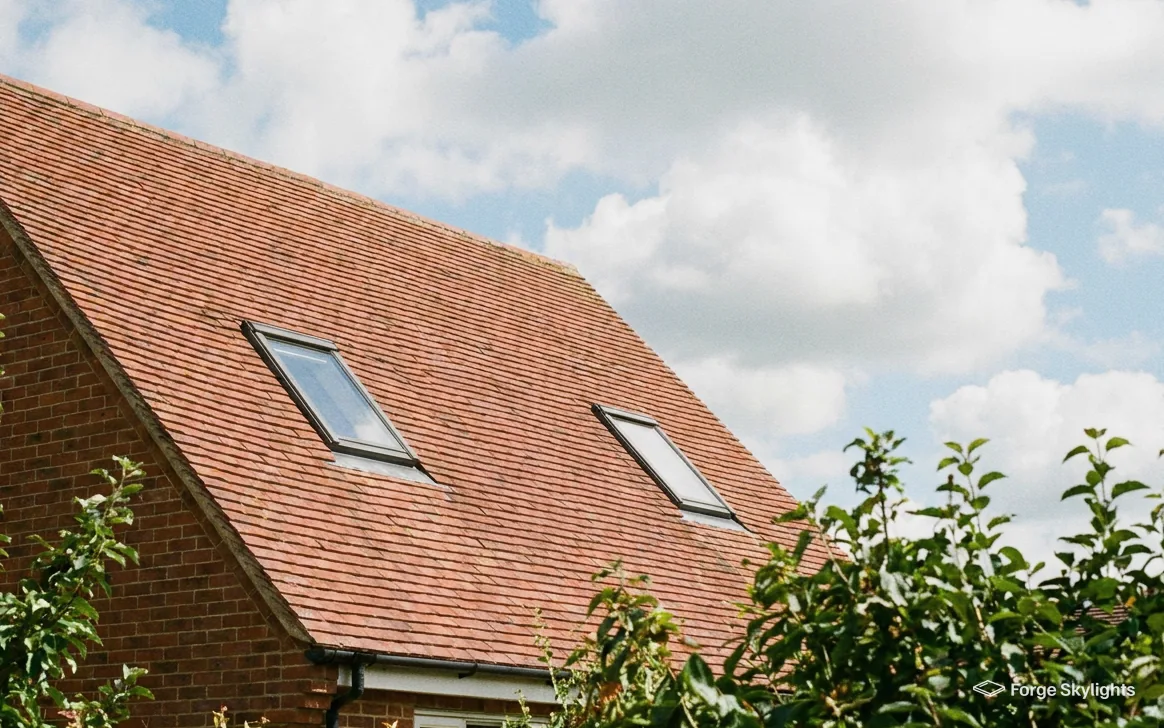
Replacing a window or changing the size
There are two sizing jobs, and they have different costs and different amounts of building work behind them. The table lays them side by side.
| Item | Same size as the old window | A different size |
|---|---|---|
| Roof opening | Already cut to suit | Cut larger or made smaller |
| Rafters | Usually untouched | May need cutting and trimming |
| Flashing | Matched to the old code | New kit for the new code |
| Inside lining | Fits the existing reveal | Reveal and plasterwork altered |
| Building work | Least | More, often with structural detail |
| Best for | A tired or failed window | A room that needs more or less light |
A larger window brings in more light and a better view, and it is a perfectly good reason to change the size. It also brings more work: the opening is cut larger, the rafters are trimmed, the lining inside is reshaped and the roof covering is dressed back to a bigger flashing. A smaller window saves nothing in effort, because the opening has to be closed up and the covering made good.
If you are replacing an existing window, our guide to replacing an old VELUX window walks through that job. If you are wondering whether the work can be done without scaffolding on the outside, our answer on fitting a VELUX window from inside explains when it can.
Building Regulations treat the cutting of any new opening in a roof as building work, whatever the change. Taking out the entire window, frame and glass, and putting in a new one is a controlled fitting replacement, so it is notifiable, and the Building Control side is dealt with by us whenever that applies. For a roof window, Part L applies the ordinary window standard, 1.4 W/m²K, though Window Energy Rating Band B also qualifies, and the quote carries the maker's own declared figure.
Flashing, blinds and the other parts that follow the code
The window code decides more than the window. The flashing kit is made for a specific size and a specific roof covering, so a window and its flashing are ordered together. A flashing that is a size out will not seal against the frame, and the rain will find the gap.
Roof coverings vary a great deal, and the flashing varies with them. A plain clay tile, a profiled concrete tile, a natural slate and a flat roof all need different kits, and the kit for one is no use on another. Our guide to VELUX flashing kits sets the types side by side.
Blinds and shutters also follow the size code. They are made to fit the frame, so a blind from a previous window may fit a new one of the same size, and will not fit a different size. If you want a blind on the new window, it is far easier to fix the code first and order the blind to match. Our page on blinds at the time of fitting covers the options.
Inside, the lining and the plasterwork round the window are shaped to the frame. A different size means a different reveal, and the decorator needs to know early.
The flashing kit, the blind and the lining all follow the size code of the window.
Choosing a size for the room
If you are fitting a new window rather than matching an old one, the room sets the size. A window sits at an angle, so it lights a different part of the room from a wall window and it frames a different view.
For a loft bedroom, a window above the bed gives light but little view when you are lying down, and a window nearer the eaves gives a view from a chair or the floor. For a stair landing, a window over the stairwell lights the steps and the hall below. For a bathroom, size and position are set by the bath, the sink and the privacy you want.
A taller window gives a longer view up the sky and a longer band of light across the floor, while a wider window spreads light along the room. In a narrow loft room, two windows side by side often work better than one very wide one, because the rafters between them stay in place and the roof stays strong. The maker also sells linked combinations, which share a flashing and sit as a single group.
Size also has a safety side. In a bungalow, or a chalet bungalow, the rooms in the roof may have a roof window as their escape, since that storey is no more than 4.5m up, provided the clear opening of the window is large enough for the purpose in question. Where a two-storey house gains a loft conversion, escape relies on a protected stair, which a roof window cannot replace, whatever its size. Our answer on roof windows as a fire escape goes through it.
England's Building Regulations set no daylight requirement for houses, so how much glass to fit is left entirely to your own choice. We would rather size a window for how you use the room than for a rule.
Getting the size right at the survey
At the survey we measure rather than assume. We read the label, measure the frame, measure the clear gap between the rafters, and check the pitch and the roof covering, as all four decide which sizes are possible.
Read the code
We find the label on your current window, or measure the frame if the label has gone.
Measure the gap
We measure between the rafters, to see which widths fit without structural work.
Check the covering and the pitch
These set the flashing kit and the lowest pitch the window can sit at.
Write the options
The quote sets out the same-size option and any larger or smaller option side by side, with the flashing and lining work for each.
Our quotes are not tied to one manufacturer. Where the roof allows, we set a VELUX option beside roof windows from other makers, and compare glass, frame, opening style and lead time. Our roof window installation page and our guide to top-hung and centre-pivot windows sit alongside this one.
The survey costs nothing and the quote is put in writing. A 10-year guarantee covers our workmanship, while the window itself carries the maker's warranty. We cover Birmingham and up to 30 road miles around it, for homes only. Book a free survey and send us a photo of the label if you have one to hand.
Common questions
What does the letter in a VELUX code mean?
The letter is the width of the window, taken from a band on the maker's chart. In MK04, M gives the width and 04 gives the height. A letter further along the alphabet means a wider window.
Is a VELUX size code the same across every window type?
The sizes are shared across the range, so a given width and height can come as a top-hung, a centre-pivot or another type, where the maker makes that size in that type. The full product code carries more letters that describe the type and the finish. We read the whole label and list the type on the quote.
Can I put a bigger window in the same roof?
Often, though the rafters decide. A window that fits between the existing rafters needs no structural change. A wider one means cutting a rafter and carrying the load on new timbers, which we detail on the quote before any work starts.
My window label has gone. How do I find the size?
Measure the outside of the frame, edge to edge, in width and height, and send it with a photograph from inside. We match the measurements to the current chart and confirm the code at the survey.
Do I need planning permission to change the size of a roof window?
The answer depends on your address and the roof slope involved. Permitted development can apply to rooflights, with its conditions explained in our rooflight planning guide, while a listed house needs its own listed building consent whatever that allows. Your address is something we check, and the council decides.
Will my old blind fit a new window?
A blind fits the frame size it was made for, so it can move to a new window of the same code. A different code needs a different blind. We suggest settling the size first and ordering the blind afterwards.