What frameless actually means
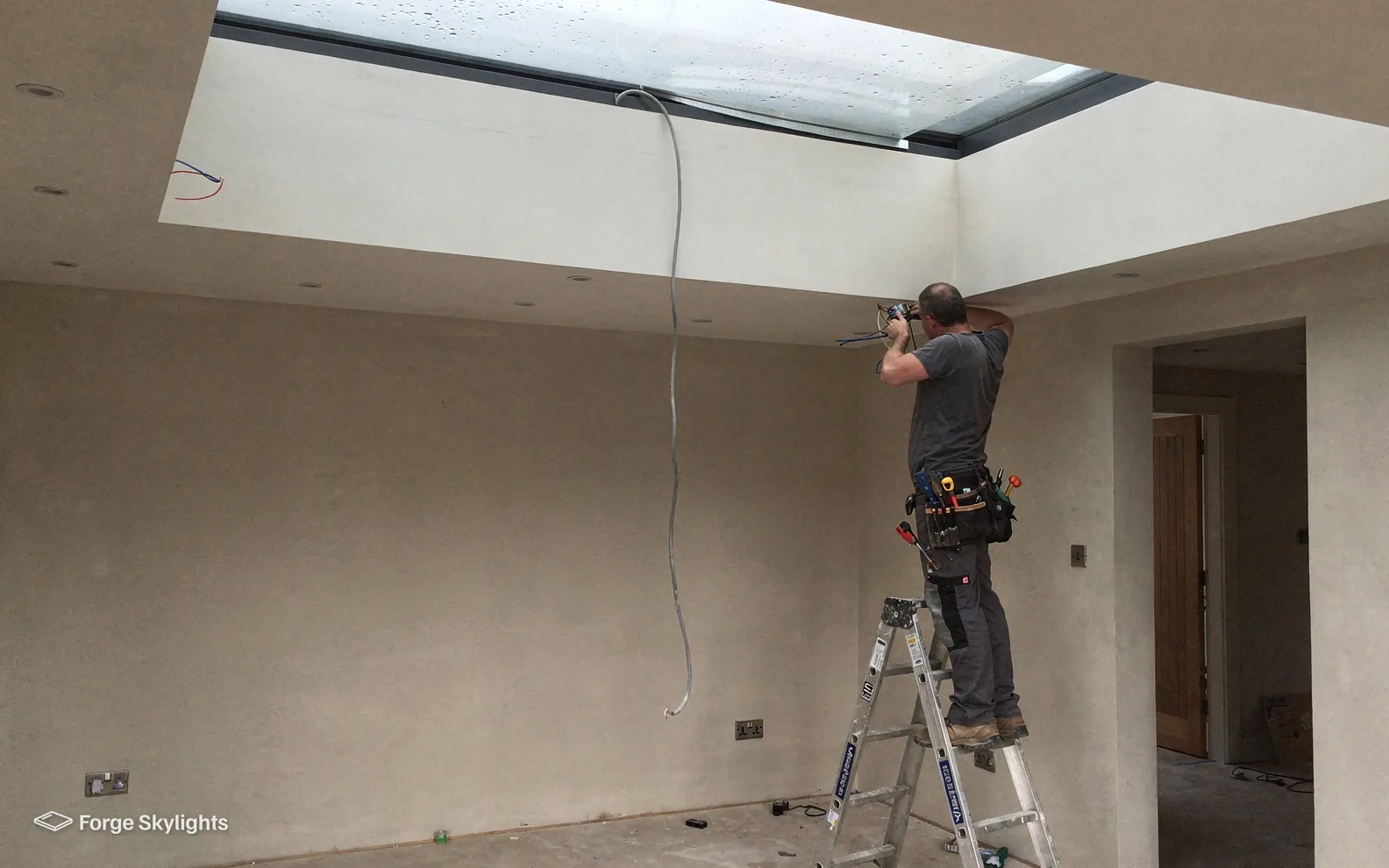
A frameless flat rooflight is a sealed glass unit fixed over a slim upstand, with no visible frame standing proud of the glass on top. From the room below you see a pane of glass in the ceiling, edged by the thin line of the upstand lining. From the garden, the glass sits flat and low, with the roof surface running right up to it. Makers describe these units as frameless, flush glazed or minimal frame, and the three words are used loosely, so a quote should say exactly what is on show.
A framed rooflight is the conventional alternative. The glass sits inside a visible frame, usually aluminium or uPVC, which rises above the upstand and gives the unit its own profile. Framed units are the older and more common type on flat roofs, and the makers who build them offer the widest choice of sizes, finishes, opening versions and glass specifications.
Neither type is a different product category. Both are double or triple glazed sealed units sitting on an upstand, and both are fitted to the same roofs. The difference is in how the glass is held, how much metal you can see, and what each approach does for appearance, thermal performance, drainage and cost. Our flat roof rooflights hub covers the whole family, and this guide compares the two ways of holding the glass.
A frameless unit and a framed unit appear next to each other on a written quote whenever the roof can take both, with several makers included, so the difference shows in the figures as well as in the brochure.
Sightlines: what you see from inside and out
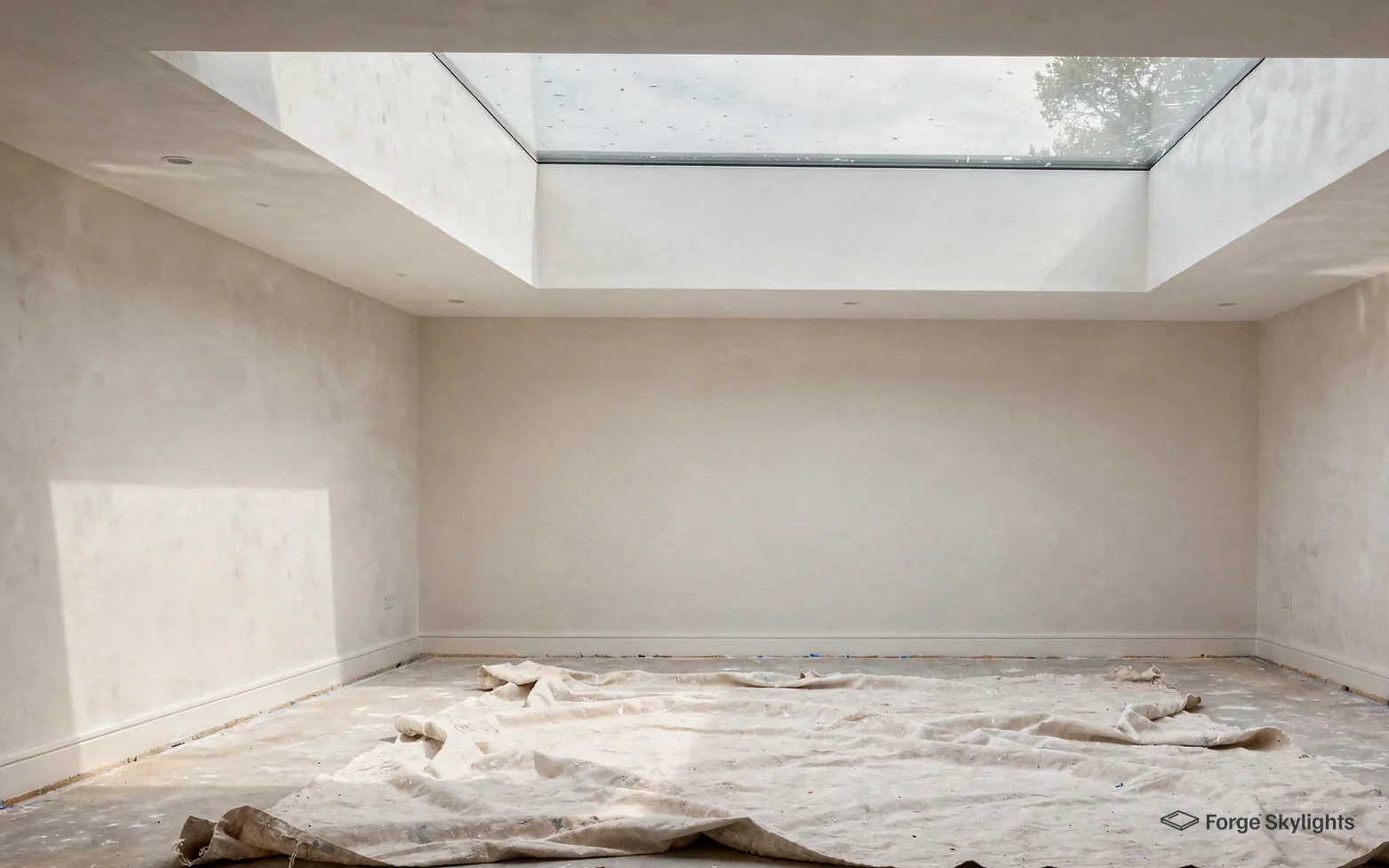
The sightline is the width of the solid material between you and the sky. On a frameless rooflight it is very narrow, often only the edge of the glass and the upstand lining. On a framed unit it is wider, because the frame sits around the glass and the upstand sits under it. In a large kitchen with a single big pane, the narrower sightline gives the clean, picture-window look that most people mean when they ask for a minimal rooflight.
From inside the room, the effect is strongest on a plain white ceiling, where a frameless unit reads as a clean rectangle of sky. A framed unit adds a visible border, which some people like because it outlines the opening and ties in with the window frames and doors. If your bifold doors have dark aluminium frames, a matching dark frame on the rooflight can look deliberate and well considered.
From outside, the picture is different. A frameless unit sits low on the roof and is hard to notice from the garden or the street. A framed unit with a tall upstand stands up more and may be visible from neighbouring windows, which matters on a conservation street or where a rooflight sits near a boundary. Our rooflight planning guide sets out how position and height can affect permission, and the survey is where we look at the position against your address.
Glass, strength and thermal performance
Frameless units lean on the glass itself. The outer pane is bonded or clamped to the upstand and does much of the work that a frame would otherwise do, so the glass specification matters. Makers use toughened outer panes, and laminated inner panes are common as a safety measure on rooms below. The sealed unit may be double or triple glazed, with coatings that reduce heat loss and, on south and west roofs, cut the summer sun.
Thermal performance is where the two types need to be compared figure by figure. A framed unit has a frame that conducts heat, and a thermal break in the frame is how makers reduce that. A frameless unit has less metal in the sight area, but the performance still depends on the edge of the sealed unit, the upstand and the way the two meet. The maker's figure for the whole unit is the one to look at, rather than a figure for the glass alone.
In existing dwellings, Part L 2021 holds rooflights in existing dwellings to 2.2 W/m²K, and that applies to frameless units too. Every unit on our written quotes shows the maker's figure, and every unit we recommend sits within the limit for the job. Our rooflight U-values guide explains how to read those figures, and our double and triple glazed rooflights guide compares the two glazing options.
Compare whole-unit figures
A quote that gives a centre-pane figure for one rooflight and a whole-unit figure for another is not comparing like with like. We list the same measure for every option on the quote, so the numbers line up.
Drainage and keeping the glass clean
On a flat roof, the way the glass meets the upstand decides where rain and dirt end up. A framed rooflight has a frame standing above the glass, which forms a small step. Water running down the glass meets that step, and dust and leaves tend to collect along its edge. Frameless glass has no proud frame to catch them, so water runs off the whole surface and takes more of the dirt with it.
That makes a frameless unit easier to keep clear on a roof that gets little rain on the glass itself, such as one sheltered by trees or a parapet. A framed unit can still be cleaned perfectly well, but you may find a line of grime along the lower edge more often. A rooflight in a shaded spot is worth thinking about for this reason, since grime and leaf litter show against the sky.
The roof around it matters as well. Both types sit on an upstand, and both need the roof covering to turn up it correctly. We cover that junction in our guide to flat rooflight upstands and kerbs, because the upstand is what keeps standing water away from either design. For roofs with very little fall, our guide on the pitch a flat rooflight needs explains what to check first.
Some glass can be specified with a coating that helps rain wash dirt away. Our answer on self-cleaning skylight glass sets out what it does and where it gives ground.
Frameless and framed side by side
| Item | Frameless | Framed |
|---|---|---|
| Sightline from inside | Very narrow | Wider, with a visible border |
| Look from the garden | Low and flush | Taller, with a visible frame |
| Glass | Outer pane carries the load, often toughened | Glass held in the frame |
| Whole-unit thermal figure | Maker states it; check the edge detail | Maker states it; check the thermal break |
| Water and dirt | Runs off the whole surface | Can collect against the frame |
| Sizes and finishes | Narrower range | Widest range, many colours |
| Opening versions | Fewer | Many, including electric |
| Price | Usually higher | Usually lower |
The table shows why neither type wins outright. A frameless unit gives the cleaner look and the easier surface to clean, and it usually costs more. A framed unit gives more choice of size, finish and opening, and it usually costs less. Which one is better for you depends on how much weight you put on the first two against the last two.
If you want a rooflight that opens, a framed unit is often the more straightforward route, because opening versions are made in a wider range of frames. Our guide to electric opening rooflights explains the choices. Where a fixed pane of glass is all you need, a frameless unit is worth pricing.
Price, lead time and what the quote should show
Frameless rooflights usually cost more than framed ones of the same size. The glass is made to tighter tolerances, the bonding or clamping is more demanding, and the range of makers is narrower. At a given size the difference can be modest or large, depending on the maker and the glass specification, and a quote that sets the two next to each other is the only reliable way to see it.
Lead times follow the maker, and they vary from one product to the next. A framed unit in a standard size and colour often arrives sooner, while a large frameless unit made to order tends to take longer. We give the maker's typical range on every quote and do not promise a delivery date that the maker has not confirmed.
Each option in the written quote is set out on the same lines, covering the glazing, the frame, the opening action, how long the maker takes and the cost. Where a frameless unit and a framed unit are both suitable for your roof, you see both. Our flat roof rooflight cost guide explains what moves the price up or down, and our answer on what size flat rooflight an extension needs helps you decide how large to go before you compare.
Which roofs suit which
Some roofs point clearly one way. A modern single storey extension with a plain white ceiling, a large pane and a flat, well-drained roof is the natural home for a frameless unit. A run of several rooflights along a galley kitchen can look tidy in either type, though a frameless run keeps the ceiling line calm.
A framed unit is often the better fit where the rooflight needs to open, where the budget has to stretch, or where the surrounding windows and doors have strong dark frames that the rooflight can echo. It also suits a roof where a tall upstand is already needed to clear a deep build-up, since the frame sits comfortably on a taller base.
Replacement work has its own rules. If you are swapping an old dome or a failed unit, the existing upstand sets what is possible, and a frameless unit needs a clean, level upstand to bear on. Our page on replacing a polycarbonate dome shows what we look at first.
At the survey we measure the roof, check the upstand and the covering, and talk through how you will use the room. Book a free survey and the written quote will set a frameless option and a framed option next to each other, with the guarantee of 10 years on our workmanship and the maker's own warranty on each unit.
Common questions
Are frameless rooflights really frameless?
They have no frame standing above the glass, but there is always an upstand below it and a structure holding the glass in place. The term describes the look, a flat pane with a very narrow sightline, rather than a unit with nothing around it.
Is a frameless rooflight more likely to leak?
Watertightness depends on the upstand, the seal and the way the roof covering is dressed, whichever type you choose. A well-fitted frameless unit on a sound upstand performs as reliably as a framed one. We check the upstand and covering at the survey before recommending either.
Can a frameless rooflight open?
Some can, but fewer versions are made than for framed units. If an opening rooflight matters to you, we price the opening options from the makers who offer them and set them beside a fixed frameless unit.
Does frameless glass let in more light?
A frameless unit has a bigger clear glass area for the same overall size, so a little more light reaches the room. The difference is small beside the effect of glass coatings and the size of the opening, which is why we compare the whole specification.
Will a frameless rooflight meet the Building Regulations?
In an existing dwelling the unit has to reach the Part L 2021 figure of 2.2 W/m²K, and swapping a whole rooflight counts as notifiable work. Whenever the job is notifiable, Building Control gets told about it by us as part of the work.
Which is easier to keep clean?
Frameless glass has no proud frame to catch grime, so rain carries more of it away and the surface is usually quicker to wipe. Framed units clean perfectly well, but dirt often settles along the lower frame edge.