Choosing skylights and rooflights in Pelsall
Around Old Town and Heath End.
Replacement domes, new lanterns and flat rooflights for the flat-roofed extensions and garages of Pelsall, with each option laid out side by side before you decide. Free survey.
- Distance
- About 14 road miles north of central Birmingham
- Planning
- Walsall Metropolitan Borough Council
- Roofs
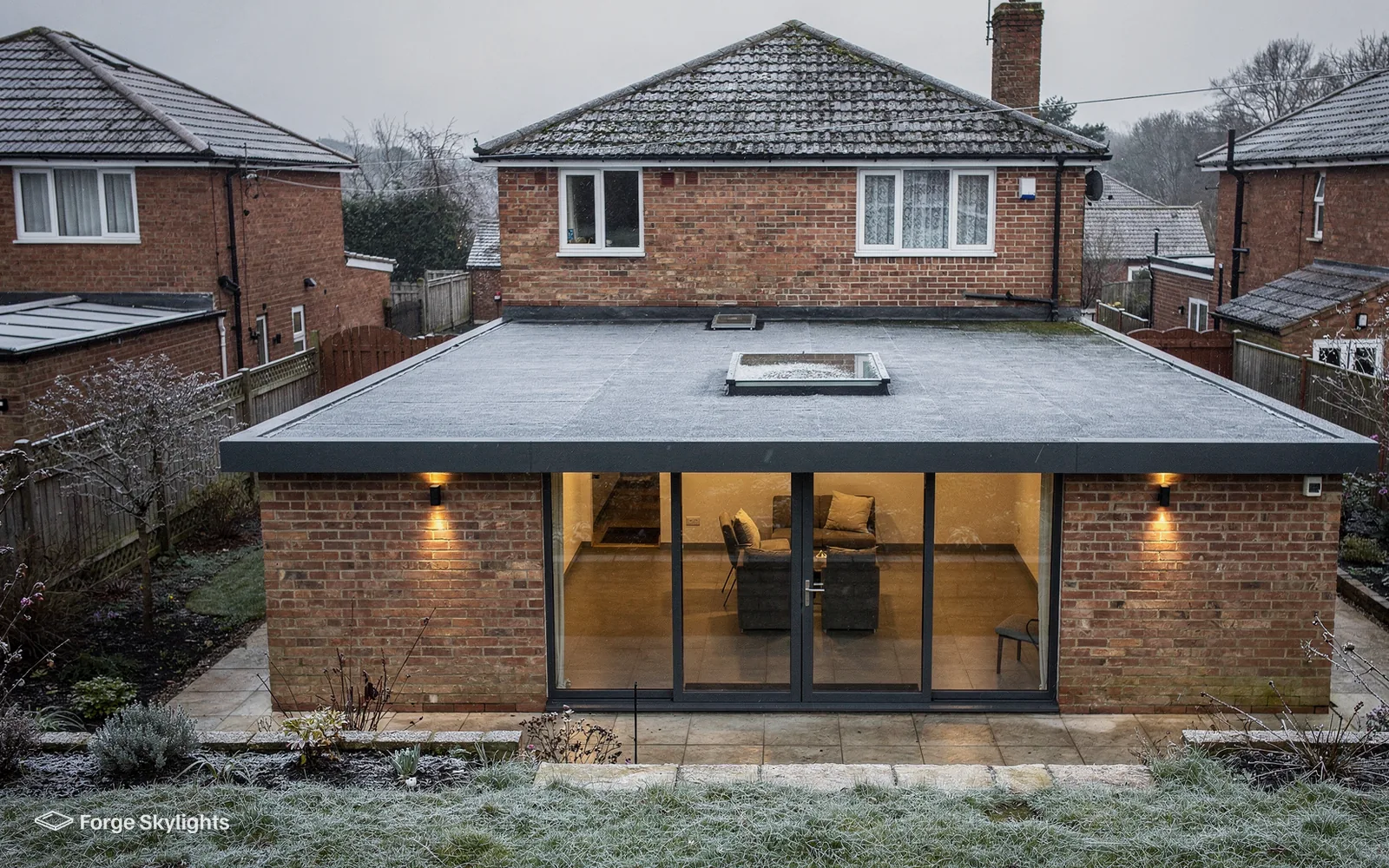
- Flat-roofed extensions, garages and rear kitchens, some with older domes
- Housing
- Semis, bungalows and newer estate houses on village streets
Three Pelsall roofs, three sensible starting points
An old dome on a kitchen extension near Old Town?
Glass can replace the plastic dome, as a lantern or a flat rooflight.
A garage conversion in Ryders Hayes with no daylight?
A flat rooflight or a sun tunnel brings light to a room with no outside wall.
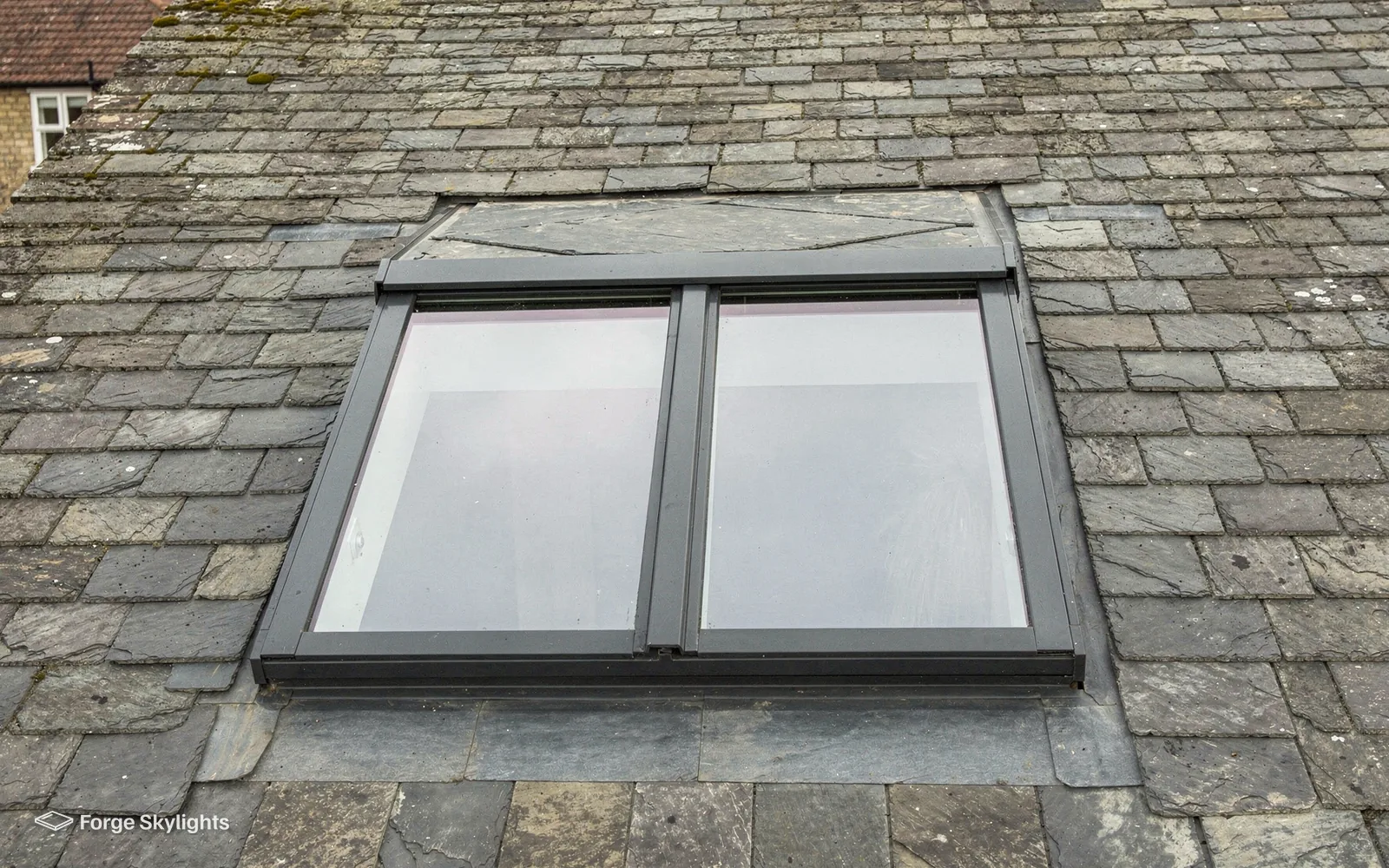
A pitched roof over a spare bedroom?
A roof window set between the rafters, sized on the day of the survey.
Swapping an old dome for something better
- Glass lantern
- Flat rooflight
Some of the flat-roofed extensions here still have the plastic dome or polycarbonate lantern put in years ago. It may now be yellowed, scratched or leaking heat. Glass replacements fall into two families: a lantern that rises above the roof, or a flat rooflight that sits close to it.
The quote lays out both for the same opening, so the decision is about how the room should feel.
Glass lantern
- Presence
- Rises above the roof
- Light
- From several sides
- Roof work
- Kerb must carry the weight
Flat rooflight
- Presence
- Low and plain
- Light
- Straight down, even
- Roof work
- Often a lighter upstand
Often asked during the survey
Can the new unit go in the old dome's opening?
Often it can, if the kerb is sound and the opening is a standard size. We measure the opening and tell you whether the new unit fits or the kerb needs altering.
What lies under the dome
Once a dome comes off, the condition of the kerb and of the roofing nearby is plain to see. A timber kerb that has stayed dry for years may be fine to reuse, while one that has been wet needs replacing before the new unit goes on. The roof covering around the kerb also has to turn up the side of the upstand, and an old felt covering might have to be renewed at that point.
We look at these details from inside and outside at the survey, and the quote names whatever is needed. If you have a roofer lined up for the covering, we agree the order of work with them so the kerb is ready before the new covering goes on. Our page on replacing a polycarbonate dome describes what each stage involves.
Flat roofs and what covers them
A rooflight on a flat roof has to be sealed into the covering, so how good the covering is matters at least as much as the glass. Felt, EPDM rubber and GRP fibreglass are the usual coverings on extensions, and each is joined to the upstand in its own way. EPDM is laid as one sheet and turned up the kerb. GRP is laid wet and forms a continuous skin. Felt is applied in layers and sealed at the edges.
Setting a new rooflight into a covering that is close to the end of its life is poor value, and we tell you so plainly on the survey, so you can decide whether to re-cover the roof first or at the same time. Our page for rooflights on EPDM, GRP and felt roofs sets out the detail for each material.
Heat in and out
Older domes lose heat, and a modern unit usually does far better. For existing dwellings the 2021 Part L limit for a rooflight is 2.2 W/m²K, and the double-glazed units we quote, with warm edge spacers, are chosen to meet it.
A south-facing extension may also need solar control glass, which we quote beside clear glass. Our guide to energy efficient rooflights explains the trade-offs between summer comfort and winter warmth.
- Kerb condition looked at from inside and out
- Covering type noted before the unit is chosen
- Glass and frame compared on one quote
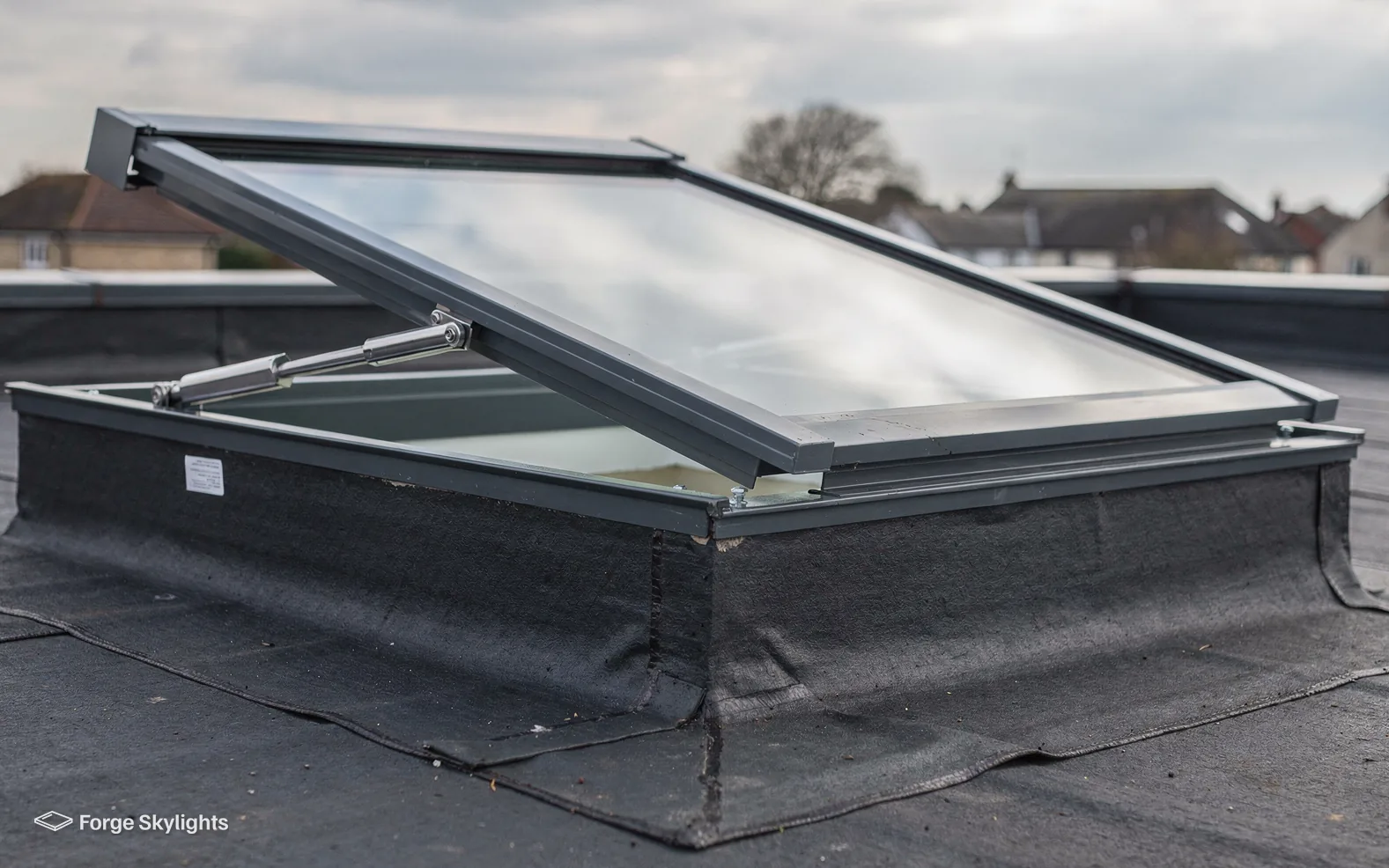
Fixed or opening flat rooflight
Fixed
- Air
- None
- Wiring
- None
- Cost
- Lower
Opening
- Air
- Vents the room
- Wiring
- Mains or solar
- Cost
- Higher
A kitchen that needs to breathe out
A kitchen extension collects steam from cooking and washing, and a fixed rooflight cannot let it out. An opening rooflight lets warm air leave at the top of the room, which a window at the side cannot do as well. It can help a room feel fresher, but it is one part of ventilation and sits beside the extractor, not in place of it.
A motor and a rain sensor make an opening rooflight close itself when a shower starts. If the roof is high or the unit is awkward to reach, that is a real convenience. We explain the wiring and the power-cut behaviour in our page on electric opening rooflights, and the quote sets the manual and motorised versions side by side.
What happens on the fitting day
On the day, the old dome comes off first and the opening is checked against the survey notes. If the kerb needs changing, that is done before the new unit goes on. The new unit is fixed and sealed into the covering, and the inside is finished to the lining agreed on the quote.
We keep the opening covered whenever the work pauses, because a gap in a roof is the last thing anyone wants when rain is forecast. A weather watch is part of how we plan the visit, and if conditions turn we reschedule instead of leaving a gap. Sign-off follows, and where the job is notifiable the paperwork for that notification is passed to you.
Rooms that need light, and the paperwork behind it
- Garage
- Loft
- Permission
A garage turned into a room
A converted garage often has one window at the front and a dim back half. A flat rooflight over the back of the room spreads even light deep into the space, and it can be fitted with a fixed or an opening sash. A sun tunnel is a lighter-touch choice where only a corner needs brightening.
A garage with a pitched roof offers another route, a roof window in the slope. The best choice follows the roof shape, the ceiling height and whether the room is used for sleeping or working.
| Item | Flat roof | Pitched roof |
|---|---|---|
| Main unit | Flat rooflight | Roof window |
| Smaller option | Sun tunnel | Sun tunnel |
| Opening sash | Available on most | Available on most |
| Check first | Covering and kerb | Rafters and tile type |
A roof window in a spare bedroom
Where a pitched roof has a room in it, a roof window lets light in along the slope without altering the shape of the roof. Rafter spacing decides the standard sizes that fit, and we check it from inside the roof.
A bungalow or semi in Pelsall may have a roof space with a boarded floor and little else. Before a window goes in, we look at the insulation, the access and where a new lining would finish. A room that is only used for storage needs a very different window from a bedroom, and the quote reflects what you plan to do there.
In a two-storey house the escape rules call for a protected stair to a loft room, so the roof window up there is picked for light and ventilation. Our roof window and fire escape guide explains the 4.5m rule that applies to the height of the storey.
Often asked on the driveway
Do you need to open up the ceiling?
For most roof windows the lining is built from inside, so some plasterwork is involved. We discuss finishing with you before work begins.
- Rafter spacing measured before sizing
- Ceiling height checked beneath the window
- Blind and opening type decided at order
Condensation on the glass
Moisture appears on any cold pane when warm air meets it. Double glazing with a warm edge spacer keeps the inner pane warmer, and a window that opens or has a vent flap lets moist air leave. Neither removes the cause, which is the amount of steam the room makes.
In a bathroom or a converted garage kitchen, a working extractor does most of the work, and the window helps. Our page on rooflight condensation sets out what to expect.
How planning works in Pelsall
Planning is decided by Walsall Metropolitan Borough Council. Our rooflight planning guide spells out the permitted development terms that cover many rooflights and roof windows. A listed building needs consent of its own whatever those rights allow, and a given house might no longer hold them if an Article 4 direction covers it or a past approval attached a condition.
Your address is checked during our survey, though the final say is the council's. Under the Building Regulations a rooflight opening cut where none existed is building work. Renewing a whole rooflight, frame and glass together, is a controlled fitting and so notifiable, whereas swapping the sealed glass unit alone is not. Notifiable work has its Building Control notification made by us, and each job gets our 10-year workmanship guarantee in addition to the maker's warranty on the unit.
Around Old Town, Ryders Hayes and Pelsall
We survey across Pelsall, including Old Town, Ryders Hayes, Heath End and High Heath.
Nearby places we cover
Rooflights in Pelsall: common questions
Is planning permission needed for a skylight in Pelsall?
Many skylights are covered by permitted development, and the terms are in our rooflight planning guide. Walsall Metropolitan Borough Council handles the planning side for Pelsall, and your address is checked by us ahead of the quote.
My plastic lantern is cloudy. What are my choices?
A glass lantern, a flat rooflight, or in some cases a new sealed unit in the existing frame. The survey shows which fits, and the quote compares them. See our page on reglazing a roof lantern.
Can a rooflight go on a garage roof?
Usually, if the roof is sound. A garage roof is often lightly built, so we check the structure and the covering first and tell you if anything needs strengthening before the unit goes on.
Is Pelsall close enough to Birmingham for you to survey my extension roof?
Pelsall lies on the northern side of Birmingham, 14 road miles from the centre, within the 30-mile area we cover. We do each survey at your home.
Which covering suits a flat roof with a rooflight?
All three of the usual coverings can take one, and the right choice depends on the roof's age and shape. Our answer on EPDM, GRP and felt roofs sets them against each other.
Can I get a quote for a sun tunnel and a roof window together?
Yes, one quote can cover both, and it places the options for each room next to each other. Book a free survey and we will measure for each.
What happens to the old dome?
We remove it and take it away with the other waste from the job. The survey notes how it is fixed, because some are bonded to the kerb and take longer to lift.
Will an opening rooflight keep working in a power cut?
Many have a manual override or a battery option, and the details differ by maker. Our page on electric rooflights in a power cut covers it, and the quote states how each unit behaves.
Can the work be done in a day?
A straightforward swap of one dome often goes quickly, while a new opening, a changed kerb or a re-covered roof takes longer. We state the programme on the quote, using the maker's typical range for the unit.
Do you only quote one maker?
A written quote shows a choice of suitable units next to one another, taken from several makers if the roof allows, and lists the glass, frame, opening and lead time of every unit.
Does a bigger rooflight always mean more light?
Larger glass lets in more, though a very large unit on a south-facing roof can bring summer heat. The quote compares sizes and glass coatings so you can see the balance for your room.
Book your free survey
It starts with a free survey and plain advice. No pressure, just clear options for your home.
Fill in the form and we will be in touch to arrange a convenient time.